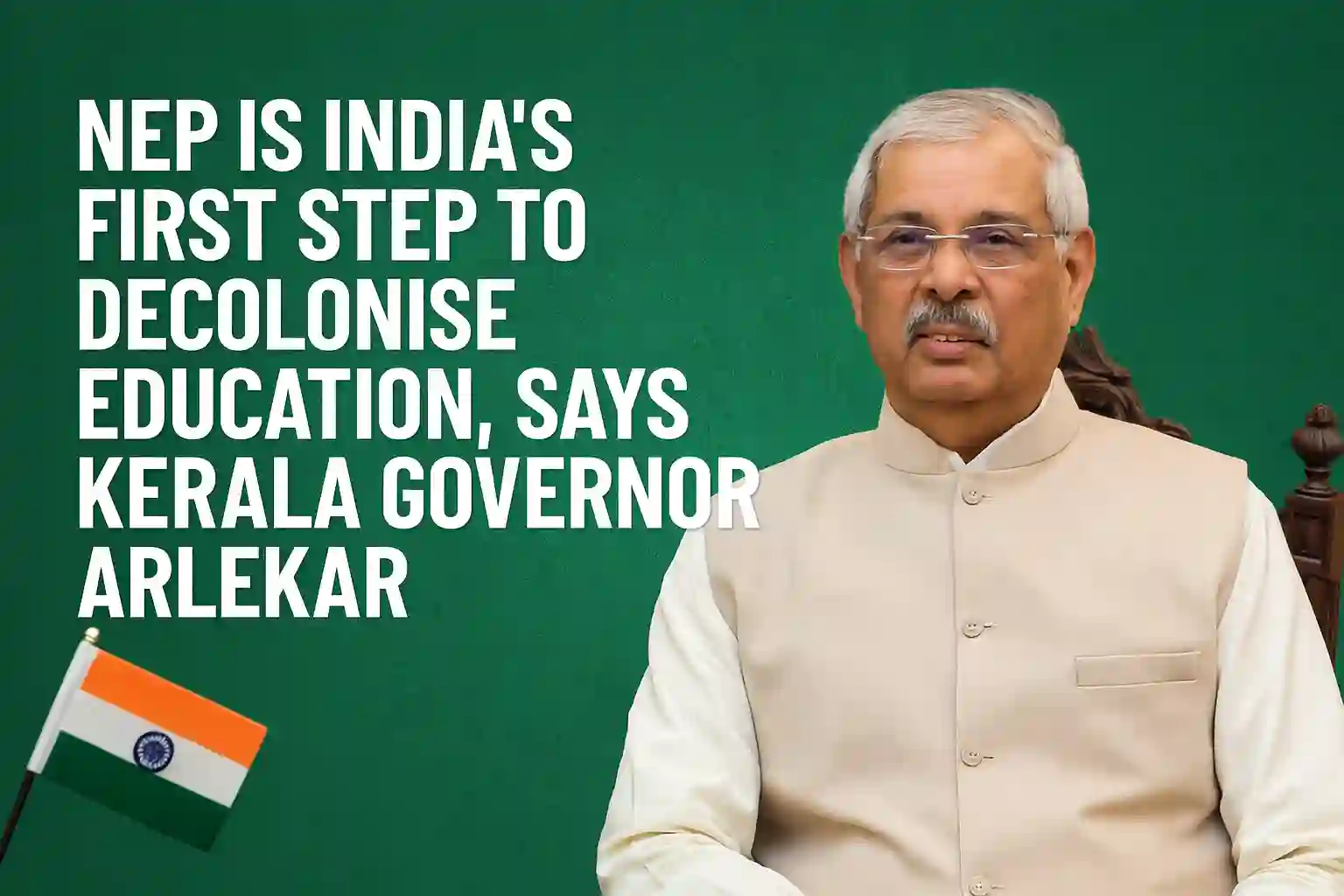
Kerala Governor Rajendra Vishwanath Arlekar recently said that the National Education Policy (NEP) 2020 is the first genuine attempt to decolonise India’s education system. While addressing a gathering at a convocation ceremony in Kerala, the Governor stressed that India’s current academic structure still carries deep colonial influences that need to be shed. He praised the NEP for focusing on Indian values, languages, and knowledge systems, stating that it is a timely move to bring the country’s education closer to its cultural identity.
I’m writing about this topic because it touches a very important issue — the long-lasting impact of colonialism on how Indian students learn. For years, we’ve been following a system that was designed by the British, not to empower us but to produce clerks and followers. Even decades after Independence, our books, syllabus and thinking continue to be shaped by Western ideals, often ignoring Indian contributions in science, art, and philosophy. This comment by a constitutional authority like the Kerala Governor forces us to think: are we still trapped in someone else’s vision of education? If NEP can help fix that, we must talk about it, support it, and make sure it’s implemented properly.
NEP 2020: Aiming to Break the Colonial Mindset
Governor Arlekar pointed out that before Independence, the British system of education was introduced mainly to serve administrative needs. Over time, this system became the default model. It replaced Indian languages with English, pushed aside Indian philosophy, and promoted a Eurocentric way of thinking. The Governor believes that NEP 2020 is the first serious effort by any Indian government to move away from this mindset and bring education back to Indian roots.
He also said that an education policy should not only provide degrees but also create responsible citizens who understand their country’s values and culture. According to him, the NEP tries to do exactly that by encouraging Indian knowledge systems and value-based learning.
Key Elements in NEP That Support Decolonisation
The NEP 2020 has several features that signal a break from colonial influence:
- Promotion of Mother Tongue: NEP recommends using regional languages as the medium of instruction at the foundational level (up to Class 5). This was a standard part of pre-colonial Indian education but was pushed out during British rule.
- Integration of Indian Knowledge Systems: The policy supports including traditional fields like Ayurveda, Yoga, Indian mathematics, Vedas, classical arts, and regional literature in mainstream education.
- Flexible Curriculum: Instead of the rigid division of Arts, Science, and Commerce, NEP offers a more flexible and multidisciplinary approach.
- Focus on Values and Ethics: Indian philosophical ideas like Vasudhaiva Kutumbakam (the world is one family) are encouraged as part of value-based education.
- Respect for Diversity: NEP respects linguistic and cultural diversity and suggests tailoring education based on local needs and backgrounds.
These steps show a clear effort to connect education with India’s cultural roots rather than simply copying foreign systems.
Why This Conversation Matters Now
In today’s time, when India is growing in almost every field, it is equally important to have an education system that creates thinkers, not just job-seekers. An education system rooted in local values can do that. For example, Japan and China have grown by building systems around their own culture and language. India must do the same.
Also, when children read about their own history, heroes and knowledge traditions, they feel more confident and connected to their identity. It gives them pride in their country and culture. On the other hand, if they learn only about foreign ideas and achievements, it creates a sense of inferiority. That’s why this shift is much needed and long overdue.
The Road Ahead: Can NEP Deliver?
While the NEP has many good ideas, implementation is still a major challenge. Education is a shared responsibility of the Centre and the States. Not all states have fully adopted NEP yet, and many are still using old syllabi and examination patterns. Teacher training is another big hurdle. Unless teachers are equipped to teach Indian knowledge systems, the change will remain only on paper.
There is also a need to develop new books, digital content, and resources in Indian languages. Without strong academic support, it will be hard to bring the real change NEP promises.
A Much Needed Step Towards Educational Freedom
Kerala Governor Rajendra Vishwanath Arlekar’s statement reminds us that education is not just about passing exams — it’s about shaping minds. NEP 2020 may not be perfect, but it is certainly a step in the right direction. For the first time, we are openly talking about removing colonial frameworks and building an education system that fits Indian society. If we truly want Atmanirbhar Bharat, we must start with Atmanirbhar Education. And that can only happen when we value our roots and let them grow in the classroom.