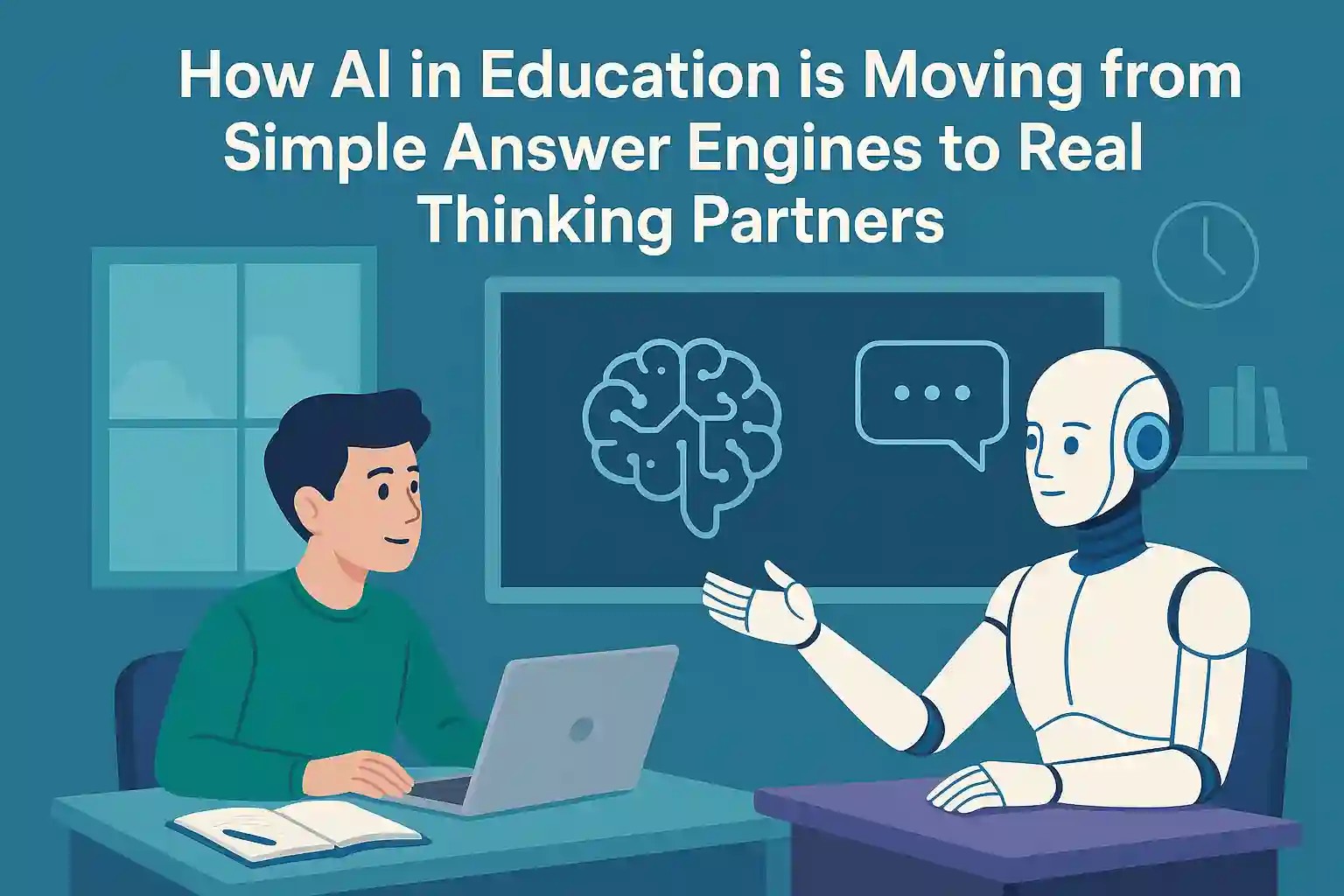
Artificial Intelligence is no longer limited to solving math sums or giving quick definitions. In education, AI is now evolving from being a simple answer provider to a real learning partner. Instead of just giving ready-made solutions, modern AI tools are designed to engage with students, ask counter-questions, guide them through reasoning, and help build critical thinking skills. This shift shows that AI is slowly becoming more than a helper – it is becoming a thinking companion for both students and teachers.
I am writing about this because it directly affects how education is changing for the next generation. In classrooms, libraries, or even homes, AI is becoming part of everyday learning. Many parents worry that AI may replace human effort, but the reality is more balanced. If used carefully, AI can reduce repetitive work like grading and doubt-clearing, while allowing teachers to spend more time on creative teaching. For students, it means personalised study support, language learning assistance, and skill development at their own pace. Understanding this shift is important because it will decide how we prepare our children not only to consume information but also to think independently. Education has always been about nurturing the mind, and with AI, that nurturing is taking a new shape.
How AI Has Changed the Learning Experience
Earlier, AI-based tools worked like answer machines – giving direct results without explaining much. But today, platforms are focusing on interaction. For example, a student solving a science problem may be asked why they chose a particular step, encouraging them to think deeper instead of just memorising the answer.
Key Benefits of AI in Classrooms
- Personalised learning based on a student’s strengths and weaknesses
- Reduction of routine work for teachers like test checking or attendance
- Instant feedback and 24/7 support for learners
- Access to global knowledge in regional languages
- Helping students with disabilities through speech-to-text and reading tools
From Teaching Aid to Thinking Partner
AI is slowly being viewed not just as an academic aid but as a partner that challenges students to think. Instead of spoon-feeding information, it can push them to justify answers, compare perspectives, and solve real-life problems. For instance, while a simple AI might just explain Newton’s laws, a more advanced AI could ask students to apply those laws in understanding traffic movement in hilly areas.
Challenges and Concerns
While AI offers many advantages, there are real concerns too. Dependence on AI might reduce self-effort if not guided properly. Data privacy is another big issue, especially when children’s learning patterns are recorded. Teachers also need training to use AI effectively, otherwise the technology may remain underused.