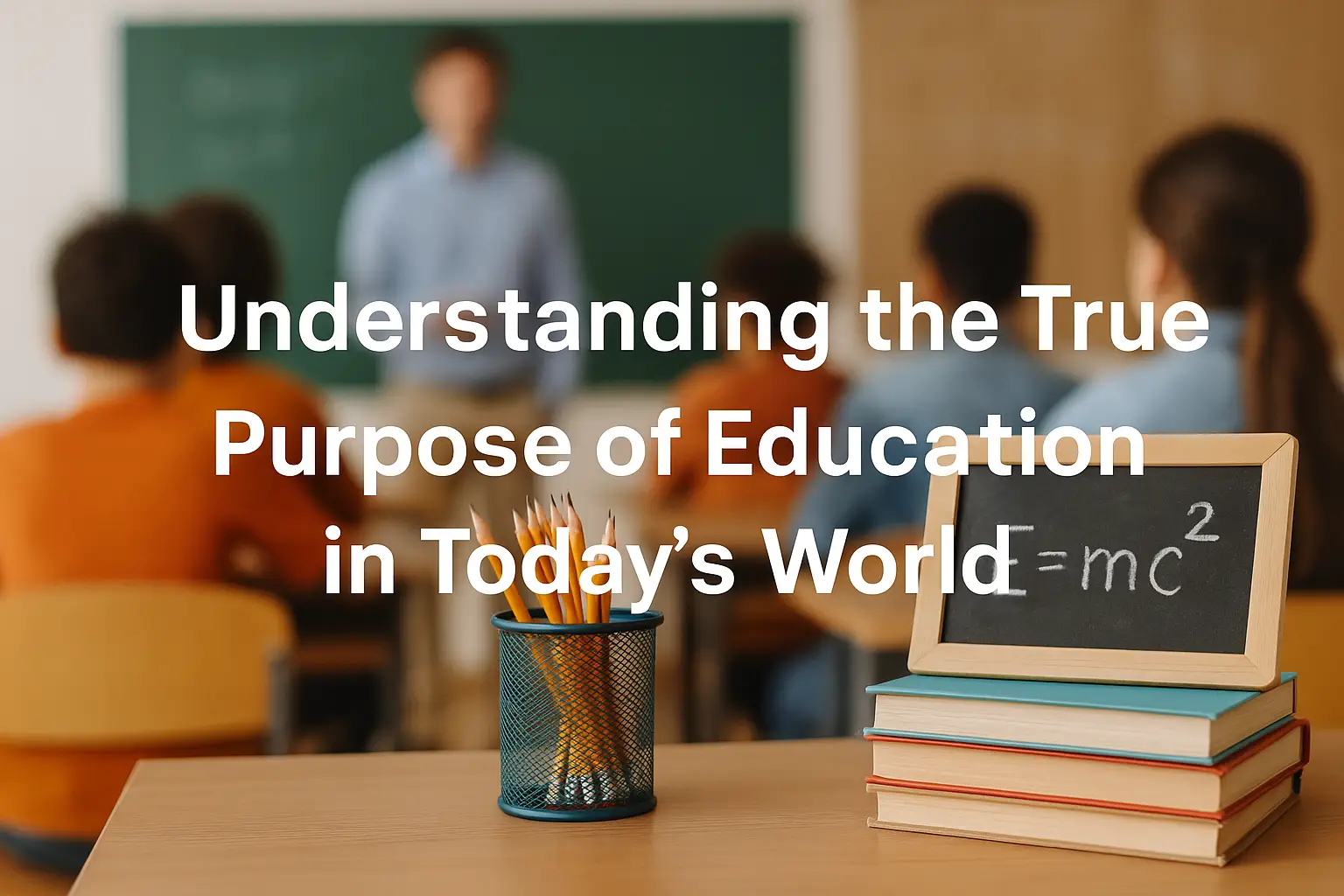
Education is not just about getting degrees or landing high-paying jobs, but about shaping individuals into responsible, thoughtful, and compassionate human beings. The true purpose of education lies in developing knowledge, skills, and values that help people contribute positively to society and lead meaningful lives.
I am writing about this topic because, very often, education is reduced to exam scores, competitive rankings, or career success. While these things are important, they do not fully capture the essence of learning. As someone who has seen how students, parents, and even teachers sometimes struggle to balance marks with personal growth, I believe it is necessary to revisit what education truly means. By exploring its deeper purpose, we can better understand how schools, families, and communities can work together to create not just successful professionals but also good human beings. This is an important conversation, especially for young learners who are building the foundation of their future, and for parents who want to give their children more than just academic success.
Education as a Tool for Personal Growth
Education should help students discover their strengths and interests. It is not only about remembering facts but also about learning how to think critically, solve problems, and make wise decisions. A well-educated person is someone who has confidence in their abilities and empathy for others.
Building Character Alongside Knowledge
True education is incomplete without character building. Values like honesty, kindness, respect, and responsibility must go hand in hand with academic learning. When students are taught to respect diversity and work with integrity, they grow into citizens who can make society better.
Education for Social Responsibility
One of the main purposes of education is to make individuals socially responsible. For example, when students learn about environmental issues, they become aware of the importance of protecting nature. When they study history and civics, they understand their rights and duties as citizens. This awareness ensures that education is not only for personal success but also for the progress of the entire community.
Beyond Jobs and Careers
Of course, education prepares people for employment, but that is just one part of the journey. Real education teaches people how to live with purpose and meaning. For instance, many successful leaders, scientists, and social reformers were not just academically strong, but also guided by strong values and a vision to serve others.
The Role of Teachers and Parents
Teachers and parents play a big role in shaping how education is understood. Teachers should inspire curiosity and critical thinking, while parents should encourage children to learn beyond textbooks. When both work together, students get an environment where they can explore knowledge freely and grow into well-rounded individuals.