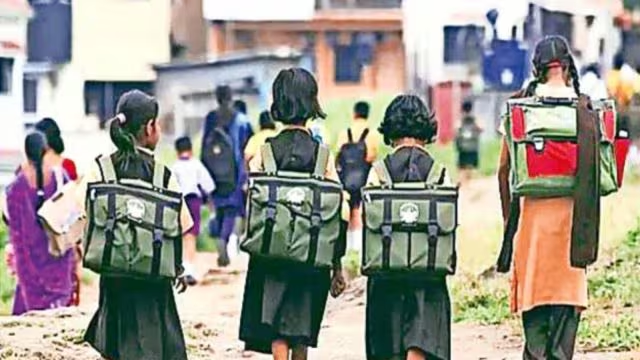
The Delhi government has told the High Court that it will not be able to supply school uniforms to students this academic year. Instead, it plans to provide only a subsidy, leaving the responsibility of purchasing uniforms to the parents. This decision has come at a time when many families are already struggling with rising living costs, sparking debates on whether this move will create additional burdens on parents of school-going children.
I decided to write on this issue because it is directly linked to access to education for children from low-income families. Over the years, Delhi schools have played an important role in reducing the financial strain on parents by providing essentials like books, stationery, and uniforms. If such assistance is reduced to subsidies, there is always a risk that the amount may not be enough or may not reach on time. Education should be a level playing field for all children, and small things like uniforms matter because they help maintain equality in classrooms. It is important to understand why the government has taken this stand and what it means for students and parents in practical terms.
What the Delhi government told the High Court
During the court proceedings, the Delhi government said that it would only provide a subsidy instead of direct distribution of uniforms this year. This means students will no longer get ready-made uniforms from schools but will receive a certain amount of money to buy them on their own.
The decision was explained as a move to simplify the process and avoid delays in procurement. However, it has raised concerns over whether the subsidy will be sufficient to cover the actual cost of uniforms in the market.
Why uniforms matter in schools
Uniforms are not just about clothing. They serve several purposes:
- They create a sense of equality among students
- They reduce peer pressure linked to fashion or expensive clothes
- They bring discipline and identity to a school
For many families, uniforms provided by the government have been a relief, as they save costs while ensuring that children attend school in proper attire.
Possible challenges with the subsidy system
The subsidy model, though well-intentioned, may face hurdles such as:
- Delay in transfer of subsidy amounts to parents’ accounts
- Subsidy not matching actual market prices of uniforms
- Families using the money for other urgent needs instead of uniforms
- Variation in quality and standardisation of uniforms across schools
Reactions and concerns
Parents’ groups and education activists have pointed out that without direct supply, the subsidy could create unequal situations. For example, one parent may buy a standard uniform, while another may compromise due to costs. This could once again create visible differences among children in the same class.
What lies ahead
The High Court has taken note of the government’s statement, but the broader concern remains—will subsidies ensure the same level of support that physical supply of uniforms once did? If the aim of public education is to ensure equal opportunities, then measures need to be taken so that no child feels left out because of financial limitations.