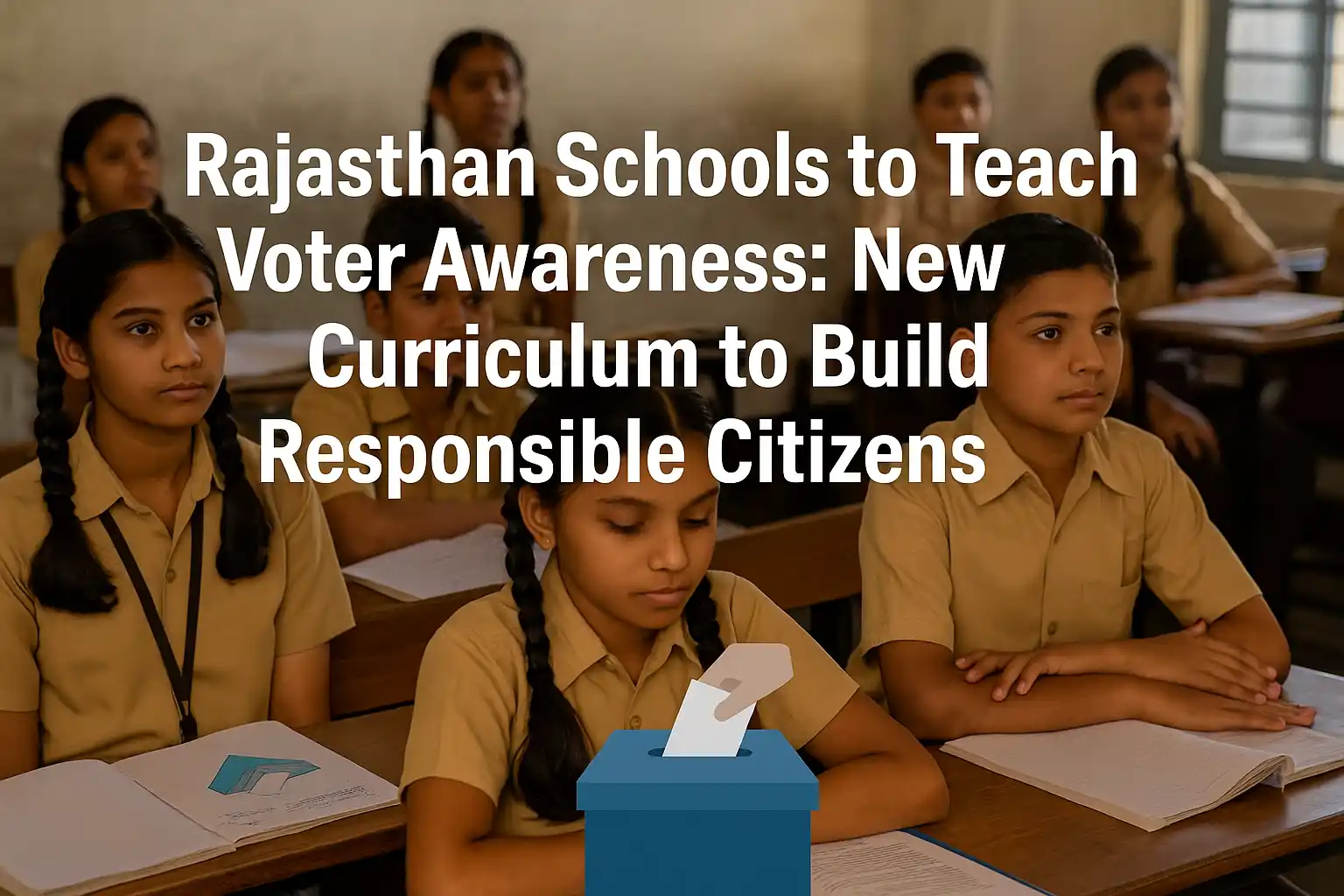
The Rajasthan government has announced that voter awareness will now be part of the school curriculum. This move is aimed at teaching students the value of voting, democracy, and active citizenship from an early age. Lessons will focus on why every vote counts, how elections shape governance, and the importance of participation in a democratic system.
I am writing about this because it is not just another update in the education sector, but a step that directly connects classrooms with democracy. In India, where voting percentages often drop due to apathy or lack of awareness, introducing this subject in schools can change the mindset of future voters. If children grow up understanding the power of their vote, they are more likely to encourage their families and communities to take elections seriously. Personally, I find it significant because many young people often reach voting age without real knowledge of how the system works. By making voter awareness a part of schooling, Rajasthan is setting an example that could inspire other states to follow.
What Will the Curriculum Include
The new voter awareness lessons are expected to cover:
- Basics of democracy and constitutional rights
- Importance of voting in shaping government policies
- Process of elections in India
- Role of the Election Commission
- Encouraging ethical and informed voting rather than voting based on pressure or influence
Teachers will be trained to explain these topics in simple language, using real-life examples and interactive activities like mock elections.
Why Voter Education in Schools is Important
India has one of the largest electorates in the world, yet voter turnout often fluctuates. One of the main reasons is lack of understanding, especially in rural areas. When schools include voter education:
- Students become aware of their duties along with their rights
- They can spread awareness within their families
- Future generations may see a rise in responsible voting
- It reduces myths and misconceptions about elections
For instance, in the last Lok Sabha elections, voter turnout in Rajasthan was around 66 percent. While decent, it still shows that a large portion of eligible voters stayed away. Early education could help bridge this gap.
Possible Impact on Society
This decision can have long-term effects beyond just voting. A society that understands its democratic rights is likely to hold leaders accountable. It also creates a culture where participation in governance is seen as a duty, not just an option. Over time, it could strengthen grassroots democracy in villages, towns, and cities across the state.