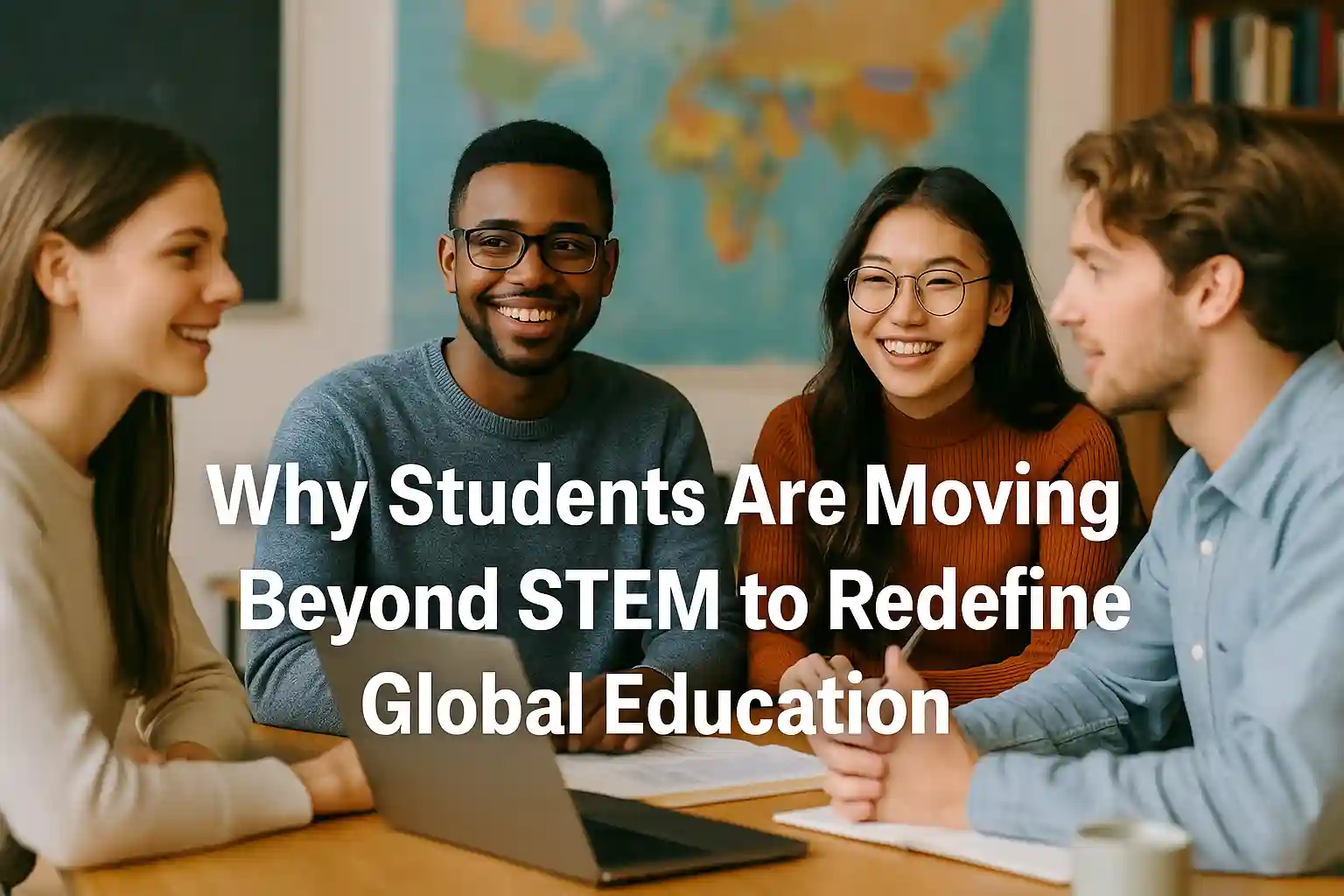
For years, STEM—science, technology, engineering, and mathematics—has dominated the global education narrative. It shaped how schools prepared students for the future, with focus on skills for technology-driven careers. But things are now shifting. Across countries, young learners are exploring humanities, arts, social sciences, sustainability, and entrepreneurship, showing that real progress comes when education is holistic and not restricted to one stream.
I am writing about this because it reflects a major turning point in how we think about learning. Today’s students are not just following traditional paths but are challenging systems to include creativity, ethics, global citizenship, and mental well-being as part of formal education. This change matters because the world is dealing with complex challenges—climate change, inequality, cultural conflicts—that cannot be solved by technology alone. By looking beyond STEM, students are opening the doors to a more balanced, humane, and globally connected way of learning. This is important not only for teachers and parents but also for policymakers who must rethink what the classroom of the future should look like.
The Rise of Interdisciplinary Learning
Modern students are mixing subjects in ways earlier generations rarely did. A student of computer science is also learning psychology to design better AI systems. Environmental studies now often combines biology, economics, and political science. This approach helps create problem-solvers who understand both technical and human sides of an issue.
Why Arts and Humanities Are Making a Comeback
While STEM careers remain important, many young people are realising that arts, literature, and history shape critical thinking and empathy. For example, design thinking is now a key skill in business schools, and storytelling is essential even in tech-driven fields. Creative learning is helping students connect innovation with human needs.
Students as Global Citizens
Another big change is how education is no longer confined to national borders. Online courses, student exchange programmes, and international collaborations are making learning global. Students are working together on climate action projects, social entrepreneurship, and cultural exchanges, which prepare them to lead in a connected world.
Beyond Degrees: Skills That Matter
Today’s learners know that a degree alone is not enough. They are focusing on:
- Communication and collaboration
- Digital literacy
- Social awareness and ethics
- Adaptability in fast-changing work environments
These skills are valued by employers and equally important for building meaningful careers.