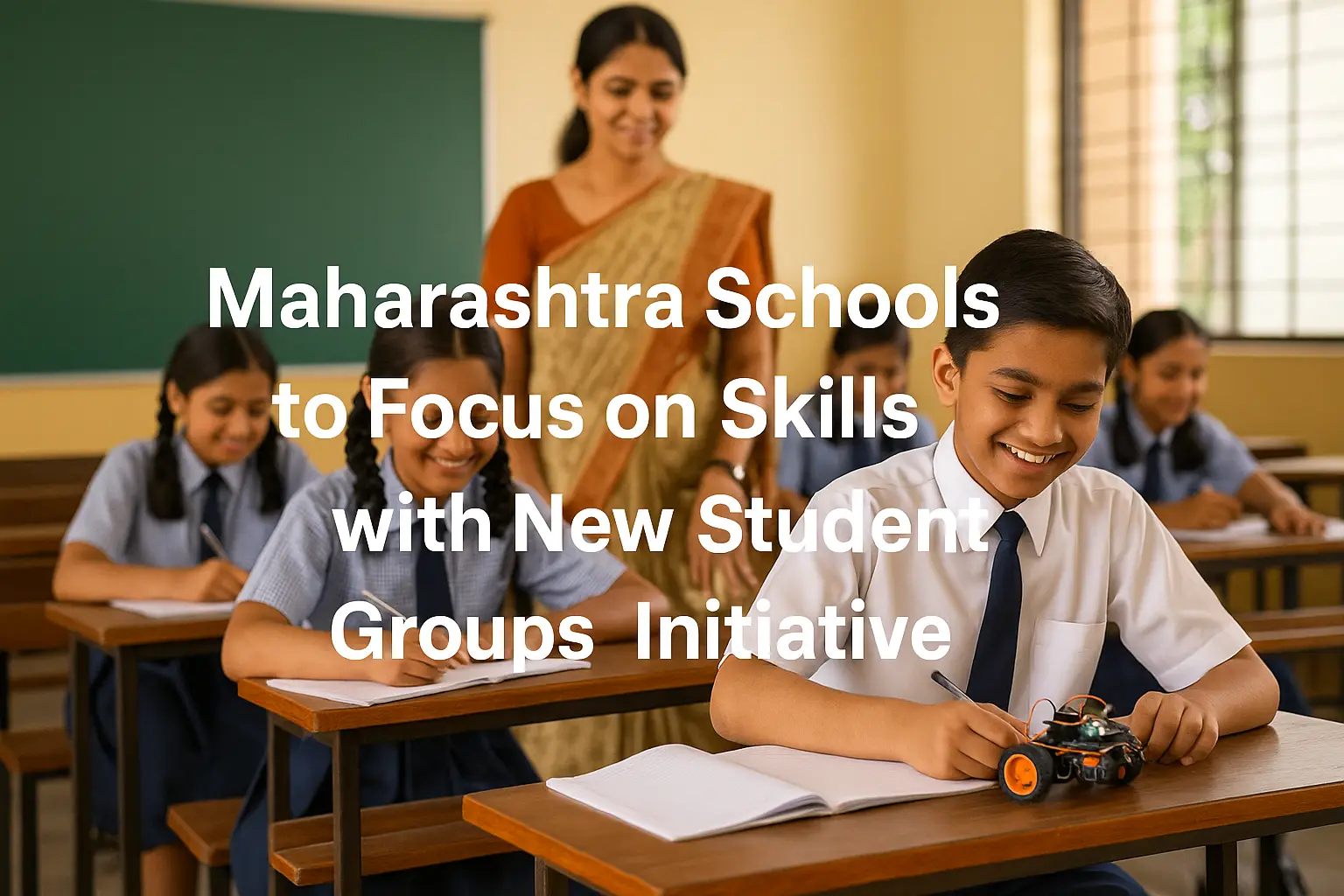
The Maharashtra School Education Department has introduced a new concept of ‘Student Groups’ that will focus more on practical skills rather than just classroom syllabus. These groups will allow students to take part in activities that develop problem-solving, teamwork, creativity, and leadership skills. The aim is to prepare children for real-life challenges, not just examinations, while still keeping regular studies on track.
As part of the National Education Policy (NEP) 2020, the Maharashtra education department has started a new ‘Student Group’ program in all schools from Classes 1 to 12. In this program, students are divided into groups based on their interests in areas like arts, sports, science, technology, reading, and more, to encourage peer learning and practical experiences.
I am writing about this topic because it reflects a major change in how we look at school education in India. For years, students have been judged mainly on marks and rote learning, often missing out on opportunities to build skills that matter outside the classroom. By bringing in ‘Student Groups’, the state is trying to shift focus from textbook-driven learning to skill-based development. This move is important because it balances academics with essential life skills. Parents, teachers, and students should all understand this change, as it will impact how schools function and how children learn in the coming years. If implemented effectively, it could become a model for other states as well.
What are Student Groups?
Student Groups are structured activity-based collectives where children from different classes can participate in skill-oriented learning. Instead of focusing only on textbooks, schools will now organise sessions and tasks that involve communication, creativity, innovation, and collaboration. These groups will give students a chance to learn by doing, which often has a stronger impact than theory alone.
Key focus areas of the initiative
The Student Groups will mainly work around:
- Building communication and teamwork skills
- Promoting problem-solving and critical thinking
- Encouraging participation in arts, culture, and innovation
- Providing exposure to real-life situations through role-play and projects
- Creating leadership opportunities among children
Why this shift is important
India’s education system has long been criticised for being too exam-oriented. Employers often say fresh graduates lack soft skills, even if they score high marks. By starting this change early at the school level, Maharashtra is trying to create a generation of students who are confident, adaptable, and better prepared for the future. It also helps children discover their talents beyond academics.
How schools and teachers will adapt
Teachers will have to take on the role of mentors rather than only lecturers. Schools will need to create timetables that balance syllabus coverage with group activities. This is not about reducing the importance of exams but about widening the scope of learning. Parents may also need to support children in participating actively, rather than just pushing them for high marks.