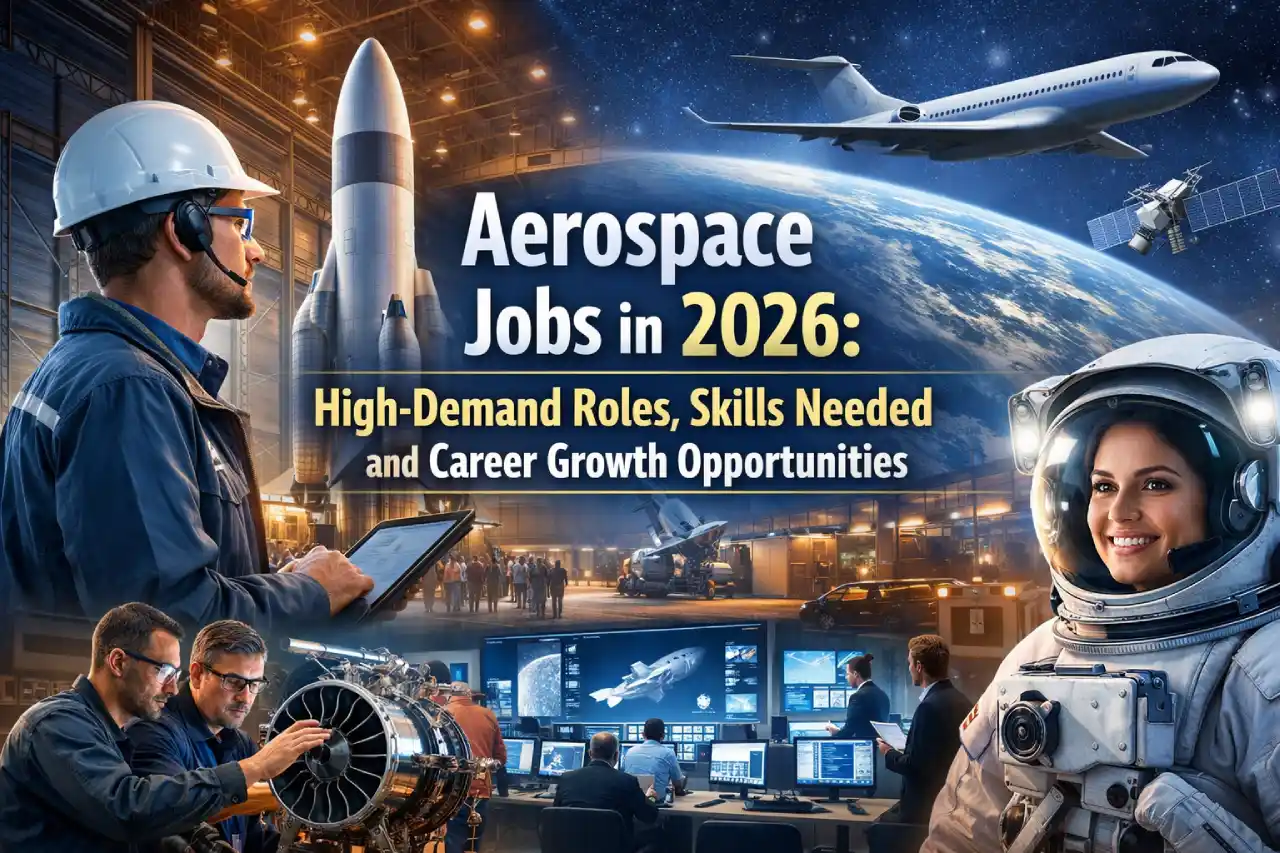
The aerospace sector is expected to be one of the strongest job creators in 2026, driven by rapid advancements in aviation technology, defence systems, and space exploration. With both government organisations and private companies investing heavily, new roles are opening up across engineering, research, manufacturing, and even data-driven domains. From satellite launches to drone operations, the industry is expanding beyond traditional boundaries, creating opportunities for students, engineers, and skilled professionals who are ready to adapt to this evolving field.
I am writing about this topic because many people still think aerospace careers are limited or difficult to access, but that is no longer the case. In 2026, the sector will need a wide range of talent, not just top scientists but also technicians, analysts, and support professionals. Understanding where the jobs will be can help you make better career decisions today. If you are planning your studies or thinking of switching fields, this insight can give you a clear direction.
Why Aerospace Sector Will Grow in 2026
The growth of aerospace jobs is not random—it is backed by strong global and national developments.
- Increase in commercial flights and expansion of airline networks
- Rising defence budgets and focus on indigenous aircraft production
- Growth in private space companies and satellite launches
- High demand for drones in delivery, agriculture, and surveillance
- Government initiatives like “Make in India” boosting manufacturing
India is also becoming a major player in the aerospace ecosystem, with increasing collaboration between public and private sectors.
Top Aerospace Jobs to Watch in 2026
The sector offers diverse roles, and many of them are expected to see high demand.
- Aerospace Engineer
Designs aircraft, spacecraft, and related systems - Aircraft Maintenance Engineer (AME)
Ensures aircraft safety and handles inspection and repairs - Avionics Engineer
Works on navigation, communication, and control systems - Drone Specialist
Includes drone operators, developers, and maintenance experts - Space Research Scientist
Involved in satellite technology and space missions - AI and Data Analyst in Aviation
Uses data for predictive maintenance, safety, and efficiency
Skills That Will Be in Demand
To succeed in aerospace careers in 2026, you need to focus on both technical and practical skills.
- Strong base in physics, mathematics, and engineering concepts
- Knowledge of aerospace software tools and simulation systems
- Understanding of AI, automation, and data analytics
- Problem-solving and critical thinking ability
- Attention to safety and precision
- Good communication and teamwork
Building these skills early can give you an advantage in competitive hiring processes.
Educational Pathways for Aerospace Careers
There are multiple ways to enter the aerospace sector depending on your interest.
- B.Tech or BE in Aerospace, Mechanical, or Electronics Engineering
- Diploma courses in aircraft maintenance engineering
- Certification courses in drone technology and UAV systems
- Postgraduate studies for research and advanced roles
Internships and hands-on training are equally important to gain real-world experience.
Job Opportunities in India
India’s aerospace sector is growing fast, offering promising career options.
- ISRO continues to expand missions in space exploration
- HAL provides opportunities in aircraft manufacturing and design
- Private startups are entering drone and satellite markets
- Airlines and MRO companies are hiring trained professionals
With more airports and improved aviation infrastructure, job demand will increase steadily.
Global Career Scope
Aerospace is a global industry, and skilled professionals can find opportunities worldwide.
- Aircraft manufacturers hiring engineers and technicians
- Space agencies and private companies expanding globally
- Research institutions focusing on advanced aerospace technologies
- Opportunities to work on international projects
Having strong qualifications and certifications can help you access global roles.
Salary Expectations in 2026
Salaries in the aerospace sector are generally competitive.
- Fresh graduates can expect good starting packages
- Mid-level professionals earn significantly higher salaries
- Specialised roles in AI, avionics, and research offer premium pay
- International jobs come with additional benefits and exposure
Overall, aerospace remains one of the higher-paying career fields.
Challenges You Should Know
While the sector offers growth, it also comes with challenges.
- Competitive exams and rigorous selection processes
- Need for specialised education and continuous learning
- High responsibility and accuracy in work
- Rapid technological changes requiring constant upskilling
Being prepared for these challenges is key to long-term success.