JOIN WHATSAPP
STORIES

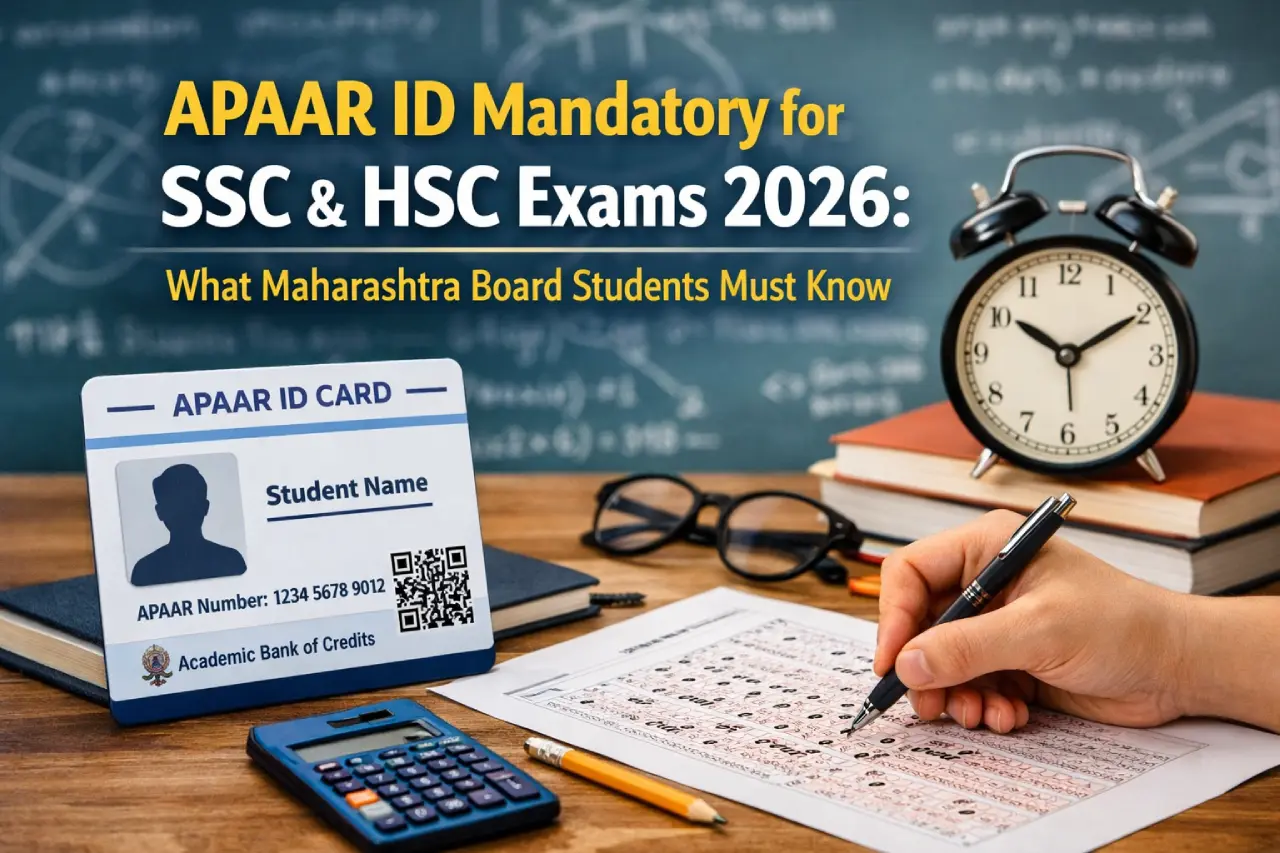
APAAR ID Mandatory for SSC & HSC Exams 2026: What Maharashtra Board Students Must Know

APAAR ID Mandatory for SSC & HSC Exams 2026: What Maharashtra Board Students Must Know

examinations scheduled for February–March next year will now need to possess an APAAR ID. The directive has been issued by the Maharashtra State Board of Secondary and Higher Secondary Education, which has cautioned that students who do not have this identification may encounter issues during exam registration and verification. The move is aimed at streamlining student records and ensuring smoother administrative processes during the examination cycle.

I am writing about this update because it directly affects lakhs of students and parents across Maharashtra, and many are still unsure about what an APAAR ID is and why it has suddenly become mandatory. From my interaction with teachers and parents, it is clear that last-minute clarity is missing at the school level. Board exams are already a stressful phase, and any new requirement can create confusion if not explained properly. This move is part of a larger shift towards digital academic records, but for students, the immediate concern is simple: how to get the APAAR ID on time and ensure there are no issues when hall tickets and exam forms are processed.

What Is APAAR ID

APAAR stands for Automated Permanent Academic Account Registry. It is a unique digital ID created to store and track a student’s academic records in a secure and standardised format.

The APAAR ID is linked to a student’s educational journey and is aligned with the broader national push for digital education records under the National Education Policy.

Who Needs an APAAR ID

As per the latest announcement:

  • All SSC (Std X) students appearing in February–March next year
  • All HSC (Std XII) students appearing in the same exam cycle

Both regular and private candidates under the Maharashtra State Board will be required to have an APAAR ID.

Why the Maharashtra Board Made APAAR ID Mandatory

The Board has taken this step to improve accuracy, transparency, and efficiency in exam-related processes. With a single digital ID, student records can be verified easily, reducing errors related to names, subjects, and previous academic details.

Officials believe this will also help in faster result processing and smoother coordination with national education databases.

How Students Can Get Their APAAR ID

In most cases, schools will guide students through the APAAR ID creation process. The ID is usually generated using basic student details and linked educational records.

Students and parents are advised to:

  • Contact their school authorities immediately
  • Verify that personal details are entered correctly
  • Complete the process well before exam form deadlines

Delaying this step could lead to avoidable last-minute issues.

Concerns Raised by Parents and Teachers

Some parents have raised concerns about awareness and access, especially in rural areas. Teachers have also pointed out that students need clear instructions to avoid data mismatches.

Education officials have assured that schools will be supported to ensure smooth implementation and that no genuine student will be left out due to technical delays.

What Happens If a Student Does Not Have an APAAR ID

While the Board has not detailed penalties, it has clearly stated that the APAAR ID is mandatory. This means students without it may face problems during exam form submission, hall ticket generation, or result processing.

Early action is strongly recommended.

Leave a Comment

End of Article

Income Tax Department Mumbai Invites Young Law and Commerce Graduates for Litigation Support Roles

Income Tax Department Mumbai Invites Young Law and Commerce Graduates for Litigation Support Roles

The Income Tax Department, Mumbai, has opened applications for young professionals to join its Young Professional Scheme and assist with litigation-related work. The engagement will be managed through the Office of the Principal Chief Commissioner of Income Tax at Aayakar Bhawan, Maharshi Karve Road, Mumbai.

The initiative is aimed at building a skilled pool of Law and Accountancy graduates who can support departmental officers in handling cases admitted before various Tribunals. Selected candidates will also be involved in legal analysis, financial research, and case preparation, offering them valuable exposure to real-world taxation and litigation processes.

I am writing about this opportunity because it opens a valuable door for young graduates who want real-world exposure in tax litigation and government legal processes. Many law and commerce graduates look for meaningful roles where they can apply their academic knowledge while gaining hands-on experience. This engagement not only strengthens professional skills but also offers insight into how major tax cases are researched, structured, and argued within the government system.

About the Young Professional Scheme

The Young Professional Scheme is designed to engage bright and motivated graduates who have strong domain knowledge in Law or Accountancy. These young professionals will work closely with officers of the Income Tax Department and contribute to litigation preparation and research.

The scheme focuses on knowledge-based support rather than routine clerical work, making it a learning-rich opportunity.

Nature of Work and Responsibilities

Selected Young Professionals will assist departmental officers in multiple areas related to litigation and research. Their responsibilities are expected to include:

  • Assisting in preparation of cases admitted for hearing in Tribunals
  • Conducting legal and financial research
  • Studying case laws, judgments, and statutory provisions
  • Supporting officers in drafting and documentation work

This role offers direct exposure to high-level tax litigation matters.

Who Can Apply

The opportunity is primarily meant for:

  • Young graduates in Law
  • Young graduates in Accountancy or related commerce fields

Applicants are expected to have sound subject knowledge, good analytical skills, and the ability to understand complex legal and financial matters. Prior exposure to taxation or legal research may be an added advantage.

Why This Opportunity Matters

For young professionals, working with the Income Tax Department offers a unique chance to understand government litigation from the inside. It helps build strong fundamentals in tax law, case analysis, and legal research, which are valuable for long-term careers in law, accounting, policy, or corporate taxation.

The experience can significantly strengthen a candidate’s professional profile.

Location and Work Environment

The engagement will be based at the Office of the Principal Chief Commissioner of Income Tax in Mumbai. Young Professionals will work in a structured government setup and interact with experienced officers handling important litigation matters.

This environment provides both discipline and learning exposure.

Leave a Comment

End of Article

Loading more posts...