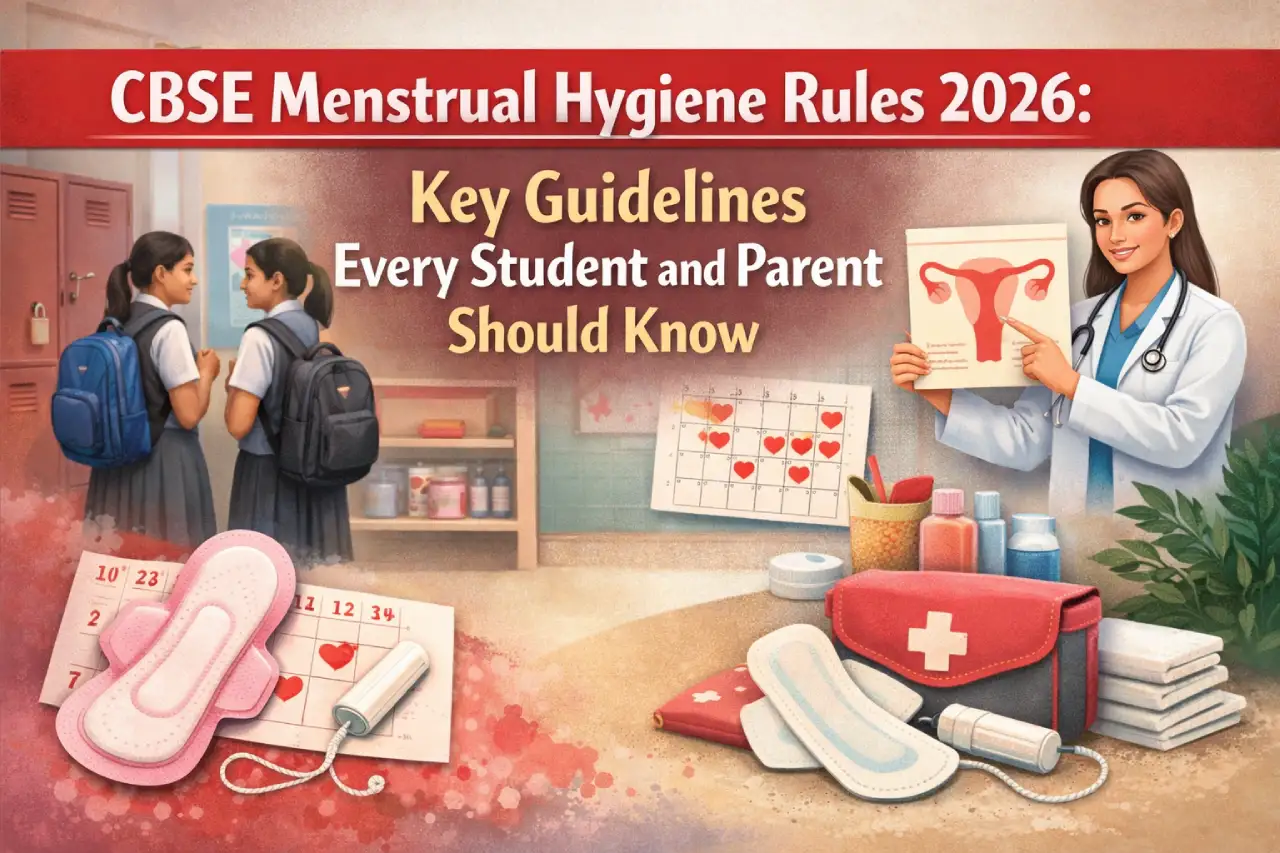
The Central Board of Secondary Education (CBSE) has introduced new menstrual hygiene management (MHM) guidelines for all affiliated schools, marking a major step towards improving student welfare. These rules focus on better sanitation facilities, access to hygiene products, and awareness programmes for students. The move comes after a recent Supreme Court judgment that recognised menstrual health as a fundamental part of a student’s dignity and right to education.
I’m writing about this because this is not just a policy update—it directly impacts lakhs of students across India. For years, menstrual health has been a sensitive topic, often ignored in schools. These new guidelines aim to change that by creating a safe and supportive environment. Parents, teachers, and students should understand these changes clearly, as they can help improve attendance, confidence, and overall well-being of girls in schools.
Why These New Rules Were Introduced
The changes are based on a Supreme Court ruling.
- Menstrual health linked to Article 21 (Right to Life and Dignity)
- Lack of facilities leads to absenteeism among girls
- Social stigma affects education and confidence
The court emphasised that schools must provide a safe and supportive environment.
Key Guidelines Issued by CBSE
CBSE has made several measures mandatory for schools.
- Clean and private toilets for girls
- Proper washing facilities within school premises
- Availability of sanitary napkins
- Installation of safe disposal systems
These steps are aimed at ensuring basic hygiene and comfort.
Focus on Infrastructure Improvements
Schools are required to upgrade their facilities.
- Separate and hygienic toilets for girls
- Regular maintenance and cleanliness
- Availability of water and washing areas
- Dedicated spaces for menstrual hygiene needs
Infrastructure is the foundation of this entire initiative.
Introduction of MHM Corners
A new concept introduced is the MHM corner.
- Special areas for menstrual hygiene support
- Easy access to sanitary products
- Information and awareness materials available
This helps students manage their needs without hesitation.
Awareness and Sensitisation Programmes
CBSE has also focused on education, not just facilities.
- Sessions on menstruation and puberty
- Open discussions to remove stigma
- Guidelines aligned with NCERT and SCERT
The aim is to normalise conversations around menstrual health.
Monitoring and Reporting System
To ensure proper implementation, CBSE has introduced strict monitoring.
- Schools must submit monthly reports
- District Education Officers will conduct inspections
- Deadlines set for March 31 and April 30, 2026
This ensures accountability at every level.
Environmental Focus in the Guidelines
The rules also consider sustainability.
- Use of biodegradable sanitary napkins encouraged
- Proper disposal systems made compulsory
- Focus on hygiene and environmental safety
This balances health and environmental concerns.
Key Highlights at a Glance
| Aspect | Details |
|---|---|
| Policy | CBSE Menstrual Hygiene Guidelines |
| Basis | Supreme Court ruling (Article 21) |
| Focus | Hygiene, awareness, infrastructure |
| Facilities | Toilets, napkins, disposal systems |
| Monitoring | Monthly reports and inspections |
| Goal | Inclusive and supportive school environment |