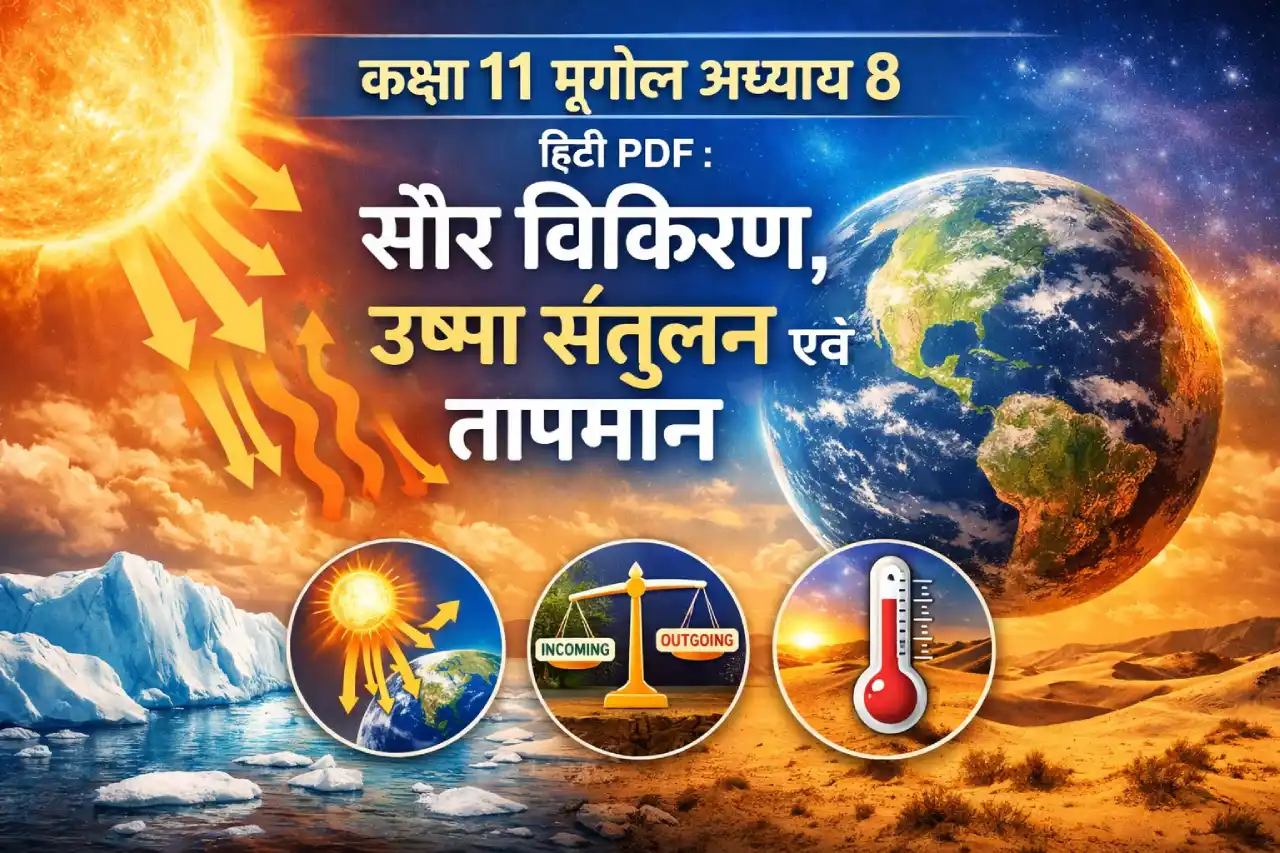
NCERT Class 11 Geography Chapter 8, सौर विकिरण, उष्मा संतुलन एवं तापमान, focuses on how the Earth receives heat from the Sun, how this heat is balanced, and how temperature is distributed across the planet. This chapter explains basic yet crucial concepts like solar radiation, insulation, terrestrial radiation, and factors affecting temperature. It helps students understand why some places are hot, others are cold, and how day–night and seasonal changes happen.
I am writing about this chapter because many students find topics like heat balance and temperature confusing at first glance. Terms such as radiation, absorption, reflection, and heat loss can feel technical if not explained properly. This chapter makes these ideas logical and relatable by connecting them to daily experiences like warm afternoons, cool nights, and changing seasons. For Class 11 students, this chapter is extremely important because it forms the backbone of climatology. It is also regularly asked in school exams and competitive exams like CUET, where conceptual clarity matters more than rote learning.
What This Chapter Is About
Chapter 8 mainly deals with three interconnected themes:
- Solar radiation and how energy reaches the Earth
- Heat balance between incoming and outgoing energy
- Temperature patterns and controlling factors
Together, these topics explain the basic working of Earth’s climate system.
Understanding Solar Radiation
Solar radiation is the energy received from the Sun in the form of short waves. The chapter explains:
- How solar energy reaches the Earth
- Why not all solar radiation is absorbed
- The role of reflection, scattering, and absorption
Students also learn about insolation, which means incoming solar radiation, a term often asked directly in exams.
Heat Balance of the Earth
One of the most important concepts in this chapter is heat balance. The Earth maintains a balance between:
- Incoming solar radiation
- Outgoing terrestrial radiation
If this balance did not exist, the Earth would either become extremely hot or too cold for life. The chapter explains this process in a simple step-by-step manner, making it easier to understand long-term climate stability.
Temperature and Its Controlling Factors
Temperature does not remain the same everywhere. This chapter explains why.
Key factors affecting temperature include:
- Latitude
- Altitude
- Distance from the sea
- Ocean currents
- Prevailing winds
- Nature of surface
These points are very important for long-answer questions and map-based understanding.
Why Chapter 8 Is Important for Exams
This chapter is a foundation chapter for later topics like pressure belts, winds, monsoon, and climate types.
From an exam point of view, questions are commonly asked on:
- Meaning of insolation
- Heat balance of the Earth
- Factors controlling temperature
Understanding concepts here reduces pressure while studying later Geography chapters.
How to Download NCERT Class 11 Geography Chapter 8 PDF (Hindi)
Students can download the official Hindi PDF by following these steps:
- Visit the official NCERT website
- Go to the Textbooks / E-Books section
- Select Class 11
- Choose Geography
- Open Fundamentals of Physical Geography (Hindi)
- Click on Chapter 8: सौर विकिरण, उष्मा संतुलन एवं तापमान
- Download the PDF for free
Always use the official source to ensure accurate content and clear diagrams.