JOIN WHATSAPP
STORIES

Delhi Government Awards ₹25 Crore Scholarships to Meritorious Students on National Youth Day

Delhi Government Awards ₹25 Crore Scholarships to Meritorious Students on National Youth Day

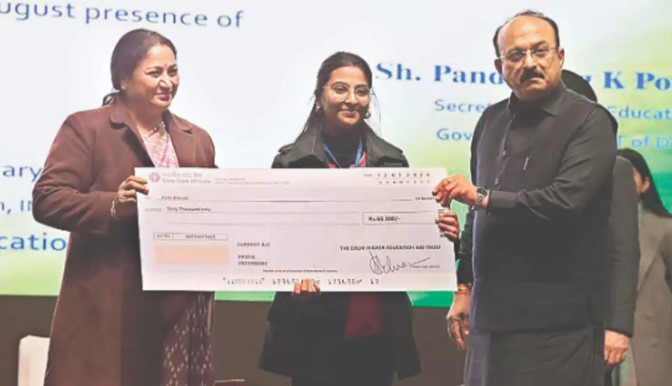
In a major boost for higher and technical education, the Delhi government on Monday distributed scholarships worth ₹25.25 crore to 1,709 meritorious students from economically weaker sections. The scholarship distribution coincided with the birth anniversary of Swami Vivekananda, which is observed as National Youth Day across the country. The initiative aims to support talented students who face financial challenges but have shown strong academic performance.

I am writing about this development because access to higher education remains a major concern for many families in urban India. Even capable students often struggle to continue their studies due to rising costs. When governments step in with targeted financial support, it not only helps individual students but also strengthens the broader education system. This announcement from Delhi highlights how public policy can directly impact young lives in a meaningful way.

Scholarship Distribution Event in Delhi

The scholarships were distributed by Rekha Gupta at a special programme organised to mark National Youth Day. The timing of the event was symbolic, linking financial support for students with the ideals of youth empowerment and self-reliance championed by Swami Vivekananda.

According to officials, the selected students come from economically weaker sections and have demonstrated merit in their respective courses, including higher education and technical programmes.

About the Delhi Higher and Technical Education Assistance Scheme

The scholarships were awarded under the Delhi Higher and Technical Education Assistance Scheme, which focuses on helping deserving students continue their education without financial stress. The scheme covers students enrolled in recognised higher education and technical institutions.

Key objectives of the scheme include:

  • Supporting meritorious students from low-income families
  • Reducing dropouts in higher and technical education
  • Encouraging students to pursue professional and skill-based courses

Who Benefited from the Scholarships

A total of 1,709 students received financial assistance under the scheme. These students are pursuing various undergraduate, postgraduate, and technical courses across institutions in Delhi.

The scholarship amount is intended to help with:

  • Tuition and academic expenses
  • Study materials and learning resources
  • Other education-related costs

For many students, this support can make the difference between continuing studies and dropping out.

Linking Education with Youth Empowerment

Speaking on the occasion, the Chief Minister highlighted the importance of investing in education to build a stronger future. Observing National Youth Day alongside the scholarship distribution reinforced the message that young people are central to the nation’s progress.

From my point of view, connecting welfare initiatives with such occasions gives them deeper meaning and helps students feel recognised and valued.

Why This Initiative Matters

Education costs continue to rise, especially in technical and professional fields. Without support, many capable students are forced to compromise on their ambitions. Schemes like this ensure that financial limitations do not block academic potential.

They also send a clear signal that merit and hard work are being recognised, regardless of economic background.

What This Means for Students and Families

For students, the scholarship brings relief and motivation. For families, it reduces financial pressure and builds confidence in public education support systems. Over time, such initiatives can help create a more inclusive and skilled workforce.

Leave a Comment

End of Article

Maharashtra Launches Genome Sequencing Drive to Tackle Drug-Resistant Infections

Maharashtra Launches Genome Sequencing Drive to Tackle Drug-Resistant Infections

Maharashtra has taken a major step in the fight against antimicrobial resistance with the start of genome sequencing of drug-resistant bacteria across key hospitals in the state. The initiative focuses on carbapenem-resistant bacteria, among the most dangerous pathogens due to their limited treatment options. The project is part of a larger international study and is being rolled out at select medical institutions in Pune and Mumbai, marking a significant advancement in India’s public health research efforts.

I am writing about this development because antimicrobial resistance is a silent but growing threat that affects everyday healthcare, from routine surgeries to critical care. Many people hear the term but do not fully understand how serious the problem is. Genome sequencing of resistant bacteria can help doctors, researchers, and policymakers stay ahead of evolving infections and make better decisions to protect patients in the long run.

What the Genome Sequencing Project Is About

The study involves whole-genome sequencing of carbapenem-resistant bacteria to understand how these organisms evolve, spread, and resist existing antibiotics. This advanced technique allows scientists to map the complete genetic structure of bacteria and identify mutations responsible for resistance.

The project is being led by Johns Hopkins University under its Global Action in Healthcare Network–Antimicrobial Resistance in India initiative, commonly referred to as GAIHN-AMR.

International Collaboration and Funding

This is a multi-country research project funded by the Centers for Disease Control and Prevention, USA. India is among seven countries participating in the study, highlighting the global scale of the antimicrobial resistance problem.

By sharing data across countries, researchers aim to identify global patterns, compare resistance trends, and develop coordinated strategies to combat the spread of superbugs.

Hospitals Involved in Maharashtra

In India, the project is being implemented at three major hospitals in Maharashtra:

  • BJ Medical College and Sassoon General Hospital, Pune
  • Dr DY Patil Medical College Hospital and Research Centre, Pune
  • P D Hinduja Hospital and Medical Research Centre, Mumbai

These hospitals handle large patient volumes, making them ideal centres for studying resistant infections in real-world clinical settings.

Why Carbapenem-Resistant Bacteria Are a Big Concern

Carbapenems are considered last-resort antibiotics. When bacteria become resistant to them, treatment options become extremely limited. Infections caused by such bacteria often lead to longer hospital stays, higher medical costs, and increased risk of death.

Understanding the genetic makeup of these bacteria helps researchers trace infection sources and design more targeted treatment and prevention strategies.

How This Will Help India’s Healthcare System

Genome sequencing data can support hospitals and health authorities in multiple ways:

  • Early detection of emerging resistant strains
  • Better infection control practices in hospitals
  • Improved antibiotic usage policies
  • Evidence-based public health interventions

From my point of view, this shift towards data-driven healthcare is essential if India wants to stay prepared for future health challenges.

A Step Towards Smarter Antibiotic Use

One of the long-term goals of the project is to promote responsible antibiotic use. By clearly identifying resistance patterns, doctors can avoid unnecessary or ineffective antibiotics and choose treatments that are more likely to work.

This approach also supports national and global efforts to slow down the spread of antimicrobial resistance.

Leave a Comment

End of Article

Loading more posts...