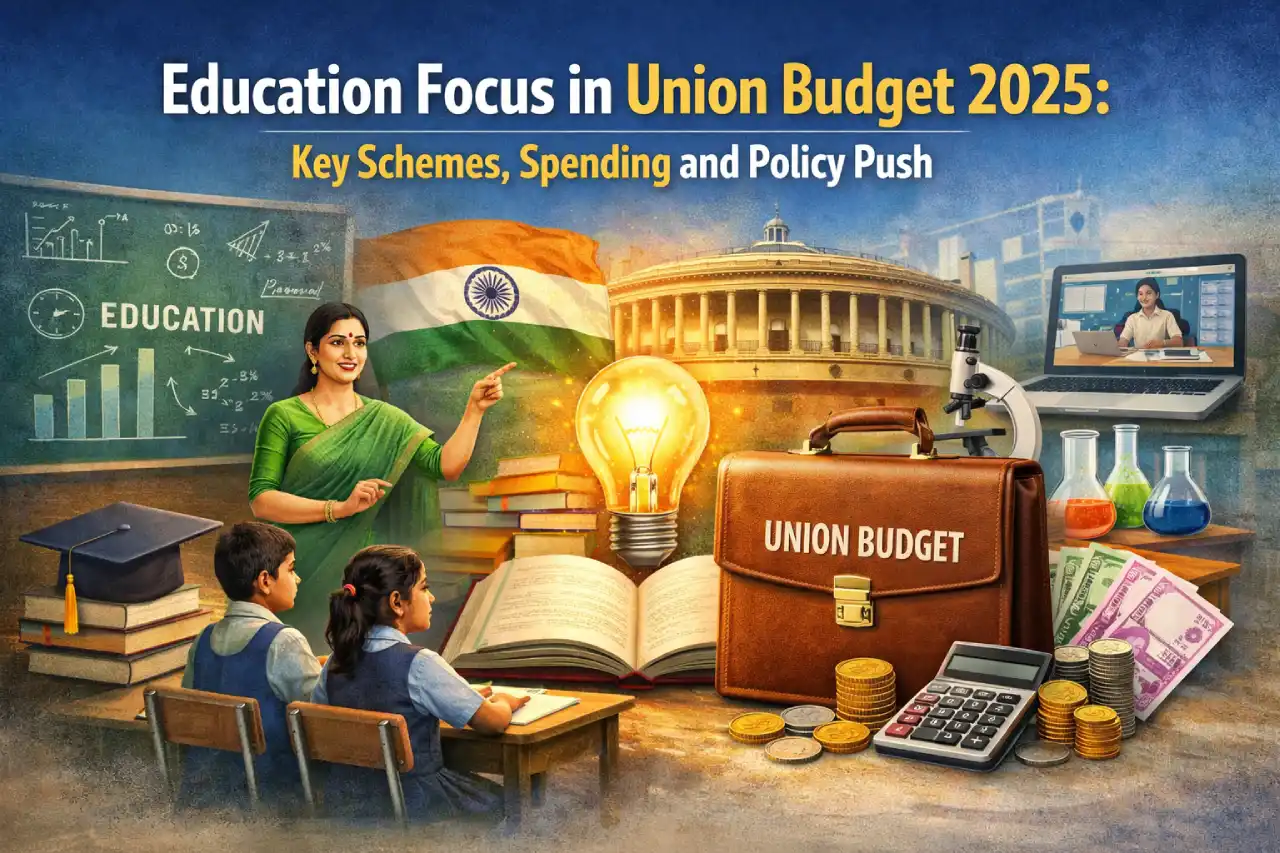
As 2025 comes to a close, it is worth looking back at what the Union Budget delivered for the education sector this year. Presented at a time when learning gaps, digital access, and employability were major concerns, the budget placed steady focus on strengthening schools, higher education, and skill development. While there were no dramatic overhauls, the government continued to build on existing reforms with targeted funding and policy support aimed at long-term outcomes.
I am writing about this year-ender because budget announcements often sound impressive on the day they are presented, but their real impact becomes clearer only over time. For students, parents, teachers, and institutions, understanding what the Union Budget actually promised for education in 2025 helps in judging priorities, tracking implementation, and knowing where public money is being directed in the learning ecosystem.
Overall Allocation for Education in Union Budget 2025
In the Union Budget 2025, education continued to remain one of the key social sector priorities. The government maintained a strong allocation for school education, higher education, and skill development, signalling its intent to align learning with employment and national growth goals.
While the overall increase was moderate, the focus remained on consolidation rather than launching too many new schemes, with emphasis on better delivery of existing programmes.
Focus on School Education
School education received attention through continued support for foundational learning and digital access. Key areas highlighted included:
- Strengthening early childhood education and foundational literacy
- Improving teacher training and classroom practices
- Support for digital classrooms and online learning platforms
- Assistance for disadvantaged students through scholarships and incentives
The government reiterated its commitment to improving learning outcomes rather than just enrolment numbers.
Push for Higher Education and Research
Higher education remained an important pillar in the budget. Funding was directed towards improving quality, research capacity, and global competitiveness of Indian institutions. Some important focus areas included:
- Support for research and innovation in universities
- Expansion of digital and blended learning models
- Encouragement for industry-academia collaboration
- Continued implementation of education reforms under NEP
The budget aimed to gradually move Indian higher education towards a more research-driven ecosystem.
Skill Development and Employability
A major theme of the 2025 budget was linking education with skills and jobs. The government stressed the need to prepare young Indians for a changing job market. Key steps included:
- Strengthening vocational and skill-based education
- Focus on emerging areas such as AI, technology, and green skills
- Support for training programmes aligned with industry needs
This approach reflects the growing recognition that degrees alone are not enough without practical skills.
Digital Education and Technology Use
Digital education remained a recurring theme in the budget. Lessons from the pandemic years continued to shape policy decisions. The budget supported:
- Expansion of online learning platforms
- Digital resources for teachers and students
- Use of technology to reach remote and underserved areas
The aim was to reduce the digital divide while improving access to quality learning content.
What This Budget Meant in Practice
While some expected a sharper increase in education spending, the 2025 budget took a more measured route. Instead of announcing many new schemes, the focus was on improving implementation, monitoring outcomes, and aligning education with long-term national goals.
Experts noted that real impact would depend on how effectively funds are used at the state and institutional levels.