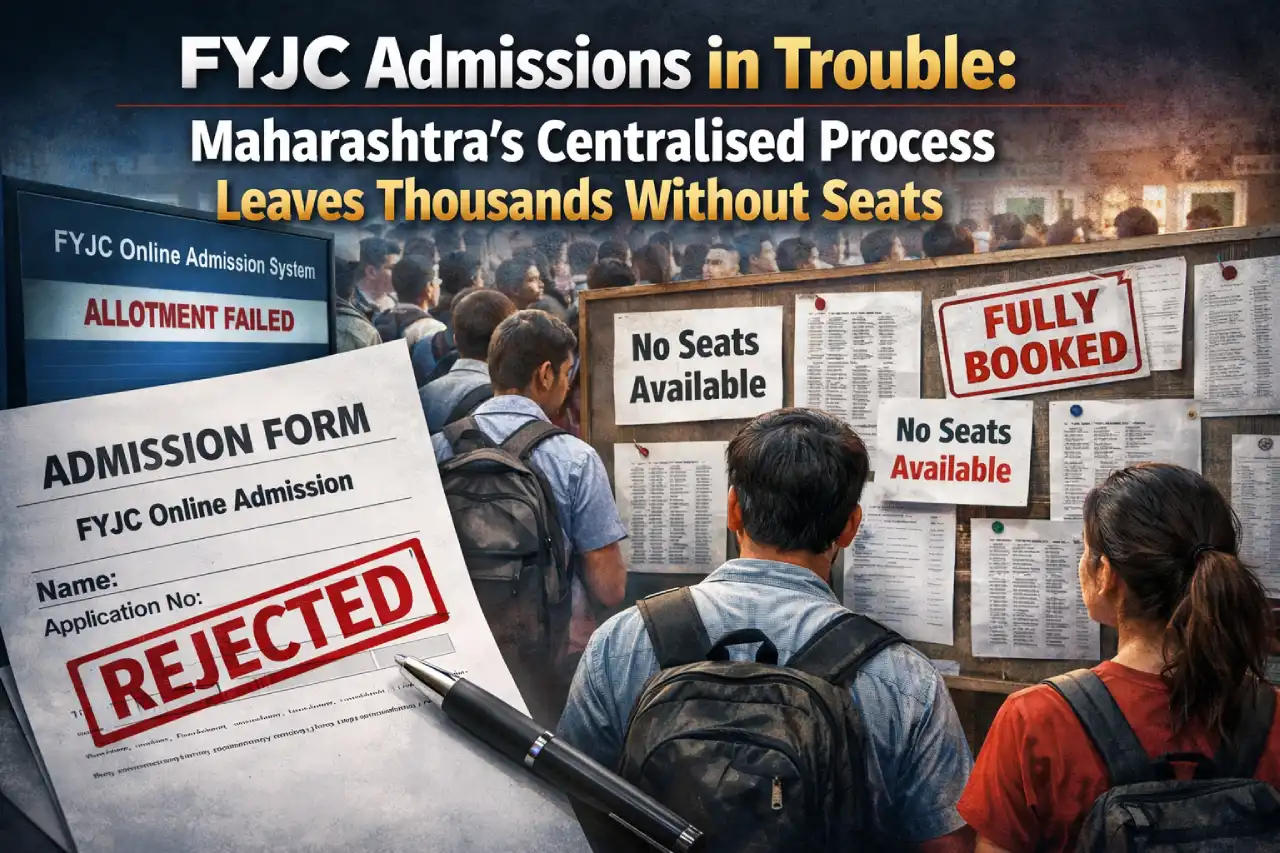
Maharashtra’s ambitious attempt to streamline First Year Junior College admissions through a centralised process has run into serious trouble. The FYJC Centralised Admission Process, which began in October 2025, aimed to fill 2,175,598 seats across 9,551 junior colleges in the state. However, despite four main CAP rounds and more than nine special rounds, around 827,787 seats remain unfilled as of mid-December. A final special round is currently underway, but a large number of students, especially from rural areas, are still waiting for admission.
I am writing about this issue because FYJC admissions are a crucial step for students transitioning from school to higher secondary education. Delays and confusion at this stage can disrupt not just one academic year, but future plans as well. What was meant to bring transparency and efficiency has instead created anxiety for students and parents. Understanding what went wrong is important, especially as the academic calendar is already under pressure and time is running out.
What the FYJC CAP Was Meant to Achieve
The FYJC CAP was introduced to make admissions more transparent, fair, and centralised across Maharashtra. By bringing all junior colleges under one online system, the aim was to reduce manual errors, eliminate bias, and give students equal access to seats across regions.
In theory, the system promised smoother admissions and better seat utilisation.
Where the Process Fell Short
Despite multiple rounds, a huge number of seats remain vacant. Many students did not get allotted colleges close to their homes, while others found the system confusing or inaccessible. Rural students, in particular, faced challenges related to internet access, documentation, and understanding the online process.
Repeated rounds did little to bridge the gap between available seats and actual admissions.
Impact on Students and Colleges
The biggest concern now is the academic year itself. With admissions still incomplete in mid-December, colleges are struggling to begin classes properly. Students without admissions are losing valuable study time, and teachers are unsure how to plan lessons with incomplete class strength.
For students, especially those from economically weaker backgrounds, the uncertainty is deeply stressful.
Why Rural Students Are Most Affected
Students from rural and semi-urban areas depend heavily on local guidance and nearby colleges. When the system pushes options that are far away or difficult to access, many simply drop out of the process. Limited counselling support and digital barriers have widened this gap.
This has led to a situation where seats are vacant, yet students remain without admissions.
What the Government Can Do Next
Education experts suggest that the Maharashtra government may need to rethink parts of the centralised model. More offline support, district-level counselling centres, and flexible admission windows could help prevent such situations in the future.
Immediate corrective steps are also needed to ensure students do not lose an entire academic year.