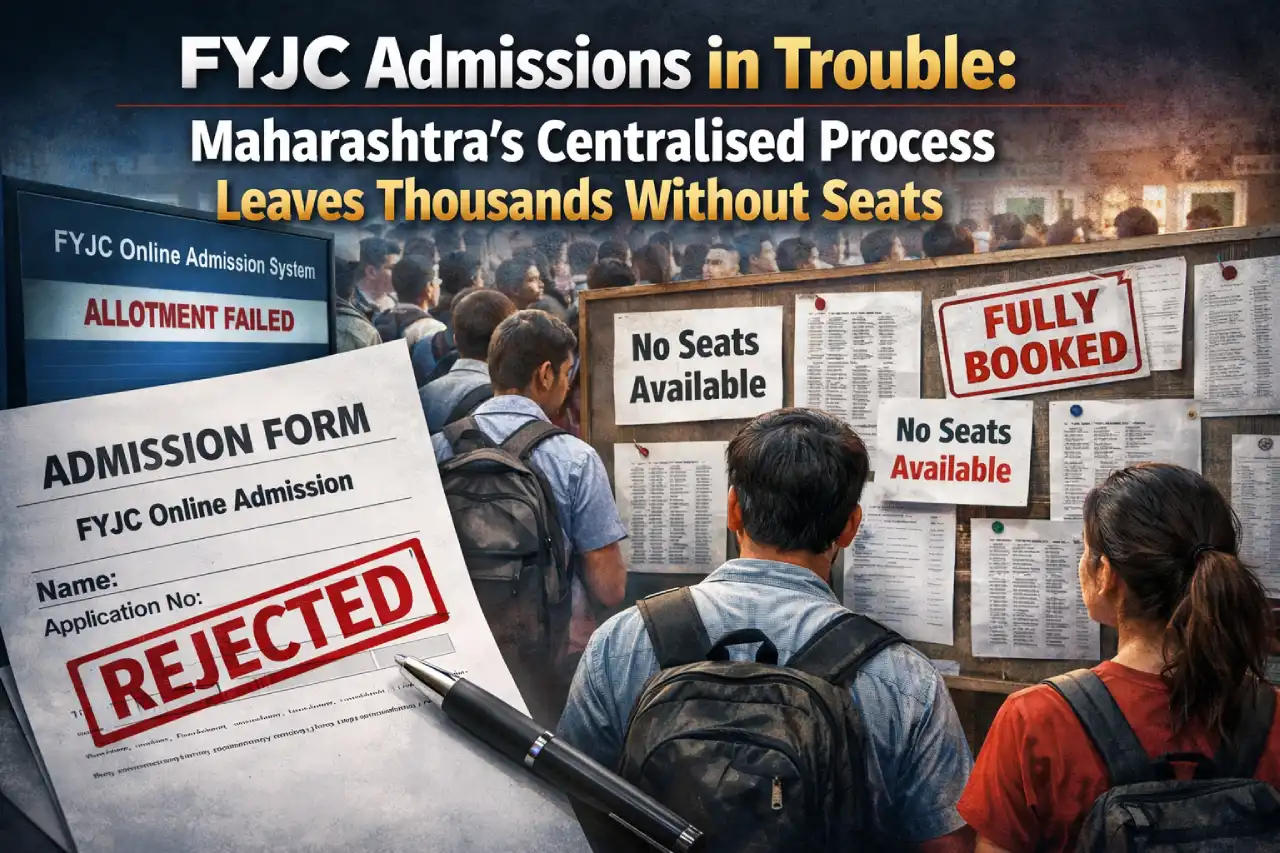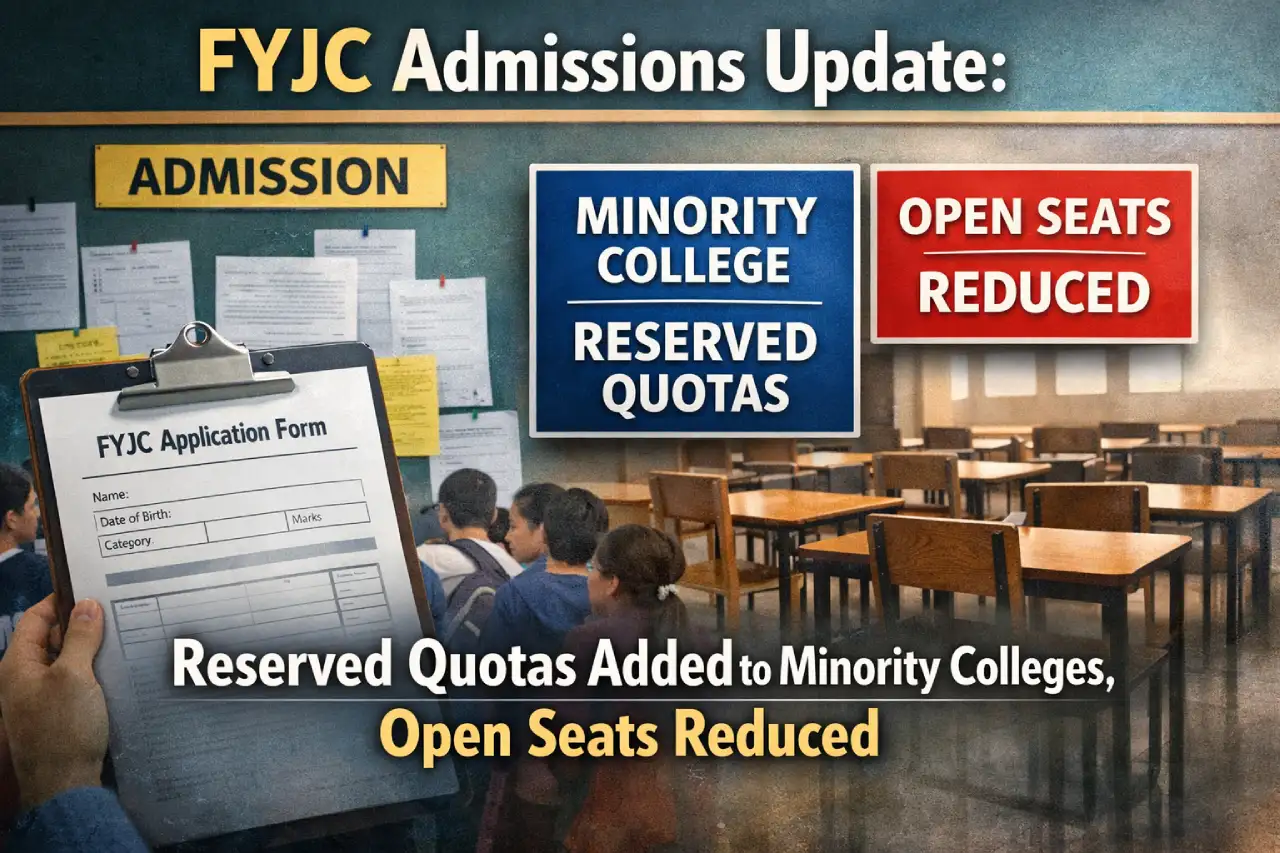
The First Year Junior College admission process in Maharashtra has seen a major change, with SC, ST and OBC quotas now being reflected in minority colleges on the FYJC admission portal. As a result of this update, the number of open-category seats in these colleges has dropped sharply and is now estimated to be between 12 and 14 per cent.
This change has come to light after students and parents noticed revised seat matrices on the official FYJC portal. Minority colleges, which earlier had a larger share of open seats after reserving a fixed percentage for minority students, now show additional caste-based reservations. This has significantly altered the admission dynamics for students applying under the open category, especially in high-demand junior colleges across Mumbai and nearby regions.
What Has Changed on the FYJC Portal
The key change is the inclusion of SC, ST and OBC reservations within the seat structure of minority colleges on the FYJC portal.
Earlier, minority colleges generally followed this pattern:
- A fixed percentage of seats reserved for minority students
- Remaining seats largely available as open-category seats
Now, the updated structure includes:
- Minority quota seats
- SC, ST and OBC reserved seats
- A much smaller pool of open-category seats
This restructuring has reduced open seats to roughly 12–14 per cent in many minority colleges.
Impact on Open Category Students
For students applying under the open category, this change has had an immediate impact. With fewer open seats available, competition has become more intense, especially in reputed junior colleges.
Some of the key effects include:
- Higher cut-offs expected for open-category admissions
- Reduced chances of securing seats in minority institutions
- Greater pressure to select alternative colleges during preference filling
- Increased importance of backup options in later rounds
Students with strong academic scores may still secure seats, but the margin for error has become much smaller.
Why This Update Matters
The inclusion of caste-based quotas in minority colleges raises important questions about seat distribution and transparency in the admission process. While reservations aim to ensure social equity, sudden changes without widespread communication can leave students confused.
This update matters because:
- FYJC admissions involve lakhs of students across Maharashtra
- College choices are often finalised based on available seat data
- Any last-minute change affects planning and expectations
- Clear communication is essential for a fair admission process
Many parents and educators believe that clarity from authorities will help reduce stress among students.
What Students Should Do Now
With open seats becoming limited, students need to be more strategic while filling their preferences.
Here are a few practical steps students can take:
- Carefully check updated seat matrices on the FYJC portal
- Do not rely on last year’s cut-offs alone
- Include a mix of high, medium and safe college options
- Be prepared for multiple admission rounds
Staying flexible and informed will be key in navigating this admission cycle.