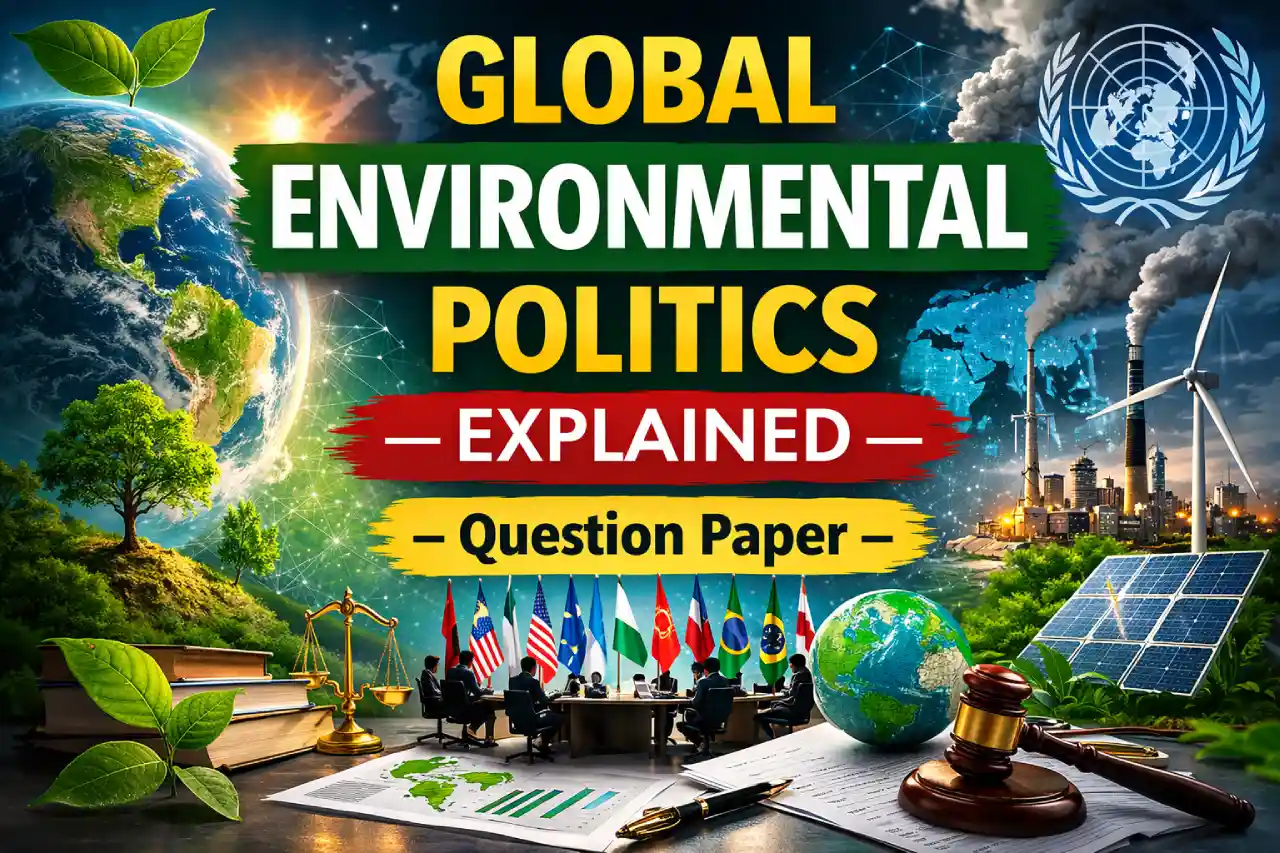
Environmental protection has become one of the most important global concerns in modern politics. Over the past few decades, issues such as climate change, pollution, depletion of natural resources and environmental degradation have forced governments around the world to work together. These problems do not remain confined within national borders; they affect the entire planet. Because of this, environmental issues are now discussed at international forums and global summits where countries attempt to find collective solutions.
I am writing about this topic because environmental issues are no longer just scientific or ecological concerns; they have become central to global politics and international relations. Governments must balance economic development with environmental protection, which often leads to debates between developed and developing countries. Understanding these discussions helps students and readers see how international agreements, environmental movements and global cooperation shape policies that affect the future of the planet.
Why Environmental Issues Matter in Global Politics
Environmental problems have gradually become part of international politics because they affect all countries and populations. Issues such as rising global temperatures, deforestation, water scarcity and pollution are global challenges that require cooperation among nations.
Some major environmental concerns include:
- Climate change and rising global temperatures
- Rapid depletion of natural resources
- Pollution of air, water and soil
- Loss of biodiversity and forests
- Shortage of clean drinking water
Since these problems cross national boundaries, they require coordinated international action.
Major Global Environmental Conferences
International conferences have played a crucial role in raising awareness about environmental protection and promoting global cooperation.
One of the most important global meetings on the environment took place in Rio de Janeiro in 1992. This summit brought together leaders from many countries to discuss environmental protection and sustainable development. The meeting produced important guidelines and action plans aimed at protecting the planet while supporting economic development.
These conferences helped establish the idea that environmental protection should be a shared responsibility among all nations.
The Concept of Sustainable Development
A key concept that emerged from global environmental discussions is sustainable development. This idea focuses on meeting present needs without compromising the ability of future generations to meet their own needs.
Sustainable development aims to balance three important goals:
- Economic growth
- Social development
- Environmental protection
Governments and international organisations now use this concept to guide development policies and environmental strategies.
Understanding Global Commons
Certain natural resources belong to everyone and cannot be owned by any single country. These shared resources are often referred to as global commons.
Examples of global commons include:
- The Earth’s atmosphere
- Antarctica
- The ocean floor
- Outer space
Since no single country owns these areas, international agreements are needed to regulate their use and ensure that they are protected for future generations.
Download this B-1 Environment and Natural Resources WS 1 PDF File: Click Here
Environmental Movements Around the World
Environmental movements have played a significant role in bringing attention to ecological issues. Many activists and communities have raised awareness about deforestation, pollution and large development projects that threaten natural ecosystems.
These movements often focus on protecting forests, wildlife and natural resources while supporting the rights of local communities that depend on these resources for their livelihoods.
Such movements have influenced government policies and encouraged stronger environmental regulations.
Indigenous Communities and Environmental Protection
Indigenous communities are among the most affected by environmental degradation. These groups have traditionally lived close to nature and depend on forests, land and water for survival.
In many parts of the world, indigenous people have organised themselves to protect their rights and preserve their traditional ways of life. Their knowledge of sustainable living and natural resource management has become increasingly valuable in discussions about environmental protection.
International organisations and environmental groups now recognise the importance of involving indigenous communities in environmental decision-making.
Global Agreements on Climate Change
To address climate change and environmental degradation, countries have signed several international agreements. These agreements aim to reduce greenhouse gas emissions, promote clean energy and protect the global environment.
Some key objectives of international environmental agreements include:
- Reducing harmful emissions that contribute to global warming
- Promoting renewable energy sources
- Protecting ecosystems and biodiversity
- Encouraging cooperation among nations
These agreements highlight the need for collective responsibility in protecting the environment.
Differences Between Developed and Developing Countries
One of the major debates in environmental politics revolves around the responsibilities of developed and developing countries. Developed countries have historically contributed more to environmental degradation because of industrialisation.
Developing countries, on the other hand, argue that they still need economic growth to improve living standards. Therefore, they emphasise the principle that environmental responsibilities should be shared but should also consider different levels of development.
This idea is often described as the principle of “common but differentiated responsibility”.
Environmental Challenges Facing the World
The world continues to face several environmental challenges that threaten ecosystems and human well-being.
Some of the major global environmental problems include:
- Rising global temperatures and climate change
- Depletion of natural resources
- Increasing pollution levels
- Water scarcity in many regions
- Destruction of forests and wildlife habitats
Addressing these problems requires strong cooperation between governments, international organisations and civil society.