JOIN WHATSAPP
STORIES

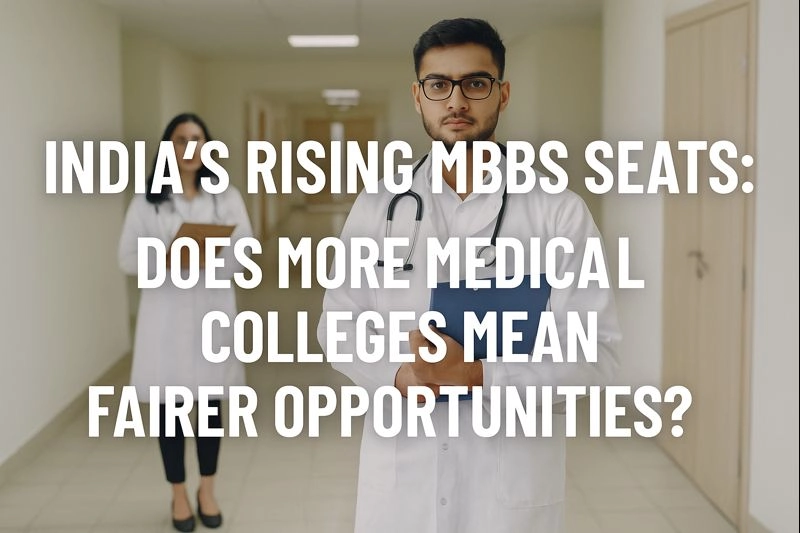
India’s Rising MBBS Seats: Does More Medical Colleges Mean Fairer Opportunities?

India’s Rising MBBS Seats: Does More Medical Colleges Mean Fairer Opportunities?

India’s medical education system is going through one of its biggest expansions ever, with the Union Health Ministry confirming that 118 new medical colleges have been set up in the past two years. This has pushed the total number of MBBS seats in the country to 1,28,875, a significant rise compared to previous years. For many students and parents, this feels like a positive shift, offering hope for reduced competition and better access to medical education.

But the key question remains: Are students across India actually getting an equal opportunity to secure an MBBS seat? I am writing about this issue because every year lakhs of students spend enormous time, effort and money preparing for NEET, yet only a small fraction find a seat. Even with the increase in colleges, the distribution of seats, affordability concerns, rural–urban divide and the difference between private and government institutions continue to shape the real picture. Understanding these layers is important for students and families who are planning their academic path.

India’s Medical Seats: A Growing Number but Uneven Access

The rise to 1,28,875 MBBS seats shows the government’s push to strengthen the healthcare workforce. These new colleges have expanded opportunities, especially in emerging medical hubs and districts that did not have such institutions earlier. However, the availability of seats varies widely across states.

  • Some states have multiple government colleges and lower fees
  • Others rely heavily on private institutions with high tuition costs
  • Northeastern and rural regions still remain underserved

This uneven distribution affects who can realistically access medical education, regardless of their NEET score.

Government vs Private Colleges: A Major Divider

While the number of seats has increased, a large percentage belongs to private colleges. This creates new challenges:

  • Government seats remain affordable but limited
  • Private seats can cost anywhere between ₹50 lakh and ₹1 crore
  • Students from lower and middle-income backgrounds often cannot compete financially
  • Even high scorers sometimes lose out due to fee-related constraints

So, although seat numbers have gone up, affordability is still a major barrier to equal opportunity.

The Competition Factor: Has It Really Reduced?

More colleges do not necessarily mean less competition. Every year, NEET sees close to 20–25 lakh candidates, making it one of India’s toughest entrance exams.

  • The rise in MBBS seats is significant
  • But the number of aspirants rises too
  • The gap between appearing candidates and available seats remains wide

For many students, the increased seats offer hope, but the ratio still leans heavily in favour of competition.

Regional Imbalance: Opportunities Still Unequal

Certain states like Tamil Nadu, Karnataka, Maharashtra and Uttar Pradesh have far more medical colleges compared to others. This leads to:

  • Students migrating to different states for better chances
  • Higher costs of living and relocation
  • Complex state quota rules affecting admission prospects

Students in states with fewer government colleges face a much tougher journey.

Is Increasing MBBS Seats Enough?

Experts believe that simply adding more colleges is not the complete solution. Equal opportunity requires:

  • Better quality of teaching and infrastructure
  • More government seats at affordable fees
  • Transparent counselling processes
  • Fairer state quota distribution
  • Stronger support for rural and tribal students

Only when these issues are addressed will the increase in seats translate into real equality.

What Students Should Keep in Mind

For aspirants preparing for upcoming NEET cycles:

  • Focus remains the biggest equaliser
  • Explore allopathy alternatives like BDS, BAMS, BHMS and BSc Nursing if needed
  • Apply through central, state and deemed university counselling
  • Study previous years’ cut-offs to understand realistic targets
  • Keep financial planning transparent from the start

Being informed helps students make practical choices in a competitive field.
Leave a Comment

End of Article

Maharashtra Mandates ‘Disha’ App in Special Schools to Standardise Special Education

Maharashtra Mandates ‘Disha’ App in Special Schools to Standardise Special Education

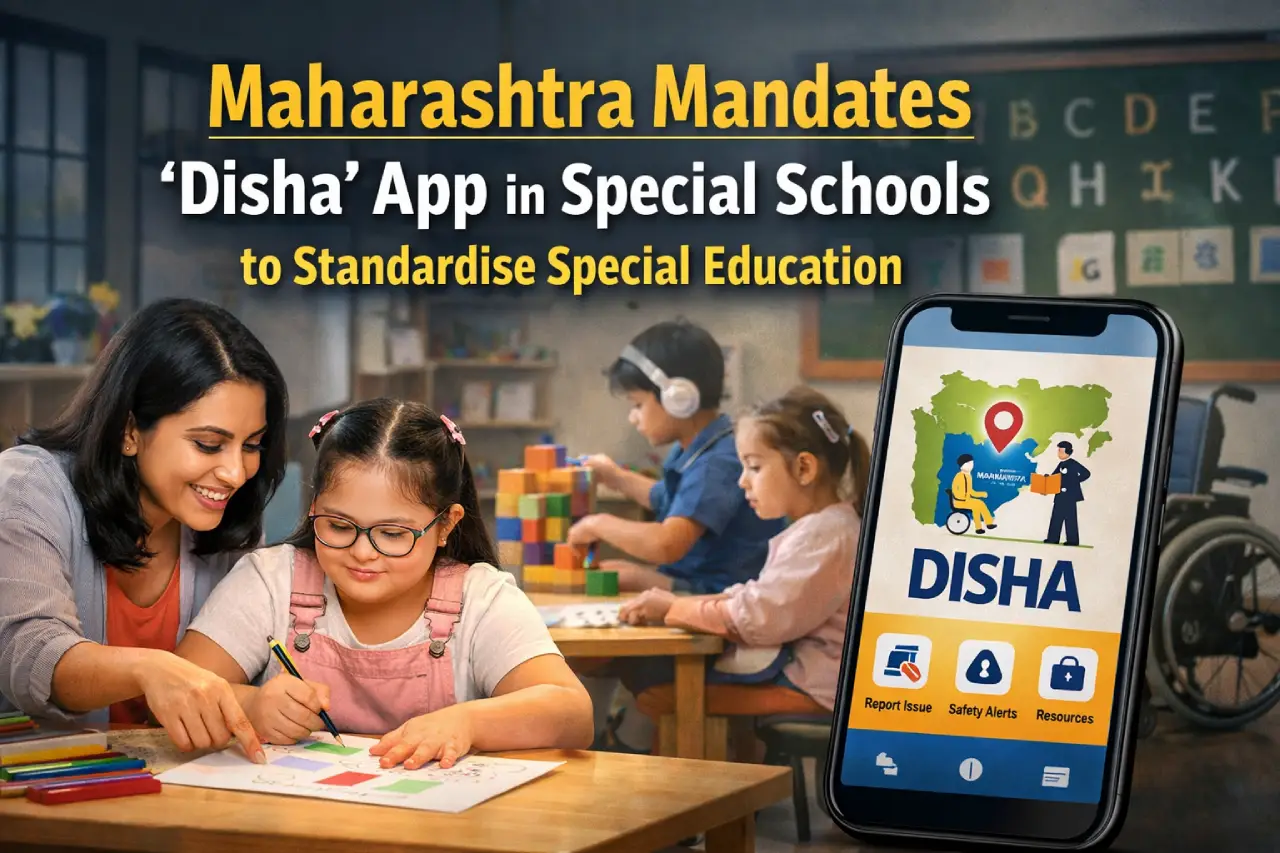
In a significant move to strengthen education for students with intellectual disabilities, the state Department of Disability Welfare has announced that the ‘Disha’ app will now be compulsory in all special schools. The decision mandates the uniform adoption of the Disha special curriculum, digital learning portal, and assessment system across the state.

By making the platform mandatory, the department aims to ensure consistent teaching methods, standardised evaluations, and equal learning opportunities for students in special schools, irrespective of their location or the institution’s management. The move is expected to improve quality, accountability, and continuity in special education services statewide.

I am writing about this development because special education often suffers from uneven implementation and lack of standard benchmarks. When different schools follow different methods, students are the ones who lose out. Making a common digital curriculum and evaluation system mandatory is a significant policy shift. It directly affects students, teachers, parents, and school administrators, and signals the government’s intent to bring structure, accountability, and continuity into special education.

What Is the ‘Disha’ App and Curriculum

The Disha app is a specially designed digital platform developed for students with intellectual disabilities. It includes a structured curriculum, teaching tools, and an evaluation framework aligned with the learning needs of special children.

The platform helps teachers track student progress in a systematic way and ensures that learning goals are clearly defined and measurable.

Why the State Made Disha Mandatory

According to the disability welfare department, the lack of a uniform curriculum across special schools has led to gaps in learning outcomes. Some schools follow advanced methods, while others struggle with outdated practices.

Announcing the decision, Tukaram Mundhe, secretary of the disability welfare department, said the Disha system would help bring “uniformity and continuity into special education while supporting the overall development of students”.

How This Will Help Students

With the Disha system in place, students across the state will now follow a common learning structure suited to their abilities. This ensures smoother academic progression, especially for students who move between schools or districts.

Standardised evaluation will also help identify learning gaps early and provide targeted support.

Impact on Teachers and Special Schools

Teachers will now receive a clear framework for lesson planning, assessment, and reporting. This reduces confusion and improves teaching quality. Schools will also be accountable for following the prescribed curriculum and updating student progress on the portal.

While some schools may need time to adapt, the long-term goal is better coordination and quality control.

Concerns and Challenges on the Ground

Some educators have raised concerns about training, digital access, and infrastructure, especially in smaller or rural special schools. Successful implementation will depend on proper teacher training, technical support, and continuous monitoring by authorities.

Without these, the system risks becoming a formality rather than a meaningful reform.

Why Uniformity Matters in Special Education

Special education requires consistency more than flexibility. Students with intellectual disabilities benefit from structured routines, clear goals, and continuity in teaching methods. A common curriculum helps ensure that every child, irrespective of school, receives comparable support and opportunities.

This move aligns policy with actual learning needs.

Leave a Comment

End of Article

Loading more posts...