JOIN WHATSAPP
STORIES

Karnataka 2nd PUC Result 2026 Date Expected in April: Check Time, Link and How to Download

Karnataka 2nd PUC Result 2026 Date Expected in April: Check Time, Link and How to Download

Students across Karnataka are eagerly waiting for the 2nd PUC Result 2026, which is expected to be announced by the Karnataka School Examination and Assessment Board (KSEAB) in April. Over 6 lakh students who appeared for the Class 12 board exams this year are now looking forward to their results. The exams were conducted from February 28 to March 17, 2026, and based on past trends, the results are likely to be declared soon on the official websites.

I am writing this because result time can be stressful, and many students are unsure about where to check their results or how to download their marksheet properly. Having clear information in advance can make the process smoother and reduce confusion. Whether you are checking your own result or helping someone else, knowing the steps and important details will save time and avoid last-minute panic.

Karnataka 2nd PUC Result 2026 Date and Time

As of now, the board has not officially confirmed the exact date and time.

  • Expected Result Month: April 2026
  • Last year, results were declared on April 8 at 12:30 PM
  • Similar timeline is expected this year as well

Students are advised to regularly check official websites for updates.

Where to Check Karnataka 2nd PUC Result 2026

Once declared, students can check their results online through the official portals:

  • karresults.nic.in
  • kseab.karnataka.gov.in

These websites will host the result link and allow students to download their scorecards.

How to Download Karnataka 2nd PUC Result 2026

Students can easily download their result by following these steps:

  • Visit the official website karresults.nic.in or kseab.karnataka.gov.in
  • Click on the link “Karnataka 2nd PUC Result 2026”
  • Enter your registration number, roll number, or date of birth
  • Submit the details
  • Your result will appear on the screen
  • Download and save the scorecard
  • Take a printout for future use

Make sure to check all details carefully after downloading.

Details Mentioned on the Scorecard

The online marksheet will include the following information:

  • Candidate’s name
  • Roll number
  • Name of the exam
  • Subject-wise marks
  • Total marks obtained
  • Minimum qualifying marks
  • Result status (Pass/Fail)
  • Remarks

If there is any error, students should contact their school immediately.

Passing Marks for Karnataka 2nd PUC 2026

To pass the exam, students must meet the minimum criteria:

  • At least 35% marks in each subject
  • Must pass both theory and practical components (if applicable)

Students who do not pass in one or more subjects can appear for supplementary exams.

What Happens After the Result

After the online result is declared, the next steps include:

  • Original mark sheets will be issued through schools
  • Students can apply for revaluation or re-verification if needed
  • Supplementary exam dates will be announced for those who need improvement

This phase is important for students planning their next academic step.

Important Tips for Students

Here are a few useful suggestions:

  • Keep your login details ready before checking results
  • Avoid refreshing the website repeatedly during peak time
  • Download and save multiple copies of your result
  • Stay calm and plan your next step based on your performance

These small steps can make the process stress-free.
Leave a Comment

End of Article

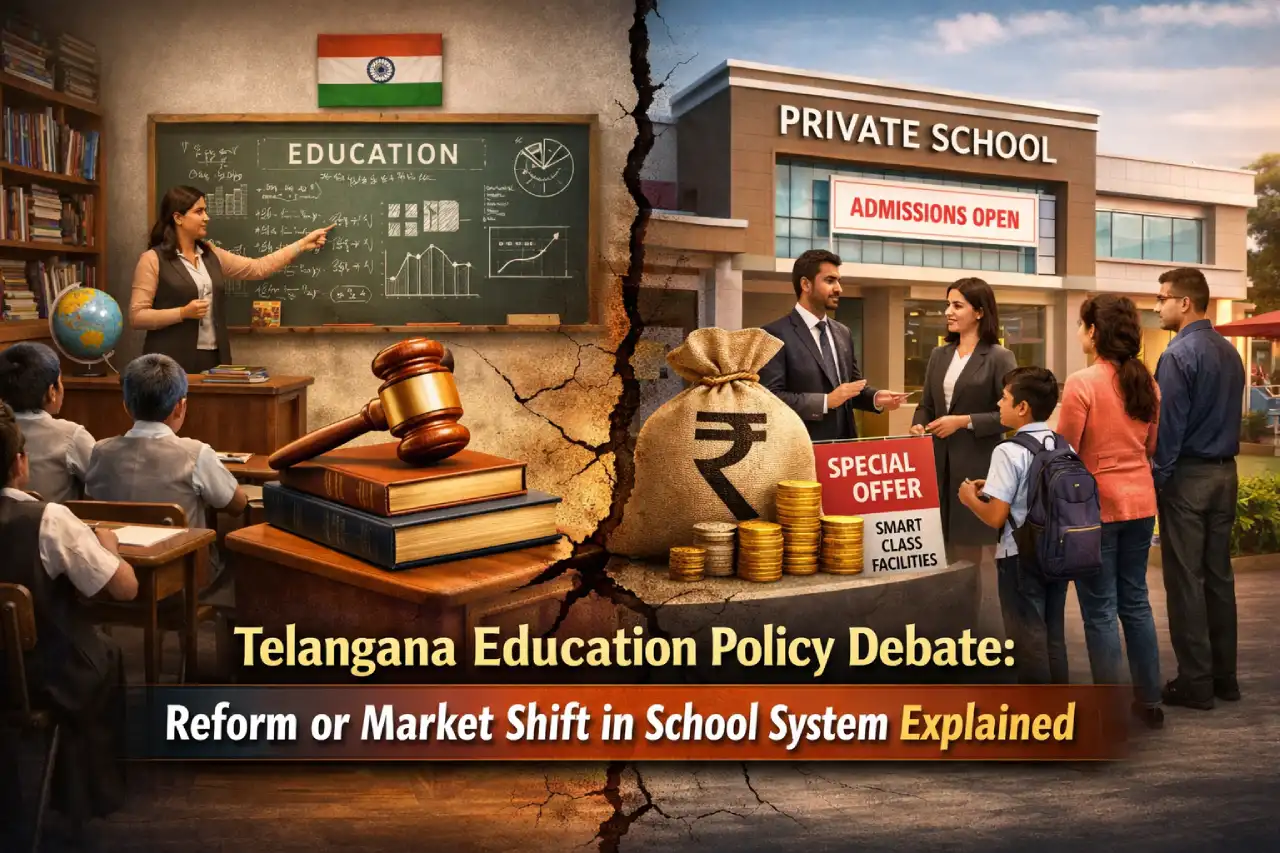
Telangana Education Policy Debate: Reform or Market Shift in School System Explained

Telangana Education Policy Debate: Reform or Market Shift in School System Explained

The Telangana Education Policy (TEP) is being presented as a progressive step towards inclusive and holistic education. On paper, it talks about improving learning outcomes, modernising schools, and aligning with global education standards. However, when you look closely, the policy raises several important questions. Is it truly strengthening public education, or is it gradually shifting the system towards a more market-driven approach where competition and choice take centre stage?

I am writing this because education policies are not just government documents—they directly affect students, teachers, and society as a whole. When a state changes how schools function, it shapes the future of millions of children. It becomes important for all of us to understand what these changes really mean. This discussion is not about opposing reform, but about asking whether the direction of reform is actually helping build a more equal and inclusive education system.

What Telangana Education Policy Aims to Do

The policy claims to focus on “inclusive excellence” and better learning outcomes.

  • Encourages modern teaching methods
  • Talks about holistic development of students
  • Refers to global education ideas and frameworks
  • Aims to improve quality across schools

At first glance, these goals sound positive and forward-looking.

The Shift Towards Private-School Model

One of the biggest concerns is the assumption that private schools represent better quality.

  • Public schools have weakened over time due to lack of funding and trust
  • Many families have shifted to private education
  • The policy seems to accept this trend instead of correcting it

Instead of rebuilding strong public schools, the focus appears to be on making them compete with private institutions.

Telangana Public Schools (TPS) Model

The introduction of Telangana Public Schools is a key part of the policy.

  • Schools will be divided into different categories
  • TPS institutions are expected to become the preferred choice
  • Parents will choose schools based on options available

While this is presented as a step towards improvement, it creates a system where schools compete rather than collaborate.

Is This a Common School System?

The policy suggests that it is moving towards a common school system, but there is a difference.

  • A real common system brings children from all backgrounds together
  • It promotes equality and social integration
  • The proposed system allows separation based on choice and access

This raises concerns about increasing inequality instead of reducing it.

Ground Reality vs Policy Vision

Another issue is the gap between policy and actual actions.

  • Expansion of residential schools is continuing despite policy caution
  • New “Young India” schools are being introduced
  • Entry of foreign private institutions is being encouraged

This indicates a move towards a more layered and divided system.

Concerns Around Testing and Accountability

The policy proposes a standards authority to measure performance.

  • Focus on student and teacher evaluation
  • Emphasis on measurable outcomes

However, international examples show risks:

  • Over-testing can reduce learning quality
  • Teaching may become focused only on exams
  • Teacher independence can be affected

Countries like Finland follow a trust-based system instead of constant testing.

Language Policy and English Medium Debate

The push for early English-medium education is another key issue.

  • Reflects parents’ aspirations
  • But may ignore the importance of mother tongue learning

Research shows:

  • Early education in mother tongue improves understanding
  • Sudden shift to English can create learning gaps

This is an area where balance is needed.

What Should Be the Way Forward

If the goal is truly inclusive education, some areas need attention:

  • Strengthening neighbourhood public schools
  • Equal distribution of resources
  • Supporting teachers as professionals
  • Encouraging learning in mother tongue
  • Reducing over-dependence on testing

I believe reforms should focus more on building trust and quality rather than competition.

Leave a Comment

End of Article

Loading more posts...

Important Video