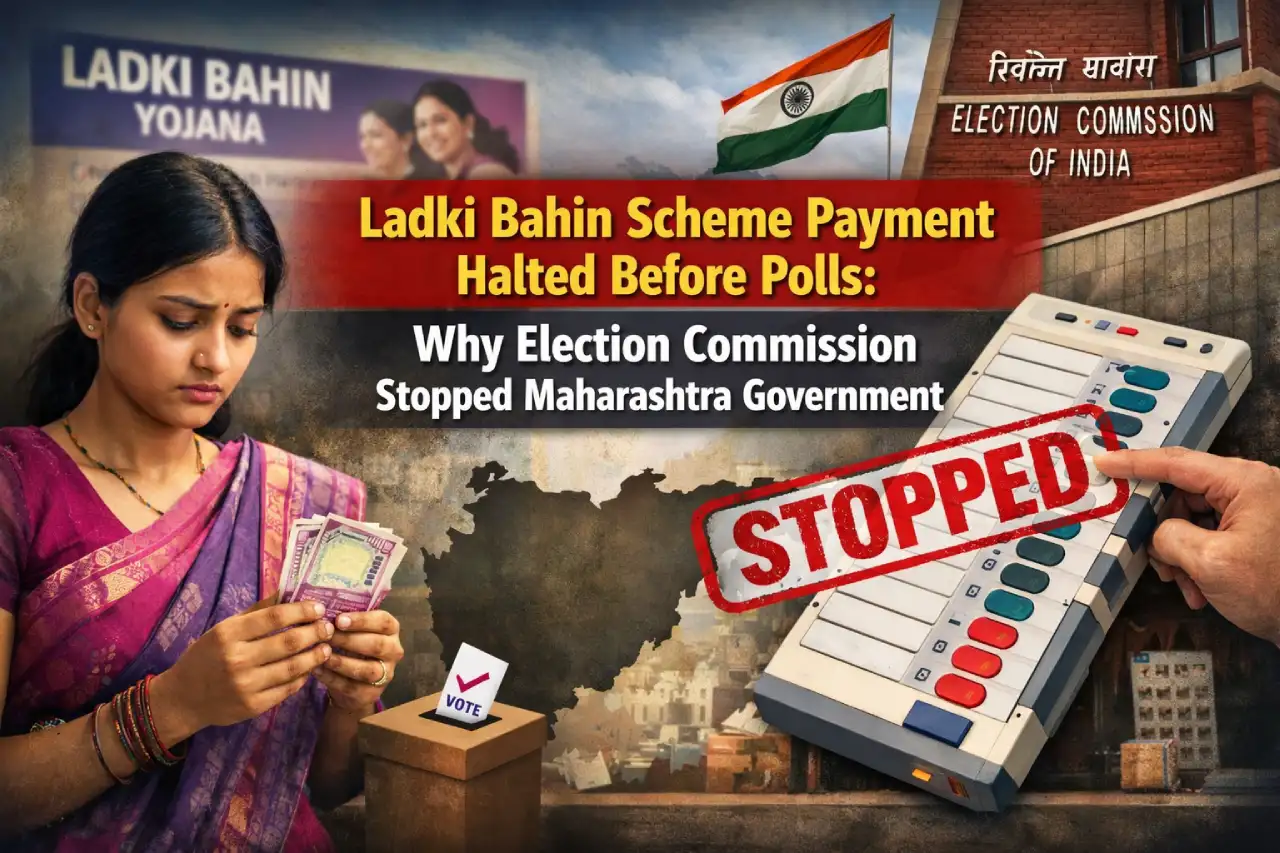
The Maharashtra government’s plan to release payments under the Ladki Bahin scheme just ahead of the upcoming civic body elections has been put on hold after intervention by the election authority. The State Election Commission barred the disbursement citing the enforcement of the Model Code of Conduct, which comes into effect once election dates are announced. With voting scheduled for January 15 and counting on January 16, the timing of the proposed payment raised concerns about influencing voters.
I am writing about this issue because welfare schemes and elections often overlap, and it becomes difficult for people to understand where governance ends and election rules begin. Many beneficiaries were confused about why payments were suddenly stopped, while others questioned whether this was a political move. This explainer helps clarify what the law says, why the decision was taken, and what it means for both the government and beneficiaries.
What Triggered the Election Commission’s Action
The issue came to light after reports suggested that the Maharashtra government was considering releasing two months’ instalments of the Ladki Bahin scheme together, just days before polling. Following complaints, the State Election Commission stepped in and flagged the matter as a potential violation of election norms.
The commission subsequently wrote to the state’s chief secretary, Rajesh Agarwal, seeking clarification on whether such a disbursement was planned during the election period.
Role of the Model Code of Conduct
The Model Code of Conduct comes into force as soon as election dates are announced. Its main purpose is to ensure a level playing field so that no party or government uses official machinery or public funds to gain electoral advantage.
Under the code:
- New welfare announcements are restricted
- Financial benefits that can influence voters are closely scrutinised
- Governments are expected to avoid decisions that may appear politically motivated
The proposed timing of the Ladki Bahin scheme payment fell under this sensitive period.
Why Ladki Bahin Scheme Payment Was Stopped
The Ladki Bahin scheme is a welfare initiative aimed at providing financial support to women. While the scheme itself is not under question, the timing of the payment became the issue. Releasing funds immediately before elections could be seen as an attempt to sway voters, even if the scheme was announced earlier.
To prevent any perception of bias, the election authority decided to bar the payment until the election process is completed.
What the Election Commission Asked the State Government
The State Election Commission asked the Maharashtra government to clearly explain whether it intended to:
- Release two months’ instalments together
- Disburse funds during the Model Code of Conduct period
- Justify the urgency of payment close to polling day
The clarification was sought to determine whether the action violated election norms.
What This Means for Beneficiaries
For beneficiaries of the Ladki Bahin scheme, the decision means a temporary delay, not cancellation. Payments are expected to resume once the election process concludes and restrictions under the Model Code of Conduct are lifted.
While the delay may cause inconvenience, election authorities maintain that fairness in the democratic process must take priority.
Why Such Decisions Matter During Elections
From my perspective, this episode highlights how closely welfare policies and elections are linked in India. Election rules are meant to protect voters from last-minute incentives that could influence their choices. At the same time, governments are expected to balance ongoing administration with these restrictions, which is not always easy.