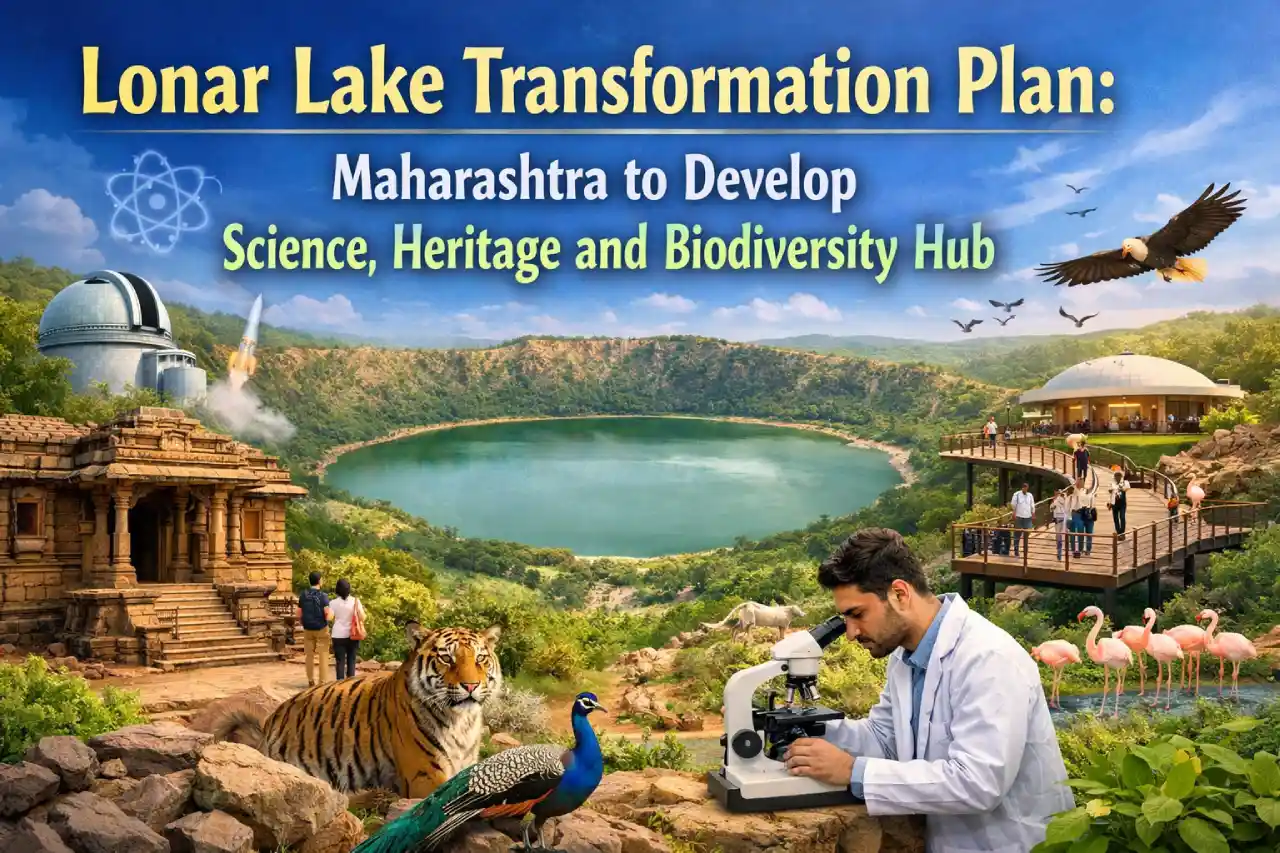
Lonar Lake, one of India’s most unique natural wonders located in Maharashtra’s Buldhana district, is set to undergo a major transformation. Known as a meteorite crater formed around 50,000 years ago, the lake is now being developed into a centre for science, biodiversity, cultural heritage, and sustainability. The initiative aims to bring this National Geo-Heritage Monument closer to people while preserving its ecological and scientific importance.
I am writing about this because places like Lonar Lake are not just tourist spots, they are living laboratories of science and history. From my perspective, many such sites in India remain underexplored despite their global importance. This effort to transform Lonar into a science and learning hub can inspire awareness, research and conservation, while also giving people a deeper understanding of nature and heritage.
What Makes Lonar Lake Unique
Lonar Lake stands out for several reasons.
- Formed by a meteorite impact around 50,000 years ago
- Located in the basaltic Deccan Plateau
- Shows similarities with craters found on the Moon and Mars
- Recognised as a National Geo-Heritage Monument
It is one of the few hypervelocity impact craters in basalt rock.
Vision Behind the Transformation
The goal is to make Lonar a multidisciplinary hub.
- Promote science and research
- Preserve biodiversity and ecosystems
- Highlight cultural and archaeological heritage
- Encourage sustainable tourism
This initiative connects science with public awareness.
Key Organisations Involved
Several institutions are working together on this project.
- National Centre for Science Communicators (NCSC), Mumbai
- Nehru Science Centre
- Kelkar Education Trust’s Scientific Research Centre
- Ku Durga K Banmeru Science College
Their collaboration ensures both academic and practical inputs.
Conference to Plan the Roadmap
A major conference was organised to discuss the future.
- Focus on science, sustainability and heritage
- Experts from multiple fields participated
- Emphasis on long-term conservation strategies
This helped outline a clear plan for development.
Major Concerns Raised by Experts
Despite its importance, Lonar Lake faces challenges.
- Sewage inflow affecting water quality
- Agricultural encroachment around the lake
- Unregulated tourism pressure
- Climate change impacts
- Declining alkalinity levels
These issues highlight the need for urgent action.
Proposal for Research and Innovation
Several important proposals were discussed.
- Establishment of Centre for Excellence in Lunar Exploration (CELE)
- Creation of a National Lonar Lake Research Laboratory
- Promotion of planetary science and public learning
This will make Lonar a global research destination.
Rich Biodiversity and Ecosystem
Lonar is not just about geology.
- Home to extremophile microorganisms
- Rich algal diversity
- Habitat for migratory birds
- Unique flora and fauna
This makes it important for ecological studies.
Cultural and Historical Importance
The area around the lake also holds heritage value.
- Ancient Hemadpanthi temples
- Strong links to mythology and archaeology
- Cultural significance for local communities
It is a blend of science and tradition.
Role of Community and Public Participation
Local involvement is crucial for success.
- Awareness programmes for residents
- Encouraging responsible tourism
- Community participation in conservation
From my view, long-term success depends on people’s involvement.