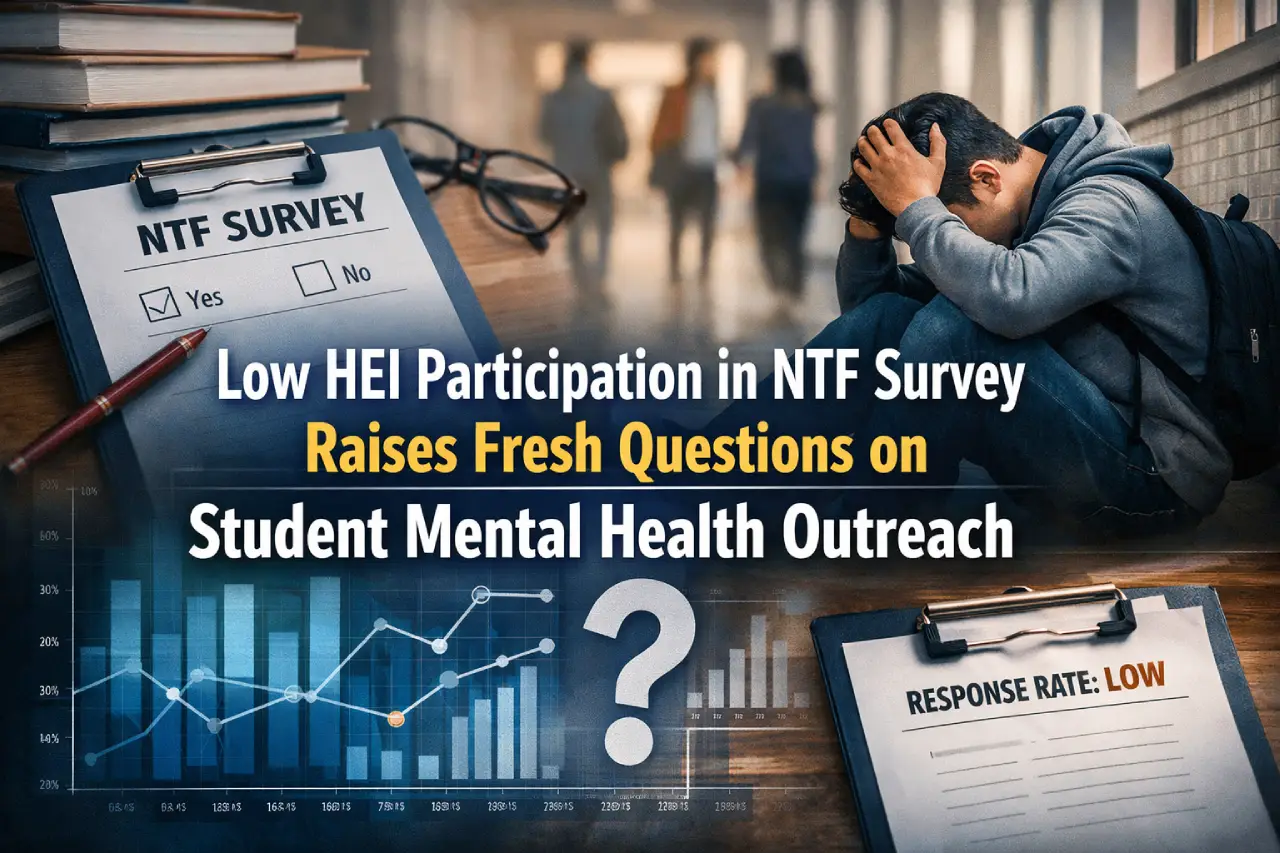
The low participation of Higher Education Institutions (HEIs) in the latest NTF survey has raised concerns about how seriously student mental health issues are being recognised and addressed across campuses. Even though student well-being has been repeatedly emphasised in policy discussions and institutional forums, many colleges and universities chose not to engage with the survey.
Notably, states with a large concentration of HEIs, including Maharashtra, Rajasthan, Uttar Pradesh and Telangana, recorded particularly weak response rates. Similar trends were observed in Bihar, Chhattisgarh, West Bengal and Odisha, pointing to a broader gap in institutional involvement on mental health-related matters. This lack of engagement underscores the need for stronger outreach and more direct conversations with institutions on student mental health concerns.
Surveys like the NTF are meant to help policymakers and institutions understand what students are actually facing. When HEIs do not respond adequately, it limits the quality of data and weakens future interventions. From what many teachers and counsellors informally observe, students are under pressure from academics, finances, family expectations and uncertainty about careers. If institutions are not actively participating in such surveys, it raises concerns about how seriously mental health frameworks are being implemented on the ground.
What the NTF Survey Is Meant to Address
The NTF survey was designed to gather inputs from Higher Education Institutions on student mental health concerns, support systems, and existing counselling mechanisms. The aim was to understand institutional readiness and identify gaps in outreach and support.
Such surveys play a key role in shaping national-level strategies for student well-being.
States Showing Poor Response Rates
According to the available data, the response from HEIs was uneven across regions. States with large numbers of colleges and universities surprisingly showed weaker participation.
These include:
- Maharashtra
- Rajasthan
- Uttar Pradesh
- Telangana
In addition, states such as Bihar, Chhattisgarh, West Bengal and Odisha also reported low response levels compared to other states and Union Territories.
Why Low Participation Is a Serious Concern
When institutions do not engage with surveys focused on mental health, several issues arise. Policymakers receive an incomplete picture, and students’ real struggles remain underreported.
Low response rates may point to:
- Lack of institutional priority for mental health
- Over-reliance on online reporting mechanisms
- Limited awareness or training at administrative levels
- Hesitation to openly discuss mental health challenges
The Case for More In-Person Discussions
One of the key takeaways from the poor response rate is the need for more in-person engagement. Mental health is a sensitive issue, and many institutions may find it difficult to respond meaningfully through online surveys alone.
In-person discussions, workshops, and consultations allow for deeper understanding, honest feedback, and trust-building between students, faculty and administrators.
Impact on Students at the Ground Level
Students often hesitate to speak openly about mental health concerns due to stigma or fear of judgement. When institutions themselves appear disengaged, it further discourages students from seeking help.
This gap can lead to unresolved stress, anxiety, and burnout, especially in competitive academic environments.
What Institutions Can Do Differently
To improve engagement and outcomes, HEIs can focus on:
- Regular campus-level mental health dialogues
- Appointing trained counsellors and support staff
- Encouraging faculty to recognise early warning signs
- Treating surveys as tools for improvement, not compliance
Active participation sends a message that student well-being is taken seriously.