JOIN WHATSAPP
STORIES

Maharashtra Bans PG Medical Student Transfers Under DRP: What It Means for Colleges and Doctors

Maharashtra Bans PG Medical Student Transfers Under DRP: What It Means for Colleges and Doctors

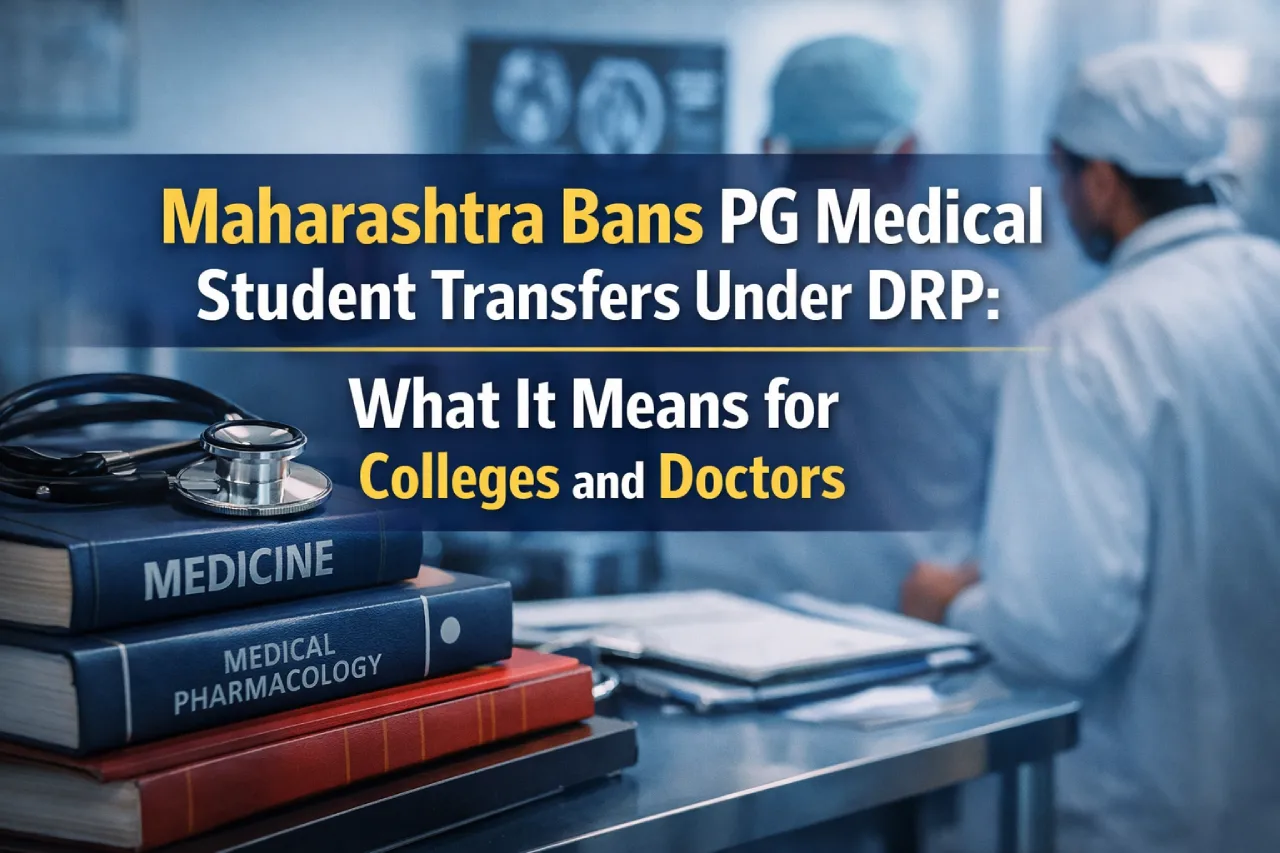
The Government of Maharashtra has decided to ban inter-district transfers of postgraduate medical students admitted under the District Residency Programme (DRP). The move aims to ensure that doctors trained under this scheme continue to serve in the districts they were originally allotted. According to officials, allowing transfers was weakening the core purpose of the DRP, which was designed to strengthen district-level public healthcare by retaining trained specialists locally.

I am writing about this decision because it directly affects hundreds of PG medical students and also has long-term implications for healthcare delivery in smaller towns and rural areas. Many students and hospitals were unsure about how flexible the DRP rules really were. This clarification brings certainty, but it also raises questions about student hardship, personal circumstances, and how the state plans to balance fairness with public health needs.

What Is the District Residency Programme (DRP)

The District Residency Programme was introduced to address the shortage of specialist doctors in government hospitals outside major cities. Under this system, PG medical students are required to undergo training in district hospitals instead of concentrating only in urban medical colleges.

The idea was simple:

  • Improve healthcare access in districts
  • Build specialist capacity in government hospitals
  • Reduce dependence on city-based medical infrastructure

However, over time, inter-district transfer requests started increasing, which diluted the programme’s intent.

Why Maharashtra Banned Inter-District Transfers

State health officials observed that frequent transfers were creating staffing gaps in already understaffed district hospitals. Some districts were losing trained PG students midway, while others were receiving more than their allocated strength.

By banning inter-district transfers, the government wants to:

  • Ensure continuity of patient care in district hospitals
  • Maintain uniform distribution of PG medical trainees
  • Prevent misuse of transfer provisions

Officials have clarified that the ban will apply strictly to students admitted under the DRP quota.

Impact on PG Medical Students

For students, this decision brings both clarity and concern. While it removes uncertainty around future postings, it also limits flexibility for those facing genuine personal or medical issues.

Students will now need to:

  • Complete their training in the allotted district
  • Plan personal commitments accordingly
  • Rely on exceptional relief only in rare cases, if permitted

Medical associations have urged the government to define clear guidelines for exceptional circumstances.

What Happens Next

The state health department is expected to issue detailed circulars to medical colleges and district hospitals outlining the implementation process. Colleges have been asked to strictly follow the new directive for all current and upcoming DRP batches.
Leave a Comment

End of Article

Maharashtra Teachers Push Back on App Overload, Warn of Digital Boycott

Maharashtra Teachers Push Back on App Overload, Warn of Digital Boycott

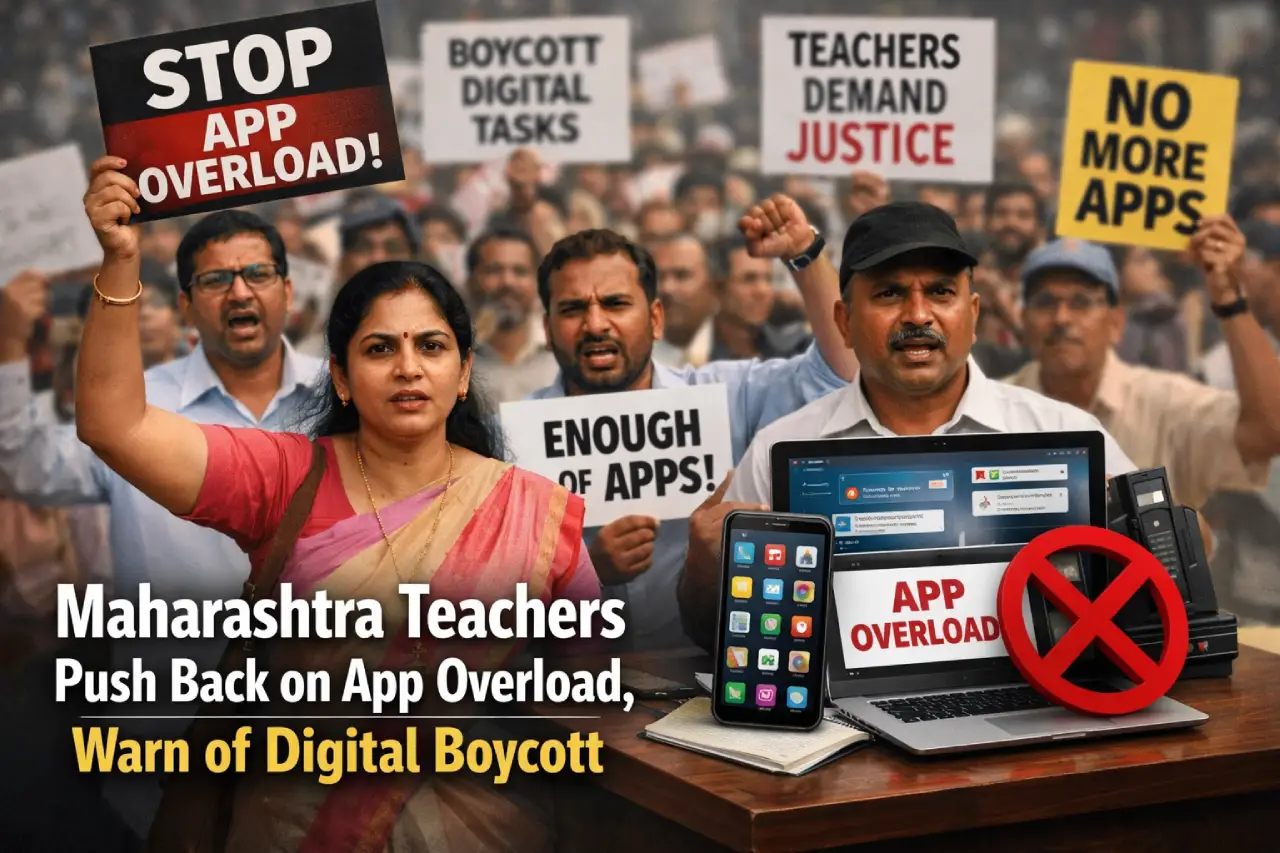
School teachers across Maharashtra are raising serious concerns over what they describe as an unmanageable digital workload imposed through mandatory mobile applications. Teachers’ organisations have warned the state government that they may collectively opt for a temporary “digital disconnect” if the pressure of constant data entry through official apps is not reduced. The warning comes at a time when new applications are being rolled out, adding to the already heavy administrative burden on educators.

I am writing about this issue because it highlights a growing gap between policy intent and classroom reality. While digital tools were meant to simplify administration and improve monitoring, many teachers say the opposite has happened. Instead of focusing on teaching and student engagement, they are spending long hours filling forms, uploading data, and meeting app-based deadlines. This situation affects not just teachers, but also the quality of education students receive.

Why Teachers Are Threatening a ‘Digital Disconnect’

Teachers’ unions argue that the number of mandatory apps has increased steadily over the past few years. Each app requires separate logins, frequent updates, and repeated data entry, often for similar information. Many teachers say they are expected to complete this work after school hours, using personal mobile phones and internet connections.

The proposed “digital disconnect” is being seen as a form of protest to draw attention to the issue without disrupting classroom teaching directly. Teachers have clarified that the move would be temporary and focused only on non-essential digital reporting.

Growing Digital Workload in Maharashtra Schools

Educators point out that apart from teaching duties, they are now required to manage:

  • Daily attendance and student records on apps
  • Mid-day meal and nutrition-related data
  • Infrastructure and survey-related entries
  • Academic progress and assessment uploads
  • Various time-bound reports demanded at short notice

Teachers say that every new app is introduced with good intentions, but without removing older systems, leading to duplication of work.

What Teachers’ Organisations Are Demanding

Teachers’ associations have placed a few clear demands before the Maharashtra State Government. These include:

  • Reducing the number of mandatory apps
  • Integrating data into a single, unified platform
  • Limiting data entry to school hours only
  • Consulting teachers before launching new digital tools

They argue that teachers are educators, not data operators, and their primary responsibility should remain classroom teaching.

Impact on Teaching and Learning

Many teachers say the excessive focus on digital compliance is affecting lesson planning, student interaction, and remedial teaching. When teachers are mentally exhausted by administrative tasks, classroom effectiveness naturally suffers. Parents, too, have begun expressing concern that teachers are being pulled away from their core role.

In rural and semi-urban areas, poor internet connectivity further complicates the issue, leading to stress and repeated follow-ups from authorities.

Government’s Stand and Possible Way Forward

While the government maintains that digital platforms help improve transparency and monitoring, teachers insist that implementation needs urgent review. Education experts suggest that technology should support teachers, not overwhelm them. Streamlining apps, reducing repetitive data entry, and providing proper technical support could ease the situation significantly.

Dialogue between the government and teachers’ organisations is now being seen as crucial to prevent escalation.

Leave a Comment

End of Article

Loading more posts...