JOIN WHATSAPP
STORIES

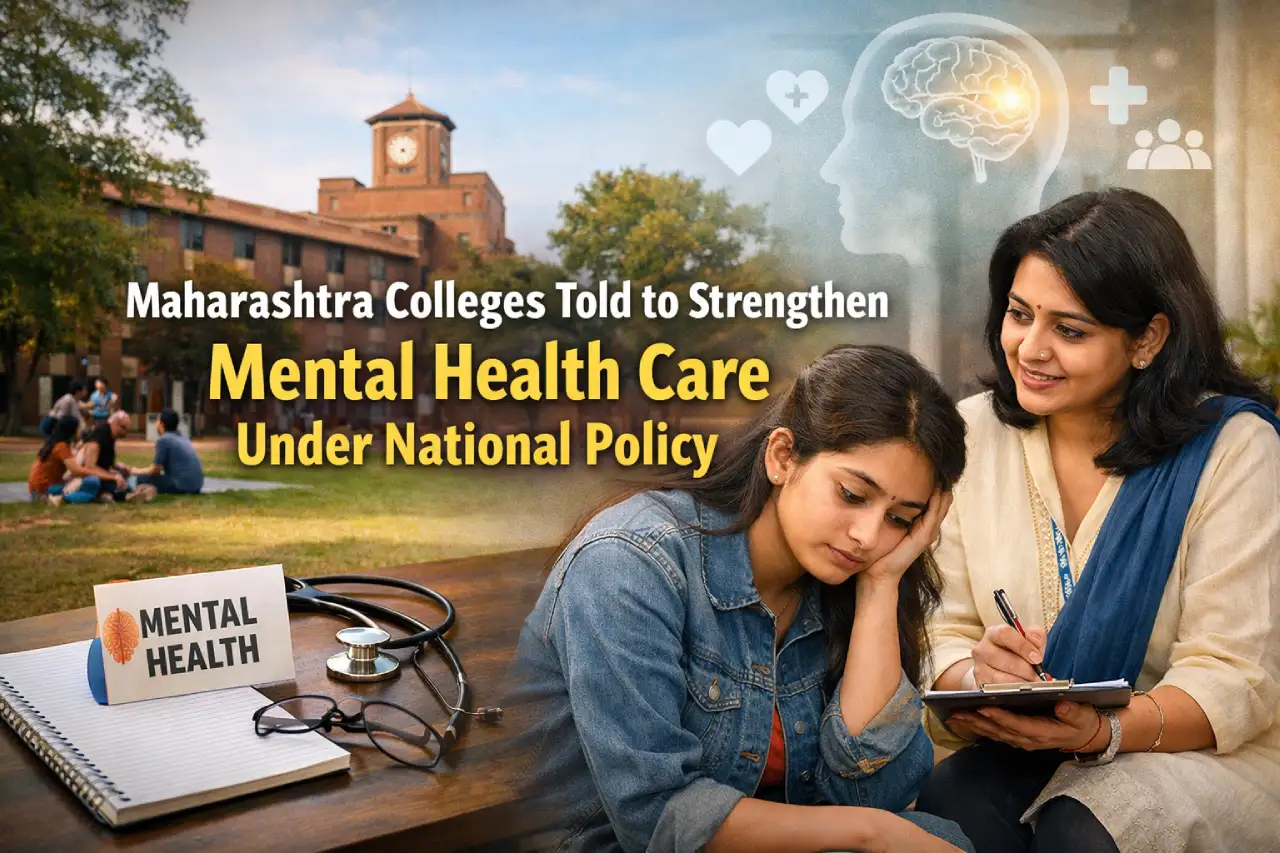
Maharashtra Colleges Told to Strengthen Mental Health Care Under National Policy

Maharashtra Colleges Told to Strengthen Mental Health Care Under National Policy

All educational institutions across Maharashtra have been directed to put proper mental health support systems in place, following instructions issued by the Directorate of Technical Education. The move comes in line with the national suicide prevention policies and aims to ensure that students receive timely emotional and psychological support within their campuses. Colleges and institutes have been asked to actively implement these provisions rather than treat them as optional guidelines.

I am writing about this development because student mental health has become a serious concern in recent years, especially after the pressures caused by academic competition, social expectations, and personal challenges. Clear instructions from authorities like the DTE signal that mental well-being is no longer a side issue but a core responsibility of educational institutions. Parents, students, and educators all need to understand what these directions mean on the ground.

What the DTE Has Directed Institutions to Do

The instructions have been issued by the Directorate of Technical Education to colleges and technical institutes across the state. Institutions have been told to strictly follow the provisions outlined in the national suicide prevention framework and ensure that support mechanisms are visible and functional.

The focus is on early identification of distress, easy access to help, and creating a supportive campus environment for students.

Key Features of the Mental Health Support System

As per the directions, educational institutes are expected to introduce several measures, including:

  • Setting up counselling or mental health support cells
  • Appointing trained counsellors or psychologists
  • Creating referral mechanisms for professional help when required
  • Displaying helpline numbers and support resources prominently
  • Sensitising faculty and staff to identify warning signs

These steps are meant to ensure that students do not feel isolated when dealing with emotional or mental health issues.

Why This Move Is Important for Students

Students today face multiple pressures, ranging from academic performance to career uncertainty and personal struggles. Many hesitate to seek help due to stigma or fear of judgement. Having structured support systems within campuses makes it easier for students to talk openly and seek guidance.

Experts believe that timely counselling and emotional support can significantly reduce extreme outcomes and help students cope better with stress.

Responsibility of Colleges and Faculty

The DTE has made it clear that institutions must take ownership of implementation. Simply issuing circulars or forming committees on paper will not be enough. Faculty members are expected to play an active role by guiding students, encouraging open conversations, and directing those in need to professional support.

Institutes may also be required to submit compliance reports to show that the guidelines are being followed in practice.

Challenges in Implementation

While the intent is widely welcomed, colleges may face challenges such as shortage of trained counsellors, budget constraints, and lack of awareness. Smaller institutions, especially in semi-urban areas, may need additional guidance and support to implement these systems effectively.

Education experts suggest that regular training and state-level monitoring will be essential for long-term success.


Leave a Comment

End of Article

Maharashtra Faces Alarming Child Malnutrition Crisis, High Court Seeks Answers

Maharashtra Faces Alarming Child Malnutrition Crisis, High Court Seeks Answers

More than 1.37 lakh children in Maharashtra are still suffering from malnutrition, a matter that has now drawn serious attention from the judiciary. The issue came before the Bombay High Court after a newspaper report highlighted shocking figures related to child and maternal deaths in the state. According to the data placed before the court, 32,226 children below the age of five and 2,861 mothers have died in Maharashtra over the last two-and-a-half years, with malnutrition cited as a major contributing factor.

I am writing about this issue because these numbers are not just statistics, they reflect a deep and continuing public health crisis. Despite multiple welfare schemes and nutrition programmes, thousands of families are still struggling to provide basic nourishment to children and mothers. When such data reaches the High Court, it becomes clear that this is not a routine administrative lapse but a systemic problem that needs urgent attention from policymakers and authorities.

What the Bombay High Court Was Told

The matter came up before the Bombay High Court after taking suo motu cognisance of a media report on malnutrition-related deaths. The court was informed that a significant number of children identified as severely or moderately malnourished are still awaiting effective intervention.

The figures presented shocked the court, especially considering that Maharashtra is one of the country’s economically stronger states with extensive public health infrastructure.

Scale of Child and Maternal Deaths

As per the information highlighted:

  • 32,226 children under five years of age died in the last two-and-a-half years
  • 2,861 maternal deaths were recorded during the same period
  • Malnutrition was cited as a major contributing factor in many cases
  • Over 1.37 lakh children are currently identified as malnourished

These numbers point towards gaps in early detection, follow-up treatment, and nutrition delivery systems.

Why Malnutrition Remains a Persistent Problem

Health experts say malnutrition is not caused by lack of food alone. It is often linked to:

  • Poverty and food insecurity
  • Poor maternal health and anaemia
  • Inadequate access to healthcare facilities
  • Lack of awareness about nutrition
  • Irregular monitoring at the grassroots level

In tribal and rural areas, these problems are even more severe due to connectivity and staffing issues.

Government Schemes and Ground Reality

Maharashtra runs several nutrition and health schemes through anganwadis and public health centres. However, the court was told that implementation remains uneven. In many cases, children identified as malnourished are not followed up properly, and referral systems do not function as intended.

The court has sought explanations from the state authorities on what corrective measures are being taken and how existing programmes are being monitored.

Why This Issue Matters to Everyone

Child malnutrition has long-term consequences that go beyond immediate health risks. It affects physical growth, brain development, learning ability, and future productivity. Maternal malnutrition, on the other hand, increases risks during childbirth and directly impacts newborn health.

When such a large number of deaths are linked to nutrition gaps, it raises serious questions about accountability and policy execution.

What the High Court Expects Next

The High Court has indicated that it will closely monitor the state’s response and action plan. Authorities may be asked to submit detailed reports on:

  • Identification and treatment of malnourished children
  • Availability of nutrition supplements
  • Staffing and monitoring at anganwadi centres
  • Steps taken to prevent further deaths

The court’s involvement is expected to push for stricter oversight and faster corrective action.

Leave a Comment

End of Article

Loading more posts...