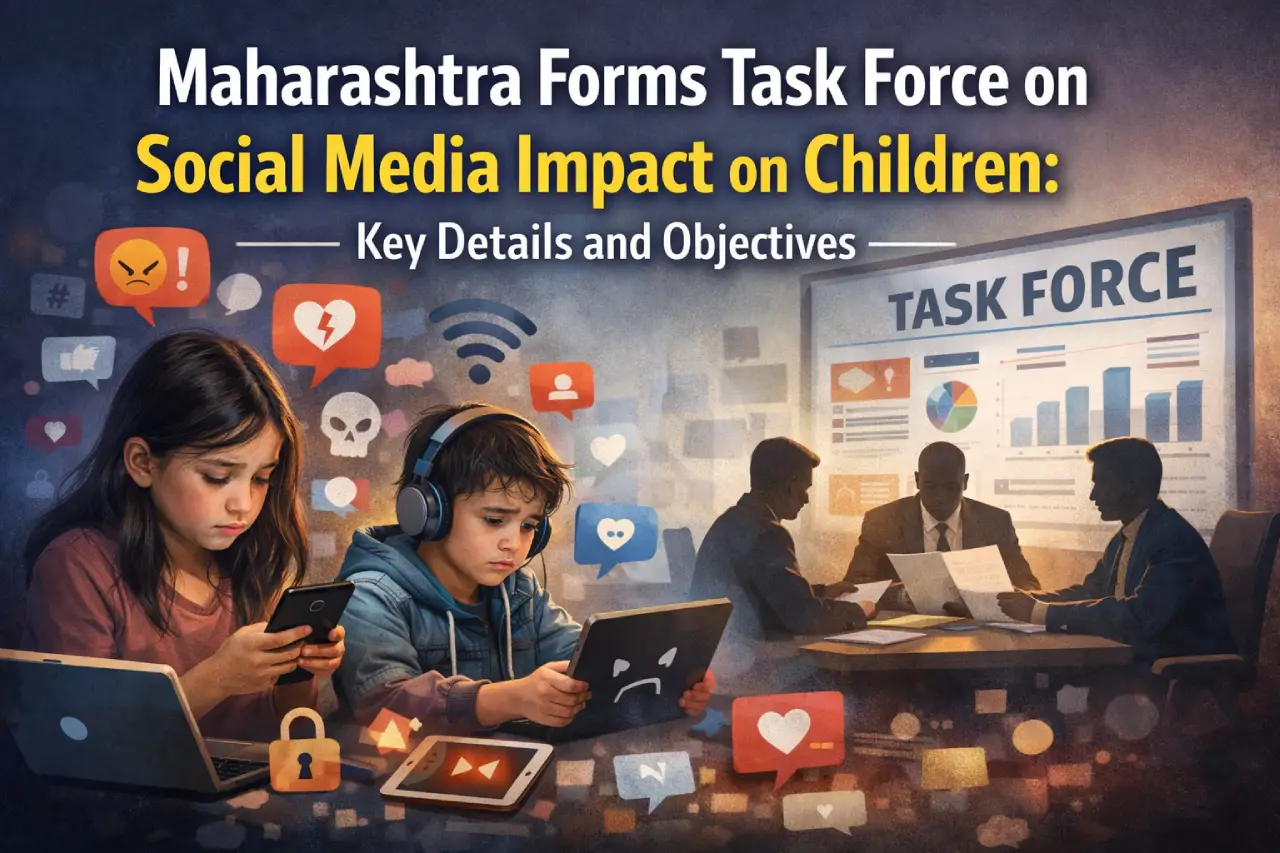
The Maharashtra government has taken a significant step by forming a high-level task force to study the growing impact of social media on children. The decision, announced through a Government Resolution on March 25, aims to examine how digital platforms are affecting minors and to recommend suitable policy and regulatory measures. With rising concerns about mental health and online exposure, the initiative comes at a time when the role of social media in young lives is being widely debated.
I am writing about this because the influence of social media on children is something many parents, teachers, and students are concerned about today. From increased screen time to mental health challenges, the effects are visible in everyday life. Understanding how the government plans to address this issue helps us stay informed and also encourages more responsible use of technology among young users.
Why This Task Force Was Formed
The government’s decision is based on growing concerns.
- Increasing use of social media among minors
- Rising mental health issues in children
- Concerns raised in recent economic survey
- Need for structured regulation and guidance
Maharashtra has nearly 4 crore children under 18, making this a major issue.
Key Focus Areas of the Task Force
The 13-member expert panel will study multiple aspects.
- Nature and extent of social media usage
- Impact on mental and physical health
- Effect on behaviour and social skills
- Influence on education and intellectual growth
- Impact of digital advertising on minors
These areas will help create a complete understanding of the issue.
Broader Areas of Study
The task force will also examine:
- Differences between rural and urban usage patterns
- Impact based on gender and income groups
- Family background and environment factors
- National and international policies on digital regulation
This approach ensures that the study is detailed and inclusive.
Structure of the Task Force
The panel includes experts from different fields.
- Chaired by Additional Chief Secretary (School Education and Sports)
- Co-chaired by Women and Child Development Department
- Members from IT, health, law, and home departments
- Representatives from academia, NGOs, and social media platforms
Experts from institutions like the University of Mumbai are also involved.
Field Visits and Report Submission
The task force will not rely only on data.
- Conduct field visits across regions
- Collect real-life insights
- Analyse findings carefully
- Submit a detailed report with recommendations
Based on this report, the government will take further action.
Expected Outcomes
The government aims to:
- Protect children from harmful online exposure
- Promote safe and responsible internet usage
- Improve mental and physical well-being
- Ensure balanced digital empowerment
From my perspective, this is a much-needed step in today’s digital age.
Why This Issue Matters Today
Social media has become a part of daily life.
- Children are exposed at a very young age
- Screen time is increasing rapidly
- Online content influences behaviour and thinking
Addressing these challenges early can create a healthier future generation.
What This Means for Parents and Students
This initiative highlights the need for awareness.
- Parents should monitor screen time
- Students should use social media responsibly
- Schools may introduce digital safety education
Small steps can make a big difference.