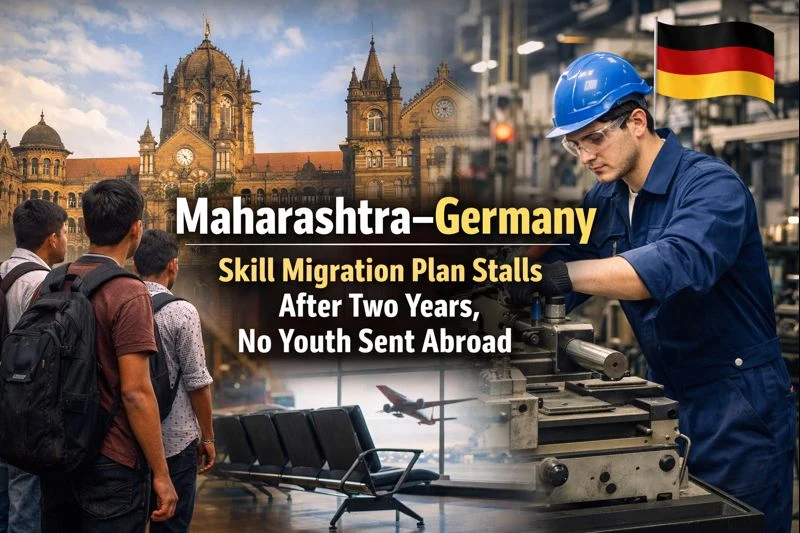
Nearly two years after Maharashtra signed a high-profile MoU with the German state of Baden-Württemberg to send 10,000 skilled workers, the much-talked-about overseas job plan has failed to take off. Despite announcements, roadshows and publicity campaigns, not a single youth from the state has travelled to Germany under this skilled manpower initiative.
I am writing about this because the issue raises serious questions about how skill migration programmes are being planned and executed. At a time when thousands of young people in Maharashtra are looking for overseas job opportunities, especially in Europe where skilled labour is in demand, this stalled initiative is worrying. What makes it more concerning is that around Rs 5 crore has already been spent on publicity, yet the programme has produced zero outcomes on the ground. For students, jobseekers and policymakers alike, this story highlights the gap between policy promises and real-world execution.
What the MoU Promised
The MoU, signed nearly two years ago, aimed to provide skilled manpower from Maharashtra to Baden-Württemberg, one of Germany’s most industrialised states. The target was ambitious: sending up to 10,000 trained workers in sectors facing labour shortages in Germany.
The initiative was projected as a win-win situation:
- Maharashtra youth would get well-paid international jobs
- Germany would address its skilled labour shortage
- The state would gain remittances and global exposure
Public statements at the time suggested that sectors like manufacturing, healthcare, hospitality and technical trades would benefit.
Money Spent, But No Movement
According to official information, Maharashtra has already spent around Rs 5 crore on publicity related to the programme. This included awareness campaigns, promotional events and communication material meant to attract candidates.
However, despite this spending:
- No worker has been sent to Germany
- No clear batch selection has been finalised
- Aspirants remain unclear about timelines
For many young people who registered interest, the process has gone silent after initial announcements.
Where Did Things Go Wrong?
Officials point to multiple hurdles that slowed down the plan. These include language requirements, certification alignment and visa-related processes.
Some key challenges reported include:
- German language proficiency being mandatory for most jobs
- Mismatch between Indian skill certificates and German standards
- Slow coordination between departments and agencies
- Lack of structured training pipelines
Without addressing these issues early, the programme struggled to move beyond paperwork.
Impact on Aspirants
Many young people enrolled or showed interest in the scheme hoping for overseas employment. With no clear updates, frustration has grown.
For aspirants, this has meant:
- Time spent waiting without clarity
- Missed opportunities elsewhere
- Loss of trust in government-led migration schemes
Several candidates had reportedly begun basic preparation but were left without guidance.
Germany’s Demand Still Exists
Ironically, Germany continues to face a shortage of skilled workers, especially in healthcare, engineering, logistics and skilled trades. Other countries have moved faster to tap into this demand.
If Maharashtra had acted swiftly, it could have positioned itself as a major supplier of trained manpower to Europe.
What Experts Are Saying
Skill development experts believe the idea itself was strong, but execution was weak. International migration programmes require long-term planning, language training, certification mapping and employer tie-ups.
Without these, MoUs risk remaining symbolic rather than practical.
What Needs To Change
For the programme to revive, experts suggest:
- Clear timelines and transparent communication
- Government-funded language training
- Tie-ups with German employers and training bodies
- Dedicated migration facilitation cells
Unless these steps are taken, the MoU may remain a missed opportunity.