JOIN WHATSAPP
STORIES

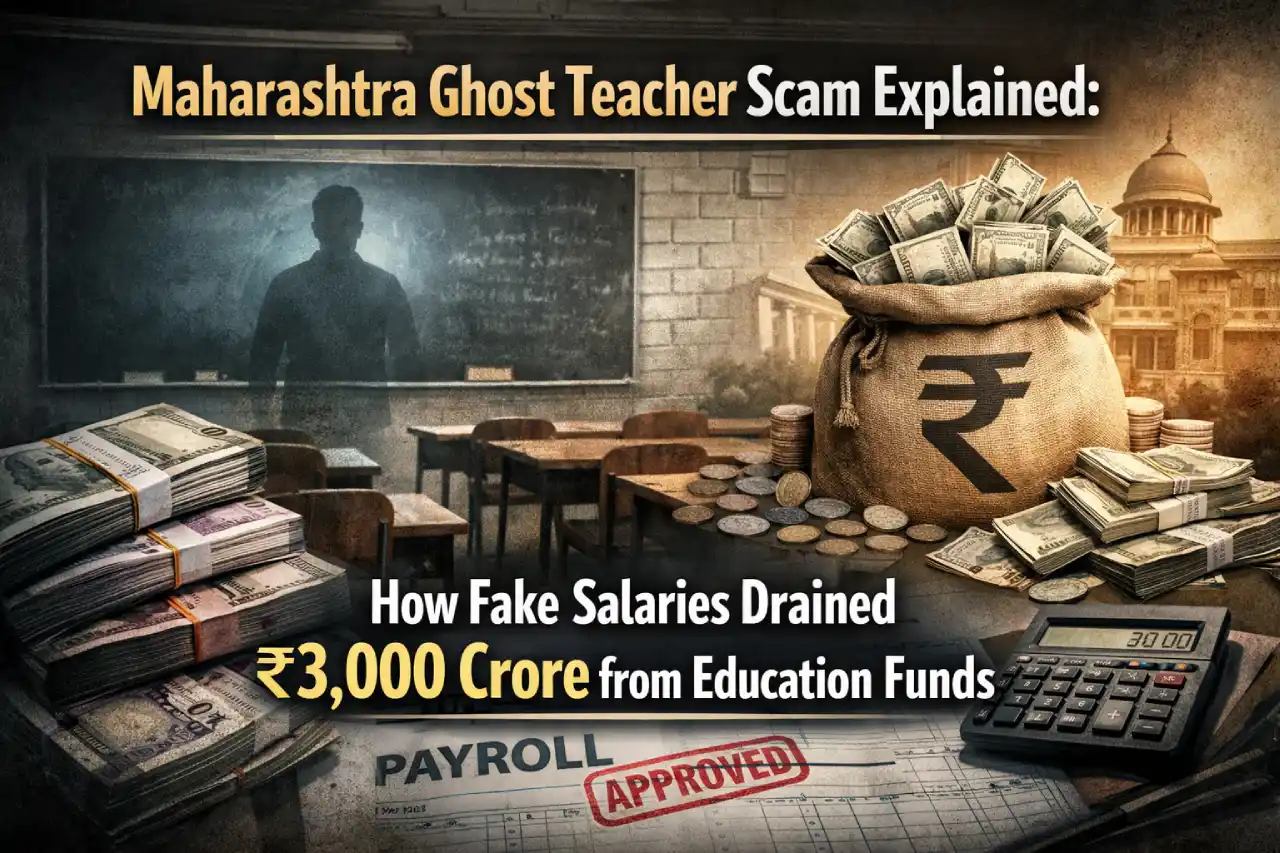
Maharashtra Ghost Teacher Scam Explained: How Fake Salaries Drained ₹3,000 Crore from Education Funds

Maharashtra Ghost Teacher Scam Explained: How Fake Salaries Drained ₹3,000 Crore from Education Funds

A massive financial scandal has rocked Maharashtra’s education department, with senior officials accused of creating thousands of “ghost teachers” to siphon off public money. According to government estimates, the scam could be worth anywhere between ₹2,000 crore and ₹3,000 crore. Fake teacher profiles were allegedly generated on the government’s salary and HR management portal, allowing salaries to be drawn for people who never existed. The fraud reportedly spans both the Mumbai and Nagpur zones.

I am writing about this issue because it exposes serious weaknesses in how public funds meant for education are monitored and protected. When money meant for schools and teachers is diverted on such a large scale, it directly impacts students, infrastructure, and trust in the system. Understanding how the scam worked is important, not just for accountability, but also to prevent similar frauds in the future.

What Is the Ghost Teacher Scam All About

The scam centres around the creation of fake teacher identities in the education department’s official salary system. These ghost teachers were shown as appointed staff, complete with employee codes and bank details, even though they never worked in any school. Salaries were then regularly credited and siphoned off by those running the operation.

The fraud was carried out using Shalarth, the state government’s official portal for managing salaries and human resources of school education staff.

How the Fake Teachers Were Created

Investigators believe that insiders with access to the system misused their authority to manipulate records. The process allegedly involved:

  • Creating fake appointment orders and service records
  • Generating employee IDs on the Shalarth portal
  • Linking bank accounts controlled by the accused or their associates
  • Ensuring regular salary disbursement without physical verification

Because the system relied heavily on digital entries, the fraud went undetected for a long time.

Scale of the Scam and Money Involved

As per initial government assessments, the total amount siphoned off could range between ₹2,000 crore and ₹3,000 crore. The scam is believed to have operated across multiple years, allowing salaries to be drawn month after month.

The involvement of both Mumbai and Nagpur education zones suggests the operation was not isolated but part of a wider network within the department.

Arrests and Investigation So Far

Some arrests have already been made in connection with the case, indicating that investigators have found concrete evidence of wrongdoing. The Maharashtra government has also announced the formation of a Special Investigation Team to probe the matter in detail.

The SIT is expected to:

  • Identify all fake teacher accounts
  • Trace the flow of money
  • Fix responsibility on officials who enabled or ignored the fraud
  • Recommend systemic changes to prevent recurrence

Why the Scam Went Undetected for So Long

One of the biggest concerns is how such a large fraud escaped notice. Experts point to:

  • Lack of regular audits and cross-verification
  • Over-reliance on digital records without physical checks
  • Limited accountability at district and zone levels
  • Weak integration between school-level data and salary systems

From my point of view, this shows that digitisation without strong oversight can create new risks instead of solving old problems.

Impact on Education and Public Trust

The money lost in this scam could have been used for teacher training, school infrastructure, student welfare schemes, and learning resources. Instead, it was drained by a system that failed to protect public funds.

Beyond financial loss, the scandal damages trust in the education administration and raises uncomfortable questions about governance and transparency.

Leave a Comment

End of Article

How Online Education Is Helping Maharashtra Students Improve Math and English Skills

How Online Education Is Helping Maharashtra Students Improve Math and English Skills

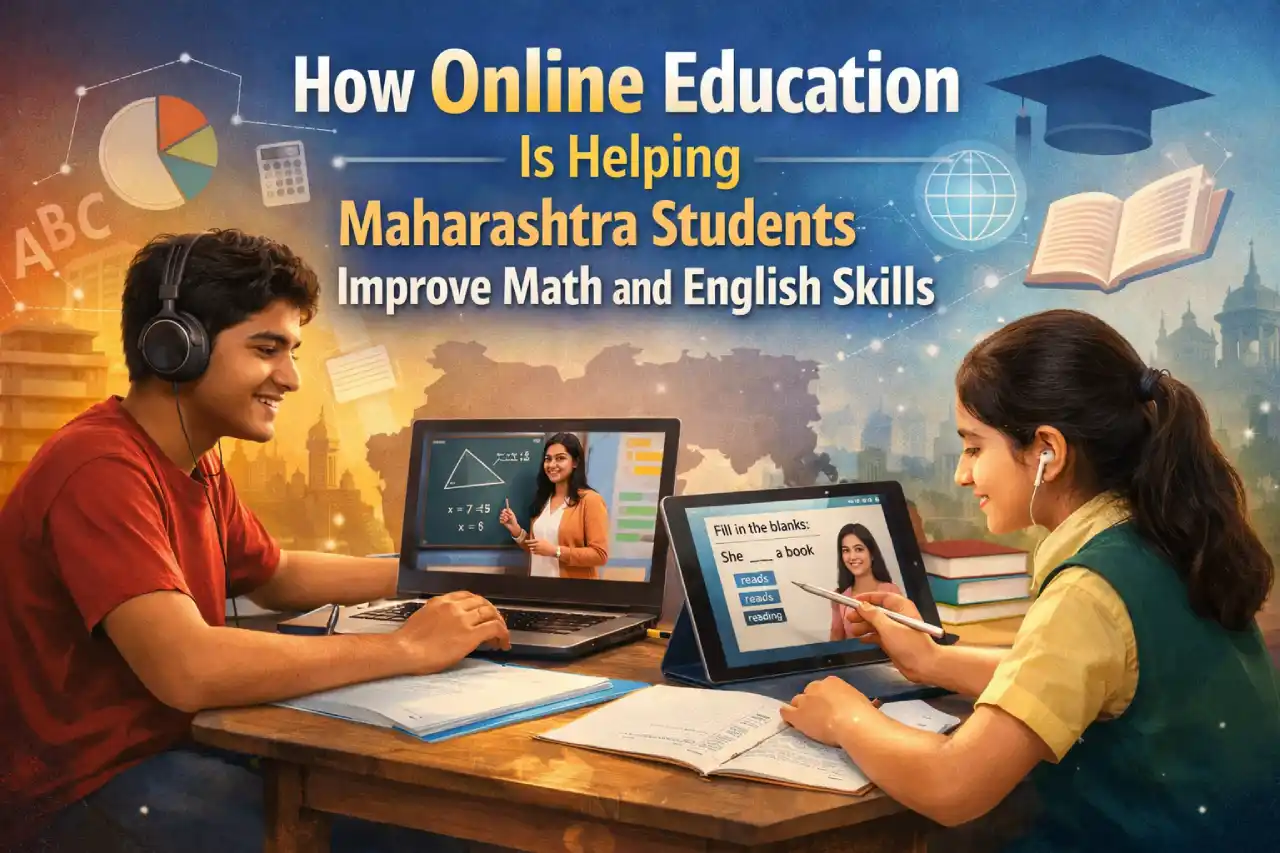
Digital learning has quietly changed the way many students across Maharashtra approach difficult subjects like Mathematics and English. For one student who once struggled with basic concepts, online learning tools became a turning point. With access to interactive lessons, recorded explanations, and regular practice tests, the student was able to learn at a comfortable pace. Over time, weak areas in maths calculations and English comprehension improved, leading to better confidence and noticeable academic progress.

I am writing about this topic because stories like these reflect a larger shift happening in education. Many students still believe that struggling in subjects means they are not capable, which is not true. The right learning support can make a big difference. Digital learning is no longer just an option for urban or elite students, it is becoming a practical solution for learners from different backgrounds who need personalised attention and flexible study methods.

The Challenge Many Students Face

Subjects like Mathematics and English often create fear among students. Maths demands clarity of concepts and constant practice, while English requires reading, listening, and confidence in expression. In traditional classrooms, students who fall behind may hesitate to ask questions, leading to long-term gaps in learning. This is exactly where digital learning tools have started to help bridge the gap.

How Digital Learning Changed the Learning Process

Digital platforms allow students to revisit lessons as many times as needed. Instead of moving at the pace of the classroom, the Maharashtra student could pause videos, revise concepts, and practise questions repeatedly.

Some key benefits included:

  • Step-by-step explanations for maths problems
  • Grammar and vocabulary practice through interactive exercises
  • Instant feedback on tests and quizzes
  • Learning without fear of judgement

This personalised approach helped build understanding and confidence.

Improvement in Mathematics Skills

For maths, digital learning provided structured practice. Concepts like fractions, algebra, and problem-solving became easier through visual explanations and guided practice sessions. Regular mock tests helped the student identify mistakes early and correct them before exams.

Over time, maths shifted from being a fear subject to one of the student’s stronger areas.

Growth in English Language Skills

English improvement came through consistent exposure. Listening to recorded lessons improved pronunciation, while reading-based exercises strengthened comprehension. Writing tasks with sample answers helped the student understand sentence structure and grammar usage.

Slowly, the student became more confident in reading passages and answering questions, both in exams and daily classroom activities.

Role of Self-Paced Learning

One of the biggest advantages of digital education is self-paced learning. The student could study early in the morning or late in the evening, depending on comfort. This flexibility reduced pressure and allowed learning to happen naturally, without stress.

From my point of view, this freedom is especially helpful for students who need more time to understand concepts.

Support from Teachers and Parents

Digital learning worked best when supported by guidance. Teachers helped track progress through performance reports, while parents encouraged regular study habits at home. This combined effort ensured the student stayed consistent and motivated.

Why This Matters for Other Students

This story is not unique. Many students across Maharashtra and other states are benefiting in similar ways. Digital learning does not replace teachers, but it strengthens learning by offering extra support where needed.

Students who struggle should see this as proof that improvement is possible with the right tools.

Leave a Comment

End of Article

Loading more posts...