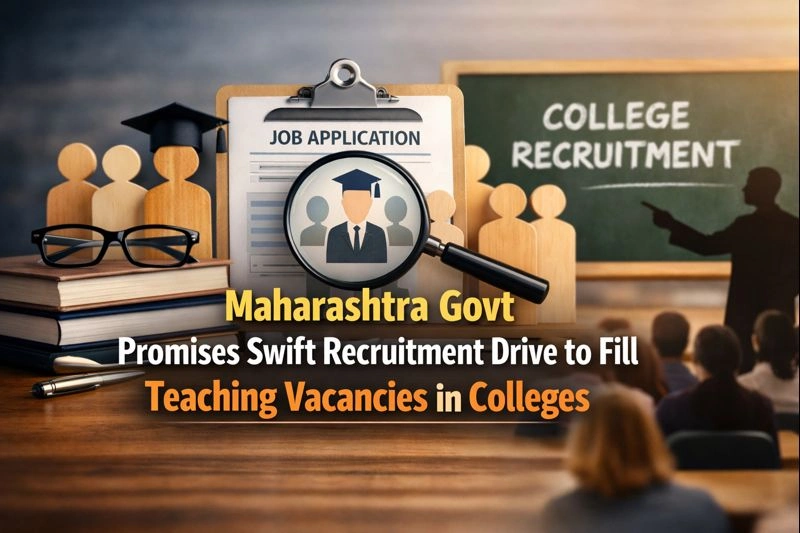
The Maharashtra government has assured that long-pending vacancies in colleges and universities across the state will be filled soon. This includes key teaching posts such as Lecturers and Assistant Professors, which have remained vacant for years and have directly affected classroom teaching and academic quality in higher education institutions.
I am writing about this development because the shortage of teaching staff has been a growing concern for students, parents and educators alike. Many colleges have been running courses with limited faculty, forcing teachers to handle extra workload and students to compromise on learning outcomes. When the government publicly commits to filling these posts, it raises hopes that higher education in Maharashtra may finally see some relief. This announcement matters not just for job aspirants waiting for recruitment notifications, but also for thousands of students whose academic experience depends on adequate faculty strength.
Scale of Vacancies in Higher Education
Across Maharashtra, government-run colleges and universities have been struggling with a shortage of teaching staff. Vacancies have piled up due to retirements, delayed recruitment approvals and administrative bottlenecks.
The vacant positions reportedly include:
- Lecturers in arts, science and commerce colleges
- Assistant Professors in universities and affiliated institutions
- Posts in professional and specialised departments
In many colleges, departments are functioning with barely half the required staff.
Government’s Assurance
According to the state government, the process to fill these vacant posts is underway and recruitment will be completed soon. Officials have indicated that necessary approvals are being processed so that hiring does not get delayed further.
The focus is on ensuring that:
- Teaching positions are prioritised
- Recruitment follows transparent procedures
- Colleges get staff as per sanctioned strength
This assurance has been welcomed by education stakeholders who have been raising the issue repeatedly.
Impact on Students and Teaching Quality
Faculty shortages directly affect students’ academic life. With fewer teachers available, students often face:
- Irregular classes
- Reduced choice of optional subjects
- Limited guidance for exams and research
- Delays in syllabus completion
In universities, research output and postgraduate supervision also suffer due to lack of qualified faculty.
Burden on Existing Faculty
Existing teachers have been carrying an additional burden for years. Many handle multiple subjects, administrative duties and examination work, often beyond their official workload.
This situation leads to:
- Burnout among teachers
- Reduced time for research and training
- Lower overall academic productivity
Filling vacancies would help restore balance and improve working conditions.
Employment Opportunity for Aspirants
The announcement is also significant for thousands of qualified candidates who have been preparing for teaching jobs. NET, SET and PhD holders have been waiting for recruitment drives that were delayed for long periods.
If implemented quickly, the recruitment process could:
- Create stable academic jobs
- Bring young faculty into classrooms
- Improve diversity in teaching staff
This could also reduce the trend of talented candidates moving out of the state.
Need for Timely Execution
While the government’s assurance is encouraging, education experts stress that timelines are crucial. Past announcements have often faced delays due to financial or administrative reasons.
There is a strong demand for:
- Clear recruitment schedules
- Regular hiring cycles
- Avoiding ad-hoc or temporary appointments
Only timely execution will ensure that the promise translates into real improvement.