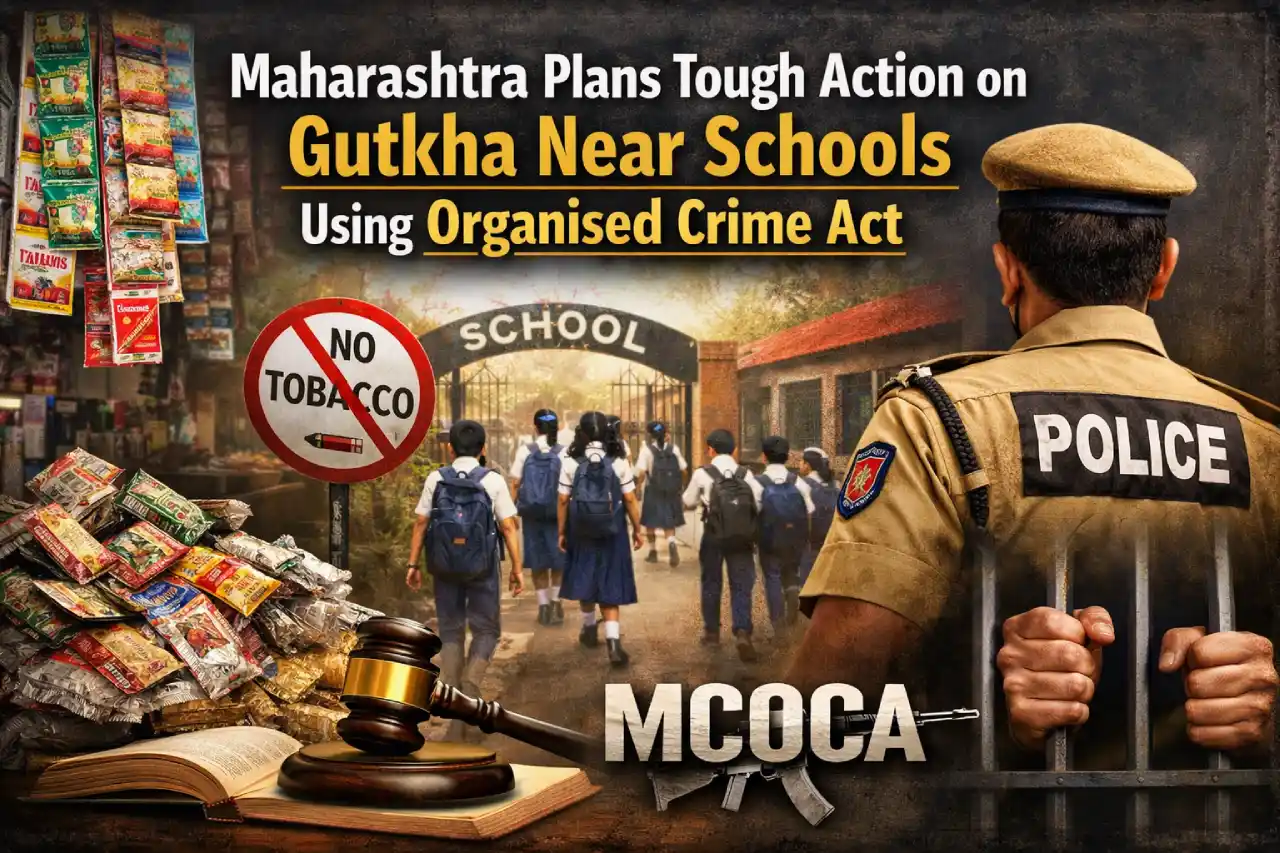
Maharashtra is preparing to take a much stricter stand against the illegal sale of gutkha near schools and colleges by invoking the Organised Crime Act. The move aims to curb the organised networks involved in the production, transport and sale of banned tobacco products, especially in areas frequented by students and young people.
The decision has come at a time when concerns over rising tobacco addiction among minors are growing across the state. Despite an existing ban on gutkha, its easy availability near educational institutions has remained a serious issue. By bringing such offences under the Organised Crime Act, the state government wants to send a strong message that selling gutkha near schools and colleges will no longer be treated as a minor offence.
Why the Organised Crime Act Is Being Considered
Gutkha has been officially banned in Maharashtra for years, yet enforcement has been challenging. Authorities have found that its sale is often backed by well-organised networks rather than small, isolated vendors.
By using the Organised Crime Act, the government can:
- Treat repeat gutkha offences as serious crimes
- Target entire supply chains, not just local sellers
- Allow stronger investigation and stricter punishment
- Act against smugglers, distributors and financiers together
This approach recognises that gutkha sale is not just a health violation but also an organised illegal business.
Focus on Schools and Colleges
The primary concern behind this decision is the easy access to gutkha around educational institutions. Shops near schools and colleges often sell banned tobacco products discreetly, making it easier for students to get addicted at a young age.
The new enforcement plan aims to:
- Create tobacco-free zones around schools and colleges
- Penalise shopkeepers repeatedly violating the ban
- Protect minors from exposure to harmful substances
- Encourage healthier learning environments
Officials believe that stricter laws will act as a strong deterrent and reduce availability near campuses.
What This Means for Sellers and Manufacturers
If implemented, this move could significantly change how gutkha-related cases are handled in Maharashtra.
Key implications include:
- Repeat offenders could face arrest under organised crime provisions
- Property and assets linked to illegal trade may be seized
- Manufacturers and transporters may also be booked, not just retailers
- Legal consequences could include longer jail terms and heavier fines
This signals that the state is no longer willing to tolerate loopholes in enforcement.
Public Health and Social Impact
Tobacco addiction among teenagers has long-term consequences, from health problems to poor academic performance. Strong legal action can help reduce early exposure and discourage illegal sellers.
From a public health point of view, this decision supports:
- Lower tobacco use among students
- Reduced health risks in the long run
- Greater awareness about the dangers of gutkha
- Stronger accountability within communities
Parents and educators have largely welcomed the move, seeing it as a step towards safer surroundings for children.