JOIN WHATSAPP
STORIES

Maharashtra ‘School at Your Doorstep’ Campaign 2026: Govt Push to Boost Enrollment and Public School Trust

Maharashtra ‘School at Your Doorstep’ Campaign 2026: Govt Push to Boost Enrollment and Public School Trust

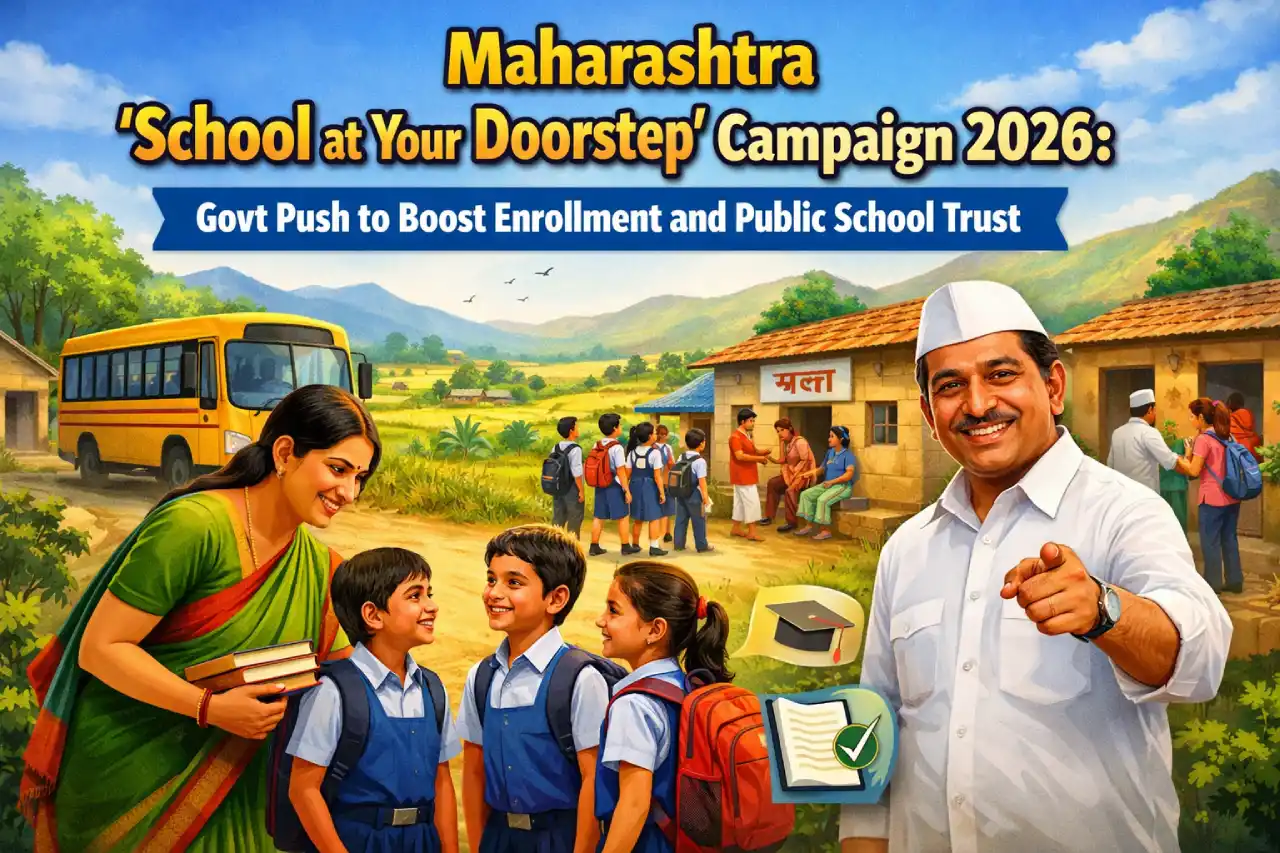
The Maharashtra government has launched a major campaign called “School at Your Doorstep” (Shala Aplya Dari) to improve enrollment in government-run schools and rebuild public trust in the education system. Announced by Education Minister Dada Bhuse, the initiative will run from March to June 2026. It focuses on direct engagement with parents through home visits by teachers and school management committees, along with community outreach programmes.

I am writing this because public schools play a crucial role in providing affordable and accessible education, yet many families are gradually shifting towards private institutions. This initiative tries to change that perception by bringing schools closer to the community. Understanding how this campaign works is important for parents, students, and educators, as it reflects a larger effort to strengthen government education and make it more appealing.

What is ‘School at Your Doorstep’ Initiative?

This campaign is designed to connect schools directly with families.

  • Teachers will visit homes to interact with parents
  • School management committees will support outreach
  • Awareness programmes will be conducted in communities
  • Focus will be on encouraging enrollment in government schools

The aim is to build trust through personal interaction rather than just announcements.

Focus on Increasing Enrollment in Government Schools

One of the main goals of the campaign is to bring more students into public schools.

  • Identify children who are not enrolled
  • Address parents’ concerns about quality and facilities
  • Highlight benefits of government schooling

Officials believe this approach will help reverse the declining enrollment trend.

Introduction of Semi-English Instruction

To match changing preferences, the government is promoting semi-English education.

  • Combines regional language with English learning
  • Helps students adapt to modern education needs
  • Attracts parents looking for English-medium exposure

This step is expected to make government schools more competitive.

Development of Ambedkar Model Schools

The government has also approved upgrading infrastructure in selected schools.

  • 405 schools to be developed as Ambedkar Model Schools
  • Improved classrooms and facilities
  • Better learning environment for students

These schools are expected to set a new standard for public education.

Sports-Focused Schools in Every District

To encourage all-round development, the state plans to:

  • Develop one sports-focused school in each district
  • Support talented students in sports
  • Provide better training and facilities

This shows a shift towards holistic education beyond academics.

Increased Rewards for Science Innovation

The government is also encouraging scientific learning and creativity.

  • First prize for state-level science exhibitions increased to ₹51,000
  • New prize structure to be लागू from 2026–27 academic year
  • Focus on innovation and practical skills

This move aims to motivate students to explore science actively.

Government’s Vision Behind the Initiative

According to Education Minister Dada Bhuse, the initiative goes beyond policy changes.

  • Focus on building trust in public education
  • Ensure equal access for rural and urban students
  • Promote skill development beyond textbooks
  • Create a supportive and inclusive learning environment

The goal is long-term improvement in the education system.

Why This Initiative Matters

From my perspective, this campaign addresses a real challenge.

  • Public schools often struggle with perception issues
  • Parents need direct communication and assurance
  • Community involvement can bring positive change

If implemented properly, this can significantly improve enrollment and confidence.
Leave a Comment

End of Article

AI Chatbot for Autism Support by College Students Wins National Hackathon 2026

AI Chatbot for Autism Support by College Students Wins National Hackathon 2026

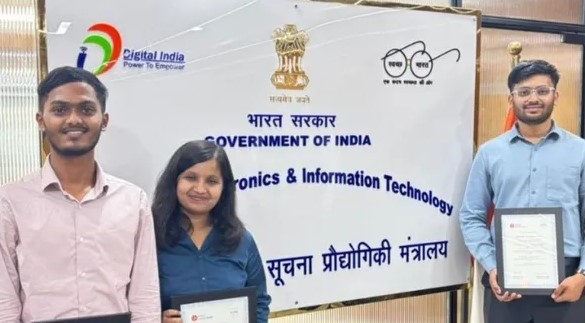
At a quiet computer lab in Maharashtra’s Rajarambapu Institute of Technology, three young engineering students are working on something far more meaningful than just code. Vaishnavi Patil, Abhishek Patil, and Ganesh Mahadik have developed an AI-powered chatbot designed to help parents of children with autism by answering their questions in real time. Their innovation recently won first place at GRASP 2026, a national-level AI hackathon, standing out among thousands of participants.

I am writing about this because stories like these show how technology can be used to solve real-life problems, especially in areas that often go unnoticed. Autism awareness and support are still limited in many parts of India, particularly in smaller towns. When students take the initiative to build something that directly helps families, it deserves attention. This is not just about innovation, but about empathy and practical impact.

Meet the Team Behind the Innovation

The project was developed by three 21-year-old students from Maharashtra.

  • Vaishnavi Rajkumar Patil
  • Abhishek Shivprasad Patil
  • Ganesh Ramchandra Mahadik

They call themselves Team Neurostars.

All three come from small-town, agricultural backgrounds, where resources are limited but determination is strong. Their journey reflects how talent and purpose can come together to create meaningful solutions.

What the AI Chatbot Does

The chatbot is designed to support parents of children with autism.

  • Answers questions related to autism in real time
  • Provides guidance for daily challenges
  • Helps parents understand behaviour and needs
  • Offers accessible support without needing experts immediately

This kind of tool can be especially useful in areas where professional help is not easily available.

The Inspiration Behind the Project

The idea did not come from textbooks but from a real-life experience.

  • A classmate shared his family’s struggle with autism
  • The team realised how little awareness existed
  • They understood the emotional and practical challenges faced by parents

This moment changed their perspective and gave direction to their project.

Vaishnavi shared that they had very little understanding of autism earlier, especially in rural areas where awareness is low and acceptance is even lower.

Journey from Small Towns to National Recognition

Each member of the team has a unique story.

  • Vaishnavi discovered coding during the pandemic
  • Abhishek developed interest after getting his first computer in school
  • Ganesh balanced academics with responsibilities from his farming background

Despite different paths, they came together with a shared goal—to build something useful.

Winning GRASP 2026 Hackathon

Their project gained national attention after winning the GRASP 2026 hackathon.

  • Competed against over 5,000 students
  • Won in the “AI for Social Good” category
  • Received ₹1 lakh prize
  • Earned mentorship and internship opportunities
  • Got a chance to collaborate with a European university

This recognition highlights the impact of their work.

Why This Innovation Matters

This chatbot addresses a real gap in society.

  • Lack of awareness about autism
  • Limited access to expert guidance in rural areas
  • Need for quick and reliable information

Technology like this can make support more accessible and less intimidating for families.

From my perspective, this is a great example of how AI can be used for social good, not just business or automation.

Challenges in Autism Awareness

The project also highlights larger issues:

  • Social stigma around autism
  • Lack of proper information
  • Limited support systems in smaller towns

By addressing these, the chatbot goes beyond being just a tool—it becomes a support system.

Future Potential of the Project

The team plans to continue improving the chatbot.

  • Add more features and accuracy
  • Expand accessibility to more users
  • Collaborate with experts and organisations

This could eventually become a widely used support platform.

Leave a Comment

End of Article

Loading more posts...

Important Video