The Maharashtra government has announced that it is working on a comprehensive policy to regulate the use of social media among minors. This move comes after growing concerns about the impact of online platforms, gaming, and digital content on children. State IT Minister Ashish Shelar shared that a dedicated expert task force has been set up to study the issue in detail and recommend practical solutions, rather than imposing strict bans.
I am writing about this because social media has become a big part of students’ daily lives, and its effects are often mixed. While it helps in learning and staying connected, excessive use can affect mental health, studies, and overall well-being. Understanding how the government plans to approach this issue is important for students, parents, and teachers who are directly affected by these changes.
Why Maharashtra is Introducing This Policy
The decision comes in response to increasing concerns raised by lawmakers and experts.
Key issues include:
- Rising screen time among children
- Influence of social media on behaviour and mental health
- Growth of online gaming addiction
- Exposure to harmful or misleading content
The government wants to address these issues through a structured and balanced approach.
Role of the Expert Task Force
To study the issue properly, the government has formed a special task force.
- Constituted on February 2, 2026
- Given three months to submit its report
- Studying usage patterns among minors
- Analysing psychological, physical, and educational impacts
The task force will also review global practices and suggest suitable policies for Maharashtra.
Key Areas Under Consideration
The upcoming policy is expected to focus on multiple aspects.
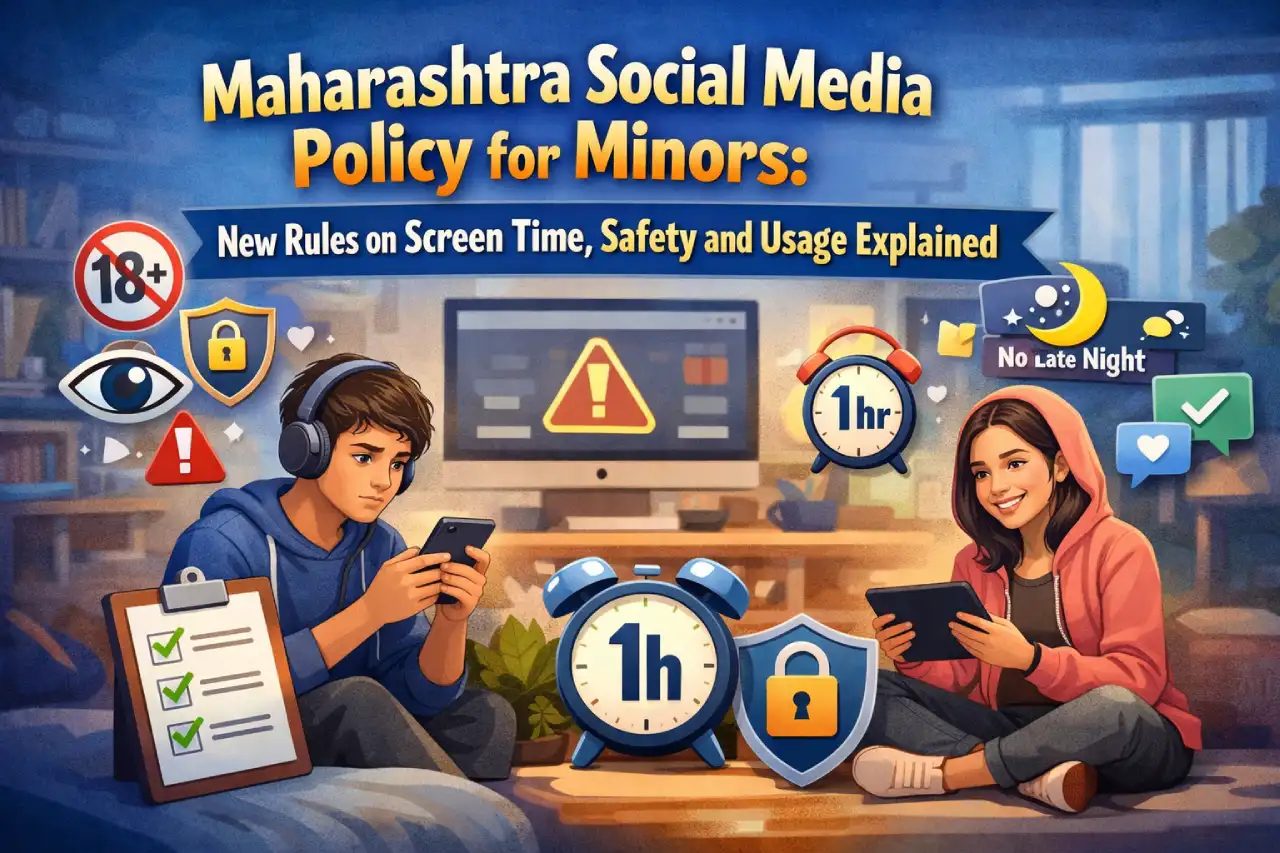
- Age-based guidelines for social media use
- Screen time limits for minors
- Digital safety and online protection
- Impact of digital advertising
These measures aim to create a safer digital environment for children.
No Blanket Ban on Social Media
One important point highlighted by the government is that a complete ban is not the solution.
- Internet is essential for education
- Students depend on digital tools for learning
- Balance is more important than restriction
From my perspective, this approach makes sense because technology is now a part of everyday education.
Possible Measures in the New Policy
Based on the task force recommendations, the government may introduce:
- Age verification systems
- Screen time regulations
- Reforms in IT laws
- Digital safety education in schools
These steps aim to promote responsible use rather than complete restriction.
Focus on Awareness and Training
The government is also planning awareness programmes.
- Training for students on safe internet use
- Guidance for parents on monitoring screen time
- Support for teachers to educate students about digital behaviour
This will help build a more informed and responsible digital culture.
Why This Policy is Important
This policy reflects a growing need to manage digital exposure among young users.
- Protects mental and physical health
- Encourages balanced use of technology
- Promotes safe online practices
- Supports better academic focus
It is a step towards creating a safer digital environment.
What It Means for Students
For students, this policy may bring some changes in daily habits.
- More awareness about screen time
- Better understanding of online safety
- Balanced use of social media and studies
Students may need to adapt, but it can have long-term benefits.