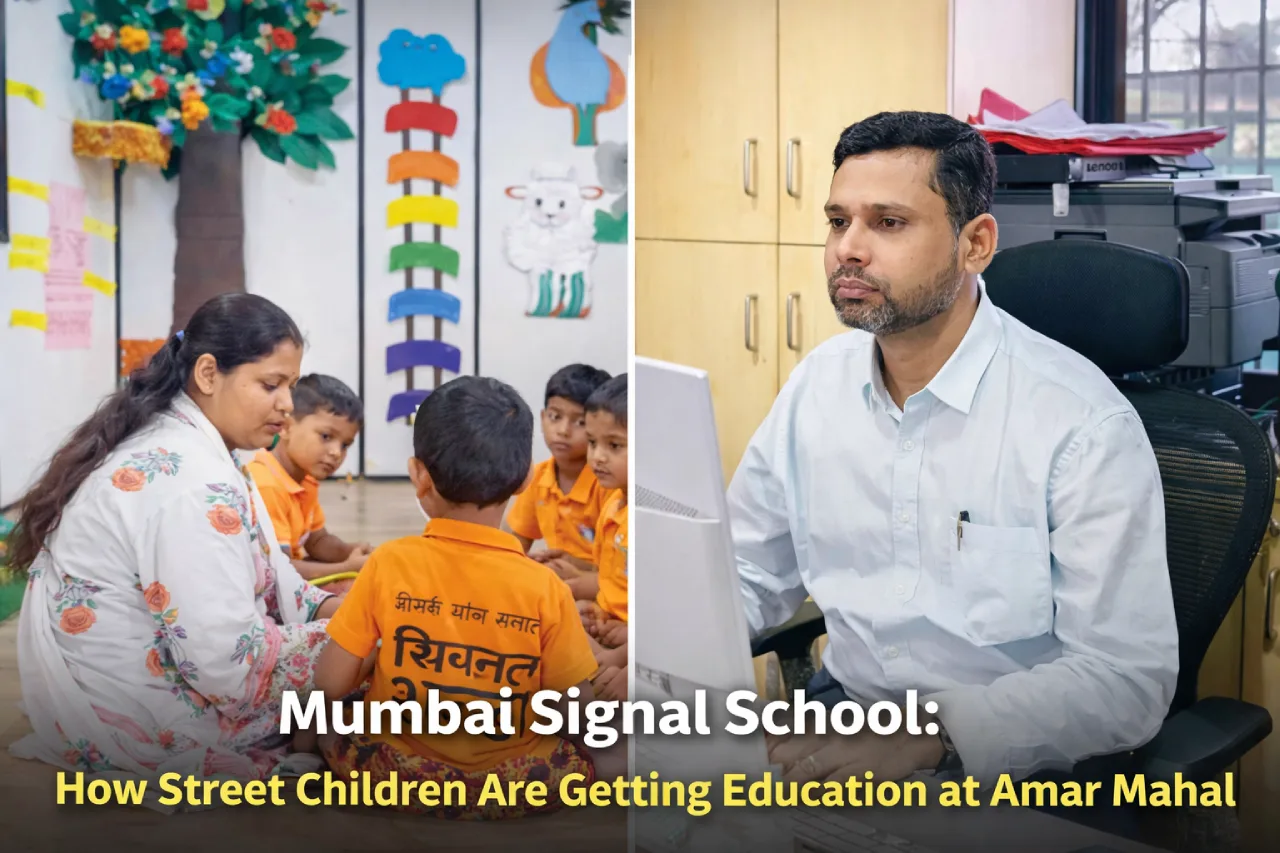
In a unique and much-needed initiative, Mumbai has opened its first ‘Signal School’ at the busy Amar Mahal junction, offering education to children who were earlier seen working at traffic signals. Bhatu Sawant, head of Samarth Bharat Vyaspeeth, shares his views on what sets Mumbai apart from other cities. Around 40 street children have now stepped into a classroom environment instead of spending their days weaving through vehicles selling items. The school, run under the flyover, represents a small but meaningful step towards bringing education to children who are often left out of the formal system.
I am writing about this because it highlights a real issue that many people see daily but often ignore—children working on the streets instead of attending school. This initiative shows that solutions are possible, even in the most crowded and challenging urban spaces. For students and readers, it is important to understand how education can transform lives and how innovative ideas like this can make a real difference.
What is a ‘Signal School’?
A Signal School is a concept designed to bring education directly to children who live or work near traffic signals.
Instead of expecting these children to attend regular schools, the school comes closer to them. It provides:
- Basic education
- A safe learning environment
- Flexible schedules for children who still support their families
This model has already been tried in places like Thane and Nerul and is now being introduced in Mumbai.
Why Amar Mahal Junction Was Chosen
The location of the school was not random. It was selected based on both need and availability of space.
Key reasons include:
- A large usable area under the flyover
- High number of children living and working nearby
- Earlier surveys identified over 100 children in need of education
Even though some families have moved due to nearby development work, children continue to come to this location for schooling.
Who Are These Children?
The children attending this school come from very challenging backgrounds.
They include:
- Children of street vendors selling flowers, umbrellas, and other items
- Kids who help their parents at traffic signals
- Children living near railway stations, bridges, or slum areas
Many of them still work part-time, especially during weekends or festivals, to support their families.
The Biggest Challenge: Convincing Parents
One of the major challenges faced by organisers is convincing parents to send their children to school.
In many cases:
- Children contribute to family income
- Parents are hesitant to lose that support
- Long-term education feels uncertain compared to daily earnings
However, through counselling and awareness, many families are slowly understanding the value of education.
Inside the Classroom: A New Beginning
For many children, this school is their first experience of structured learning.
Some voices from students reflect this change:
- An 11-year-old student shared how she now spends time learning and playing instead of travelling with her father all day
- Another student mentioned enjoying subjects like Marathi and basic maths
These small changes show how education can reshape daily life and future possibilities.
Role of NGOs and Community Support
The school is being run by Samarth Bharat Vyaspeeth, an organisation working towards social upliftment.
Their efforts include:
- Identifying children in need
- Counselling families
- Providing basic education and support
- Creating a safe learning environment
Such initiatives depend heavily on community support and collaboration.
Scope for Expansion in Mumbai
The success of this model has opened doors for expansion across the city.
Potential areas for similar schools include:
- Worli
- Andheri
- Kandivali
- Mira Road
- Goregaon
These locations also have similar conditions where such initiatives can be implemented.
Why This Initiative Matters
From my perspective, this is more than just a school—it is an opportunity for change.
- It brings education to those who need it the most
- It helps reduce child labour
- It gives children a chance at a better future
- It shows how small ideas can create big impact