JOIN WHATSAPP
STORIES

National Mathematics Day Celebrated at Samanvay Library with Prof. Nandita Narain’s Inspiring Talk

National Mathematics Day Celebrated at Samanvay Library with Prof. Nandita Narain’s Inspiring Talk

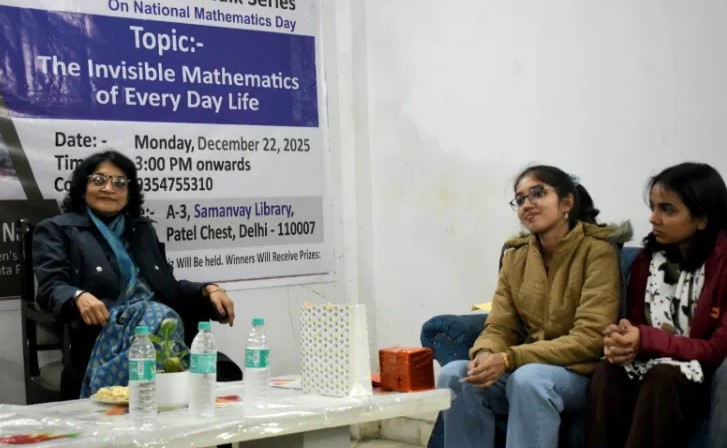
Samanvay Library recently marked National Mathematics Day with a special and engaging talk that brought together students, teachers, and curious learners under one roof. The event focused on making mathematics relatable and meaningful, moving beyond textbooks and exams. The highlight of the programme was an interactive session led by Nandita Narain, who spoke about how mathematical thinking quietly shapes everyday decisions, from budgeting at home to understanding social data and public policy.

I am writing about this event because such initiatives show how community spaces like libraries can play a powerful role in education outside classrooms. At a time when many students see mathematics as difficult or intimidating, conversations like these help break that fear. Celebrating National Mathematics Day through dialogue and real-life examples makes the subject more accessible and reminds us why logical thinking and numerical understanding are essential life skills, not just academic requirements.

About the National Mathematics Day Event

The talk was organised by Samanvay Library as part of its ongoing effort to promote learning through discussions and public lectures. National Mathematics Day, observed every year to honour Srinivasa Ramanujan’s birth anniversary, provided the perfect occasion to host a session that connected mathematics with daily life experiences.

Students from different age groups, educators, and local residents attended the event, turning it into a lively exchange of ideas rather than a one-way lecture.

Key Themes from Prof. Nandita Narain’s Talk

During her address, Prof. Narain highlighted how mathematics is often misunderstood as a subject limited to classrooms and examinations. She explained that mathematical reasoning plays a role in many aspects of society and personal life.

Some of the key points discussed included:

  • How basic mathematical thinking helps in making informed everyday decisions
  • The role of mathematics in social sciences, economics, and public policy
  • Why understanding numbers is crucial in an age driven by data and information
  • The need to remove fear and anxiety associated with learning mathematics

Her simple language and real-world examples made complex ideas easy to grasp, especially for young students.

Why Such Talks Matter for Students and Educators

Events like this help students see mathematics as a useful and living subject rather than a burden. For educators, it offers new ways to present concepts beyond traditional teaching methods.

The interaction also encouraged students to ask questions freely, creating a comfortable space for curiosity and discussion. This kind of exposure can inspire learners to explore mathematics further, whether as a subject of study or as a practical tool in everyday life.
Leave a Comment

End of Article

Delhi Schools Likely to Reopen Offline After Christmas as Pollution Curbs Ease

Delhi Schools Likely to Reopen Offline After Christmas as Pollution Curbs Ease

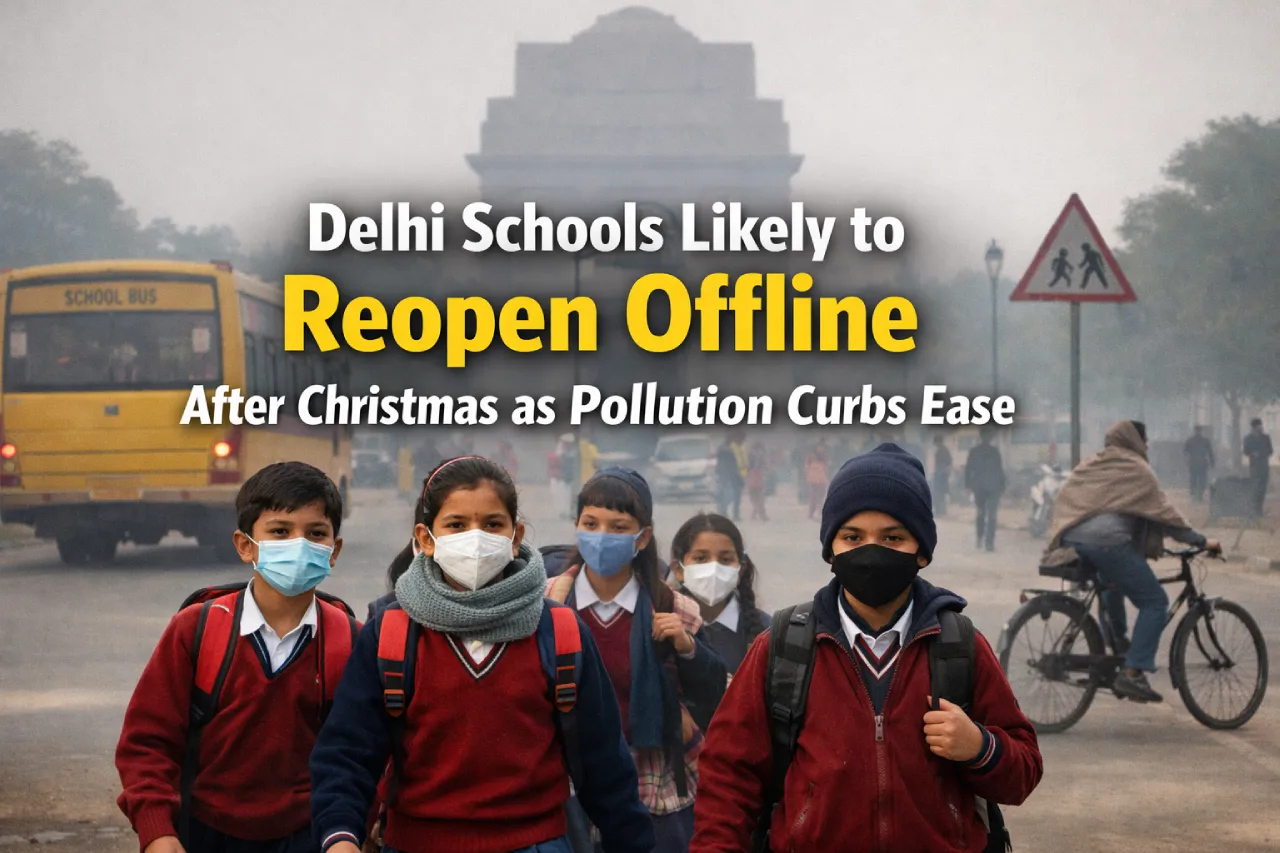
Delhi schools may soon return to physical classes after the Christmas break, following a major decision on air pollution restrictions in the national capital. The possibility of reopening comes after the Commission for Air Quality Management revoked the strict GRAP 4 curbs, which had earlier forced schools to shift to online mode. With pollution levels showing improvement, the Directorate of Education has now issued fresh guidelines for schools to plan the next steps.

I am writing about this development because frequent switches between online and offline classes have created confusion for students, parents, and teachers alike. Clear updates from authorities help families prepare for routines, transport, and academic schedules. For students especially, returning to classrooms means better interaction, structured learning, and a sense of normalcy after weeks of uncertainty.

Why Delhi Schools Were Closed Earlier

Schools in Delhi were asked to suspend physical classes after the implementation of GRAP 4 restrictions due to severe air pollution levels. These curbs were imposed to reduce emissions and protect public health, especially children, who are among the most vulnerable to poor air quality.

Under GRAP 4, several activities were restricted, and schools were advised to shift to online classes as a precautionary measure.

GRAP 4 Curbs Revoked: What Changed

The decision to revoke GRAP 4 was taken by the Commission for Air Quality Management after reviewing recent air quality data. Authorities noted that pollution levels had improved enough to relax the strictest measures, though monitoring will continue.

This rollback has opened the door for schools to consider resuming offline classes, subject to further instructions.

DoE’s New Guidelines for Schools

Following the easing of pollution curbs, the Directorate of Education Delhi has issued updated guidelines to schools. While a final confirmation on reopening dates is awaited, schools have been asked to stay prepared for a return to physical classes after the Christmas holidays.

Schools have also been advised to remain flexible and ensure that students’ health and safety remain a priority.

What Parents and Students Should Expect

As of now, schools are likely to resume physical classes after Christmas, provided air quality remains within acceptable limits. Parents should keep an eye on official notices from schools and the DoE, as decisions may vary slightly depending on local conditions.

Students may be asked to follow basic precautions, especially during morning hours, when pollution levels can fluctuate.

Health and Safety Remain Key

Even with the lifting of GRAP 4, authorities have stressed that schools must remain alert. Measures such as avoiding outdoor activities during high pollution hours and ensuring proper ventilation in classrooms may continue.

Parents are also encouraged to take precautions for children with respiratory issues.

Leave a Comment

End of Article

Loading more posts...