JOIN WHATSAPP
STORIES

NCERT Class 12 Home Science Part 2 Chapter 12: Consumer Education and Protection PDF Download

NCERT Class 12 Home Science Part 2 Chapter 12: Consumer Education and Protection

NCERT Class 12 Home Science Part 2 Chapter 12 focuses on Consumer Education and Protection, explaining how individuals can make informed choices and safeguard their rights as buyers. The chapter covers topics like consumer rights, responsibilities, common malpractices, and the role of laws in protecting consumers. It also discusses organisations and mechanisms that help resolve disputes, ensuring fair trade and ethical business practices. This is an essential chapter for understanding how to be a responsible and aware consumer in today’s marketplace.

I chose to write about this topic because consumer awareness is a life skill every person needs, regardless of age or profession. In a time where misleading advertisements, counterfeit products, and hidden charges are common, knowing our rights is crucial. Many consumers suffer losses simply because they are unaware of the legal protections available to them or how to seek help. This chapter equips students with the knowledge to identify unfair practices, demand quality and transparency, and take action when their rights are violated. It is important to spread this awareness because an informed consumer not only safeguards themselves but also helps improve market standards by holding businesses accountable.

Key Topics in Chapter 12

This chapter goes step-by-step into how consumers can protect themselves and promote fair trade practices.

Main areas covered:

  • Meaning and Importance of Consumer Education – Why awareness is necessary for everyone
  • Consumer Rights – Right to safety, information, choice, to be heard, redressal, and consumer education
  • Consumer Responsibilities – Checking product quality, reading labels, being honest in claims, and not misusing rights
  • Common Malpractices – Adulteration, false advertising, overpricing, and short weight measures
  • Consumer Protection Laws – Consumer Protection Act, 2019 and its key provisions
  • Redressal Agencies – District, State, and National Consumer Commissions
  • Role of NGOs and Consumer Organisations – Creating awareness and helping with complaint filing
  • Practical Steps for Consumers – Keeping receipts, knowing warranty terms, and using grievance portals

Real-life Importance

Consumer protection is not just about filing complaints when something goes wrong, it’s also about making smart buying decisions. For example, if a person buys an electronic item and it stops working within the warranty period, they should know the right way to approach the seller, escalate the complaint, and claim free repair or replacement. Similarly, when shopping online, reading reviews and verifying sellers can help avoid fraud. This knowledge ensures that consumers are not taken advantage of and that companies maintain ethical standards.

Download PDF

You can download NCERT Class 12 Home Science Part 2 Chapter 12: Consumer Education and Protection PDF from here.

Leave a Comment

End of Article

Class 11 Sanskrit Shashwati Chapter 11 PDF: नवद्रव्याणि Explained

Class 11 Sanskrit Shashwati Chapter 11 PDF: नवद्रव्याणि Explained

NCERT Class 11 Sanskrit Shashwati Chapter 11, titled “नवद्रव्याणि”, introduces students to an important concept from Indian philosophy—the nine fundamental substances that make up the universe. The chapter explains these elements in a simple and structured way, helping students understand how ancient thinkers tried to explain the nature of reality through observation and logic.

I am writing about this chapter because many students search for the official NCERT PDF along with a simple explanation before exams. In my experience, topics like “नवद्रव्याणि” may feel slightly abstract at first, but once you understand the list and their meanings, it becomes quite easy to remember and revise. This chapter is important not only for Sanskrit exams but also for gaining a basic idea of traditional Indian philosophy. It helps students connect language learning with deeper concepts. Studying from the official NCERT book and revising regularly can make this chapter scoring and easy to handle.

About the Chapter: नवद्रव्याणि

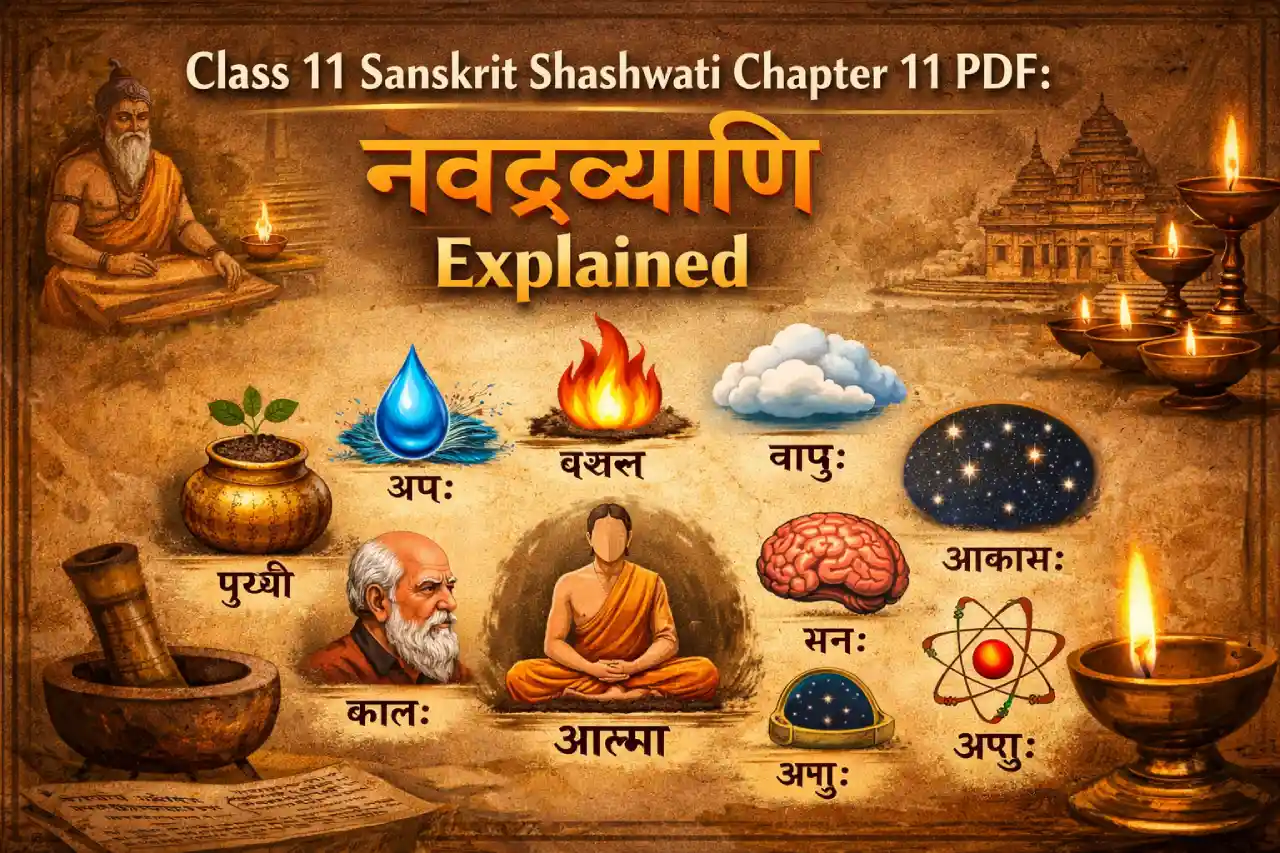
The term “नवद्रव्याणि” means “nine substances.” These are considered the basic elements that exist in the universe according to classical Indian thought.

The chapter explains each of these substances and their role in the functioning of the world.

The Nine Substances Explained

Here is a simple table to understand the nine dravyas:

Sanskrit TermMeaning (Simple English)
पृथ्वी (Prithvi)Earth
आपः (Apah)Water
तेजः (Tejas)Fire
वायु (Vayu)Air
आकाश (Akasha)Space
काल (Kala)Time
दिशा (Disha)Direction
आत्मा (Atma)Soul
मनः (Manas)Mind

These elements together explain the physical and non-physical aspects of existence.

Key Ideas in the Chapter

1. Understanding the Universe

The chapter explains how everything in the world is made up of basic substances.

2. Physical and Non-Physical Elements

Some substances like earth and water are physical, while others like time and soul are abstract.

3. Connection Between Mind and Body

The inclusion of “मनः” (mind) and “आत्मा” (soul) shows the importance of inner consciousness.

Why This Chapter Is Important for Students

  • Helps understand basic philosophical concepts
  • Improves Sanskrit reading and comprehension
  • Important for exam questions and explanations
  • Builds logical and conceptual thinking

Students who understand the list properly can easily score marks.

Study Tips for Chapter 11

  • Memorise the nine dravyas and their meanings
  • Understand the difference between physical and abstract elements
  • Practise writing short explanations
  • Revise regularly using a table format

This makes the chapter easier to revise before exams.

How to Download NCERT Class 11 Sanskrit Shashwati Chapter 11 PDF

Students can download the official chapter PDF from the National Council of Educational Research and Training website by following these steps:

Always use the official NCERT website to ensure you get the correct and updated version.

Leave a Comment

End of Article

Loading more posts...