JOIN WHATSAPP
STORIES

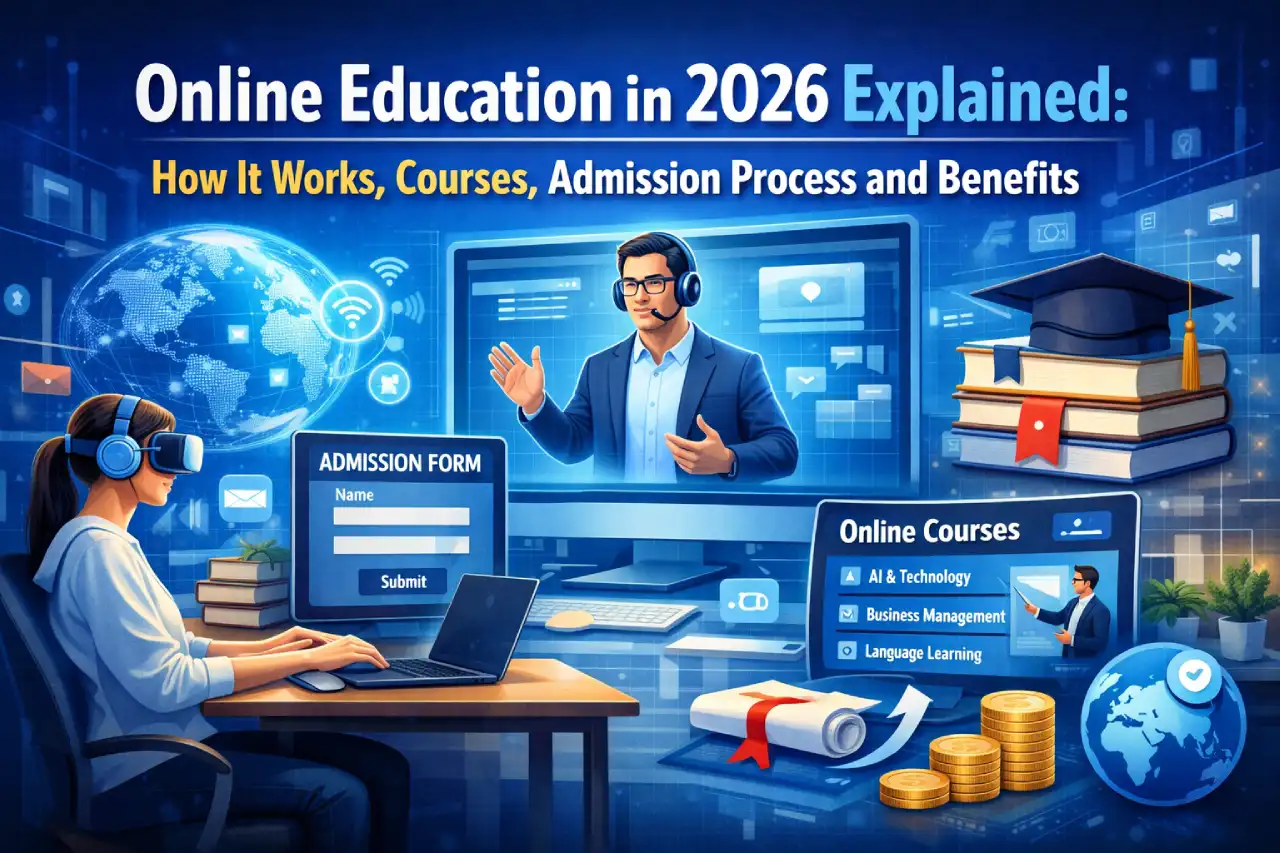
Online Education in 2026 Explained: How It Works, Courses, Admission Process and Benefits

Online Education in 2026 Explained: How It Works, Courses, Admission Process and Benefits

Online education has become one of the most popular ways of learning in recent years, especially after the shift towards digital platforms. In simple terms, online education means studying through the internet instead of attending physical classrooms. Students can access lectures, assignments, and study materials from anywhere, making it a flexible and convenient option for learners of all ages.

I am writing this because many students and working professionals are now considering online education but are still unsure about how it actually works. Questions like “Is it valid?”, “How do I take admission?”, and “Is it worth it?” are very common. This guide will help you understand everything clearly so that you can make an informed decision about your future.

What Is Online Education?

Online education is a mode of learning where teaching and learning happen through digital platforms.

  • Classes are conducted via the internet
  • Study materials are available online
  • Students can learn from home or anywhere

It removes the need for physical attendance in most cases.

How Does Online Education Work?

The process is quite simple and user-friendly.

  • Students enrol in a course through a university or platform
  • They receive login access to an online learning portal
  • Lectures are delivered through videos, live classes, or recorded sessions
  • Assignments and tests are conducted online
  • Exams may be online or at designated centres

Everything is managed digitally, making it easy to access.

Types of Online Courses Available

There are many options available depending on your needs:

  • Degree Courses: BA, B.Com, BBA, MBA, etc.
  • Diploma Courses: Short-term professional courses
  • Certificate Courses: Skill-based programmes
  • Professional Courses: IT, digital marketing, data science, etc.

You can choose based on your career goals.

Admission Guide for Online Education 2026

If you are planning to take admission, here is the basic process:

  • Visit the official website of the university or platform
  • Select your desired course
  • Fill out the online application form
  • Upload required documents (ID proof, certificates, photos)
  • Pay the application or course fee
  • Receive confirmation and login details

Most online courses have a simple and quick admission process.

Documents Required for Admission

Keep these documents ready:

  • Aadhaar card or ID proof
  • Academic certificates
  • Passport-size photographs
  • Email ID and mobile number

Having everything ready can speed up the process.

Benefits of Online Education

Online learning offers several advantages:

  • Flexible learning schedule
  • Study from anywhere
  • Lower cost compared to regular courses
  • Access to recorded lectures anytime
  • Suitable for working professionals

I personally feel flexibility is the biggest advantage here.

Challenges of Online Education

While it has benefits, there are some challenges too:

  • Requires self-discipline
  • Limited face-to-face interaction
  • Internet connectivity is essential
  • Practical learning may be limited in some courses

Students should be aware of these before enrolling.

Is Online Education Valid in India?

Yes, online education is valid if done from recognised institutions.

  • Courses approved by UGC and AICTE are accepted
  • Degrees from recognised universities hold value
  • Important to verify accreditation before applying

Always check the official recognition status.

Tips Before Choosing an Online Course

Here are some practical tips:

  • Check university recognition and accreditation
  • Compare course fees and syllabus
  • Read student reviews
  • Look for placement or career support
  • Choose a course aligned with your goals

Making the right choice is very important.

Future of Online Education

Online education is expected to grow even more in the coming years.

  • More universities are offering online degrees
  • Technology like AI and virtual learning is improving
  • Demand for flexible learning is increasing

This makes it a strong option for future learners.
Leave a Comment

End of Article

AI Chatbot for Autism Support by College Students Wins National Hackathon 2026

AI Chatbot for Autism Support by College Students Wins National Hackathon 2026

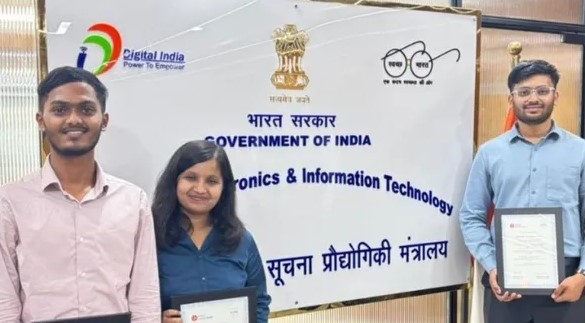
At a quiet computer lab in Maharashtra’s Rajarambapu Institute of Technology, three young engineering students are working on something far more meaningful than just code. Vaishnavi Patil, Abhishek Patil, and Ganesh Mahadik have developed an AI-powered chatbot designed to help parents of children with autism by answering their questions in real time. Their innovation recently won first place at GRASP 2026, a national-level AI hackathon, standing out among thousands of participants.

I am writing about this because stories like these show how technology can be used to solve real-life problems, especially in areas that often go unnoticed. Autism awareness and support are still limited in many parts of India, particularly in smaller towns. When students take the initiative to build something that directly helps families, it deserves attention. This is not just about innovation, but about empathy and practical impact.

Meet the Team Behind the Innovation

The project was developed by three 21-year-old students from Maharashtra.

  • Vaishnavi Rajkumar Patil
  • Abhishek Shivprasad Patil
  • Ganesh Ramchandra Mahadik

They call themselves Team Neurostars.

All three come from small-town, agricultural backgrounds, where resources are limited but determination is strong. Their journey reflects how talent and purpose can come together to create meaningful solutions.

What the AI Chatbot Does

The chatbot is designed to support parents of children with autism.

  • Answers questions related to autism in real time
  • Provides guidance for daily challenges
  • Helps parents understand behaviour and needs
  • Offers accessible support without needing experts immediately

This kind of tool can be especially useful in areas where professional help is not easily available.

The Inspiration Behind the Project

The idea did not come from textbooks but from a real-life experience.

  • A classmate shared his family’s struggle with autism
  • The team realised how little awareness existed
  • They understood the emotional and practical challenges faced by parents

This moment changed their perspective and gave direction to their project.

Vaishnavi shared that they had very little understanding of autism earlier, especially in rural areas where awareness is low and acceptance is even lower.

Journey from Small Towns to National Recognition

Each member of the team has a unique story.

  • Vaishnavi discovered coding during the pandemic
  • Abhishek developed interest after getting his first computer in school
  • Ganesh balanced academics with responsibilities from his farming background

Despite different paths, they came together with a shared goal—to build something useful.

Winning GRASP 2026 Hackathon

Their project gained national attention after winning the GRASP 2026 hackathon.

  • Competed against over 5,000 students
  • Won in the “AI for Social Good” category
  • Received ₹1 lakh prize
  • Earned mentorship and internship opportunities
  • Got a chance to collaborate with a European university

This recognition highlights the impact of their work.

Why This Innovation Matters

This chatbot addresses a real gap in society.

  • Lack of awareness about autism
  • Limited access to expert guidance in rural areas
  • Need for quick and reliable information

Technology like this can make support more accessible and less intimidating for families.

From my perspective, this is a great example of how AI can be used for social good, not just business or automation.

Challenges in Autism Awareness

The project also highlights larger issues:

  • Social stigma around autism
  • Lack of proper information
  • Limited support systems in smaller towns

By addressing these, the chatbot goes beyond being just a tool—it becomes a support system.

Future Potential of the Project

The team plans to continue improving the chatbot.

  • Add more features and accuracy
  • Expand accessibility to more users
  • Collaborate with experts and organisations

This could eventually become a widely used support platform.

Leave a Comment

End of Article

Loading more posts...

Important Video