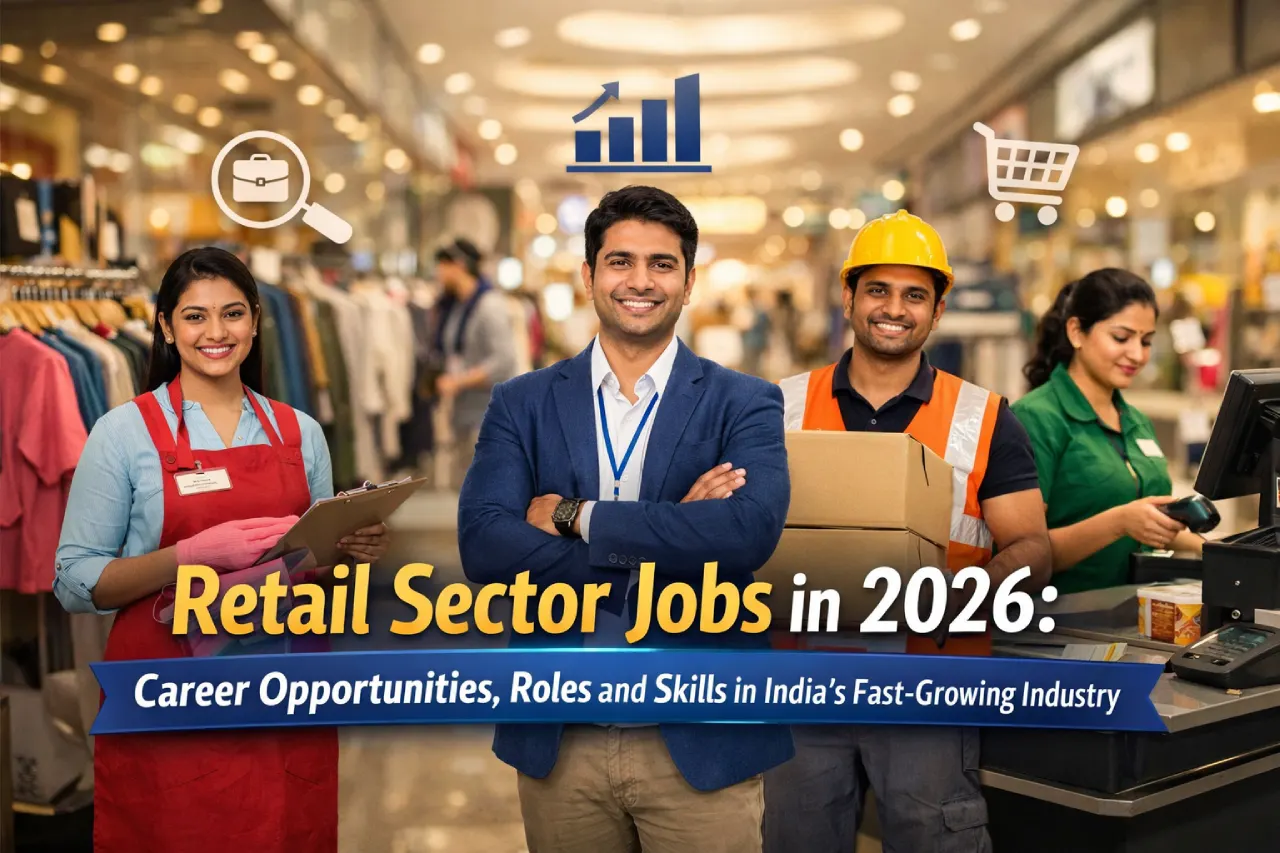
The job market is constantly evolving, and one sector that continues to create large employment opportunities is retail. In 2026, the retail industry is expected to remain one of the biggest job generators, especially in a fast-growing economy like India. From large shopping malls and supermarkets to online marketplaces and quick commerce platforms, retail businesses are expanding rapidly. As consumer demand increases, companies require skilled workers to manage sales, logistics, digital platforms and customer experience.
I decided to write about jobs in the retail sector because many students and job seekers often overlook this industry while planning their careers. In reality, retail offers a wide range of opportunities, from entry-level positions to specialised roles in management, supply chain and technology. Understanding where these jobs are likely to emerge in 2026 can help students prepare the right skills and make informed career decisions.
Why the Retail Sector Is Growing Rapidly
The retail industry has undergone a significant transformation in recent years. Growth in digital payments, online shopping and organised retail chains has created new business models.
Several factors are driving this growth:
- Rising consumer spending in urban and semi-urban areas
- Expansion of e-commerce and quick delivery services
- Increasing number of shopping malls and retail chains
- Greater adoption of digital technology in retail operations
- Growth of direct-to-consumer brands
These trends are expected to continue, making retail a major employment sector in the coming years.
Types of Retail Jobs Expected to Grow in 2026
Retail jobs are no longer limited to working at store counters. The sector now includes many specialised roles that require technical, managerial and communication skills.
Some of the most in-demand retail jobs include:
- Store managers
- Retail sales associates
- Supply chain and logistics managers
- Merchandising specialists
- Customer experience executives
- Digital marketing professionals for retail brands
- Inventory and warehouse managers
- E-commerce operations managers
With the rise of online retail platforms, the demand for digital and technology-driven roles is also increasing.
Opportunities in E-Commerce Retail
One of the biggest job creators in the retail sector today is e-commerce.
Online marketplaces and quick commerce platforms require a large workforce to manage operations such as:
- Order processing and fulfilment
- Warehouse management
- Delivery logistics
- Product cataloguing
- Digital advertising and marketing
The combination of physical stores and online platforms, often called omnichannel retail, is also creating new hybrid job roles.
Skills Needed for Retail Careers
Students interested in building a career in the retail sector should focus on developing a combination of soft skills and technical knowledge.
Important skills include:
- Strong communication and customer handling abilities
- Basic understanding of sales and marketing strategies
- Data analysis and digital marketing knowledge
- Inventory and supply chain management
- Problem-solving and decision-making skills
- Familiarity with e-commerce platforms and digital tools
Retail employers increasingly value candidates who can combine customer service skills with technological awareness.
Entry-Level Jobs in Retail
One of the biggest advantages of the retail industry is that it offers a large number of entry-level opportunities.
Common entry-level roles include:
| Job Role | Key Responsibilities |
|---|---|
| Sales Associate | Assisting customers and managing store sales |
| Store Assistant | Supporting store operations and product displays |
| Customer Support Executive | Handling customer queries and complaints |
| Warehouse Assistant | Managing stock and order packaging |
These roles can often lead to supervisory and management positions with experience.
Career Growth in Retail Management
Retail careers can progress quickly for those who gain experience and develop leadership skills.
Typical career progression may look like this:
| Career Stage | Position |
|---|---|
| Entry Level | Sales Associate |
| Mid Level | Store Supervisor |
| Management | Store Manager |
| Senior Level | Regional Retail Manager |
Large retail brands and multinational companies often provide structured training programmes to help employees grow within the organisation.
How Technology Is Changing Retail Jobs
Technology is playing a major role in reshaping retail careers.
Modern retail businesses now use:
- Data analytics to understand customer behaviour
- Artificial intelligence for product recommendations
- Digital payment systems
- Automated inventory tracking systems
Because of this shift, retail professionals with digital skills and data knowledge will have an advantage in the job market.
Why Retail Is a Good Career Option in 2026
The retail sector offers several advantages for job seekers.
Some key benefits include:
- Large number of job opportunities
- Opportunities for rapid career growth
- Exposure to business operations and customer interaction
- Availability of jobs across cities and towns
- Opportunities in both physical stores and online platforms
For students who enjoy working with people and business operations, retail can be a rewarding career choice.