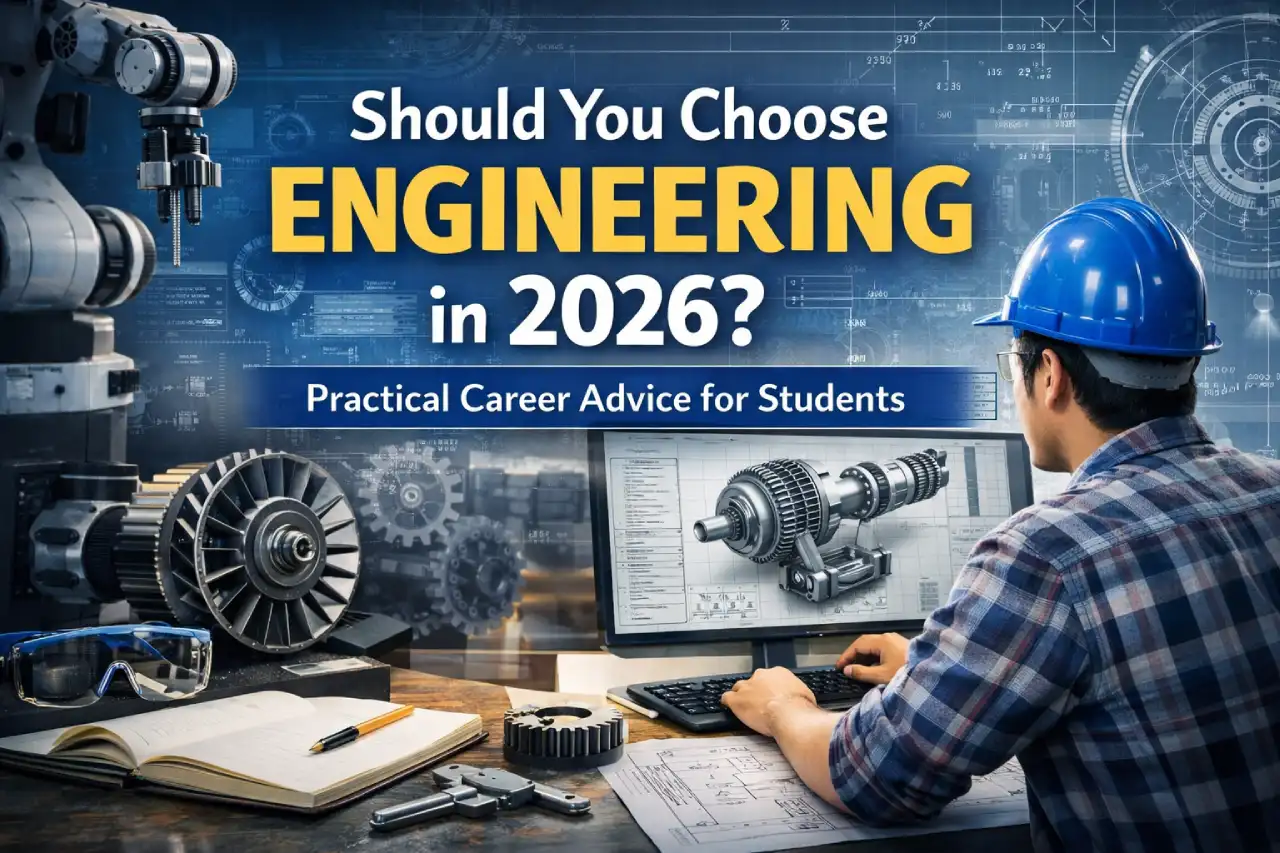
Choosing engineering as a stream is a big decision, especially for students planning their future in 2026. For many, engineering still sounds like a safe and respected option, but the reality today is more layered. The field has evolved, competition has increased, and expectations from engineers have changed. Engineering can offer strong career opportunities, but only if it matches your interests, strengths, and willingness to keep learning over time.
I am writing about this topic because every year I see students choosing engineering without fully understanding what the journey involves. Some do well and enjoy the process, while others feel stuck after a few semesters. Asking the right questions before choosing engineering is important, especially when students today have many more career options than previous generations.
What Engineering Studies Are Really Like
Engineering is not just about clearing entrance exams or getting into a good college. It involves continuous problem-solving, practical application of concepts, and long hours of study and practice. Subjects like mathematics, physics, coding, and core technical papers form the backbone of most engineering branches.
If you enjoy understanding how things work and are comfortable with analytical thinking, engineering may suit you well.
Engineering Branches Students Should Understand in 2026
Many students still believe engineering only means computer science or mechanical engineering. In reality, the options are much wider now.
Popular and emerging branches include:
- Computer Science and Artificial Intelligence
- Data Science and Cyber Security
- Mechanical and Electrical Engineering
- Civil and Infrastructure Engineering
- Electronics and Communication
- Biotechnology and Environmental Engineering
Each branch has a different career path, so choosing blindly can lead to disappointment later.
Career Scope of Engineering in 2026
In 2026, engineering careers are more skill-focused than degree-focused. Employers look for students who can apply knowledge, not just score marks. Internships, live projects, and hands-on learning matter a lot.
Engineering graduates today work in:
- Technology and software companies
- Manufacturing and infrastructure sectors
- Research, innovation, and product design
- Startups and entrepreneurship
- Higher studies, teaching, or specialised roles
Your skills and adaptability often matter more than the college name alone.
Questions Every Student Should Ask Before Choosing Engineering
Before finalising engineering as a stream, it helps to pause and reflect honestly:
- Do I enjoy logical problem-solving?
- Am I ready for continuous learning and upskilling?
- Can I handle academic pressure and competition?
- Am I choosing engineering because I want to, or because others expect me to?
Clear answers can prevent regret later.
Engineering Is Not the Only Successful Career Option
One important truth students should understand is that engineering is not the only path to success. Fields like management, design, commerce, law, healthcare, media, and skilled vocational careers also offer growth and stability today.
Choosing a stream that matches your personality and interest often leads to better long-term satisfaction.
When Engineering Makes Sense as a Career Choice
Engineering is a good option if you:
- Have genuine interest in technology or problem-solving
- Are comfortable with maths, logic, and technical subjects
- Are ready to build skills beyond the syllabus
- Have some clarity about the branch you want to pursue
In such cases, engineering can be both rewarding and future-proof.