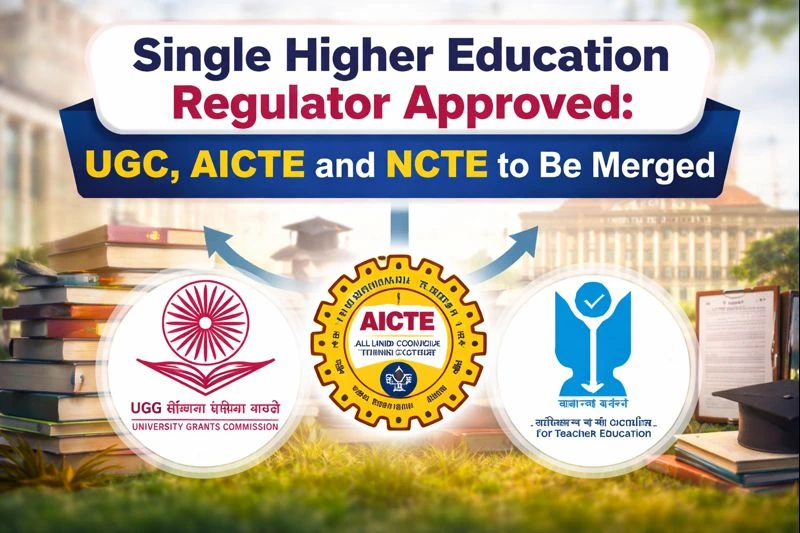
The Union Cabinet has approved the creation of a single higher education regulator that will replace three existing bodies—the University Grants Commission (UGC), the All India Council for Technical Education (AICTE) and the National Council for Teacher Education (NCTE). This move marks a major shift in how higher education will be governed in India, with the aim of simplifying regulation and bringing all streams of higher education under one umbrella.
I am writing about this decision because it directly affects students, teachers, colleges and universities across the country. For years, higher education institutions have dealt with overlapping rules, multiple approvals and different regulators depending on the course they offered. This change promises a more streamlined system, but it also raises important questions about implementation, autonomy and accountability. Understanding what this reform means can help students and educators prepare for how higher education governance is likely to evolve in the coming years.
What Has the Cabinet Approved
The Cabinet has cleared the proposal to set up a single higher education regulator that will take over the regulatory roles currently handled by UGC, AICTE and NCTE.
At present:
- UGC regulates non-technical higher education such as arts, science and commerce
- AICTE oversees technical education including engineering, management and pharmacy
- NCTE regulates teacher education institutions like BEd and DElEd colleges
Under the new system, all these functions will be brought under one regulatory authority.
Why the Government Is Making This Change
One of the main reasons behind this reform is to reduce complexity in the higher education system. Institutions offering multiple types of courses often have to approach different regulators, leading to delays and confusion.
The government believes a single regulator will:
- Remove duplication of regulations
- Speed up approvals and clearances
- Ensure uniform standards across disciplines
- Reduce administrative burden on institutions
- Improve ease of doing education
This decision aligns with the broader vision of education reforms outlined in the National Education Policy.
How the New Regulator Is Expected to Function
While detailed rules are yet to be notified, the proposed regulator is expected to focus on:
- Setting academic and quality standards
- Monitoring compliance by institutions
- Ensuring transparency in approvals
- Promoting institutional autonomy
- Encouraging innovation and multidisciplinary education
The idea is to separate regulation from funding and academic content, allowing institutions more freedom while maintaining oversight.
What Happens to UGC, AICTE and NCTE
With the new regulator in place:
- UGC will no longer function as the main regulatory authority
- AICTE’s role in approving technical courses will be absorbed
- NCTE’s oversight of teacher education will shift to the new body
Some of their existing functions may be restructured or reassigned within the new framework.
What This Means for Colleges and Universities
For higher education institutions, this could bring both relief and adjustment.
Possible benefits include:
- One-point regulation instead of multiple authorities
- Clearer and more consistent guidelines
- Faster decision-making processes
- More flexibility in launching multidisciplinary courses
At the same time, institutions will need to adapt to new rules and reporting systems.