South Asia is a politically significant region that includes several neighbouring countries with shared histories, cultures and economic challenges. Nations such as India, Pakistan, Bangladesh, Nepal, Sri Lanka, Bhutan, Maldives and Afghanistan form this region and influence each other’s political developments. Over the decades, South Asia has experienced democratic movements, ethnic conflicts, regional rivalries and efforts to promote cooperation among neighbouring states. Understanding these developments helps explain the political relationships, conflicts and partnerships that shape the region today.
I am writing about this topic because students studying political science often find the politics of South Asia both complex and fascinating. The region presents real-world examples of democratic struggles, regional organisations and international diplomacy. In my view, studying these developments helps learners understand how neighbouring countries interact with each other and how regional cooperation can address common problems such as poverty, security concerns and economic development. It also highlights why democracy remains an important aspiration across South Asian societies.
Countries That Make Up South Asia
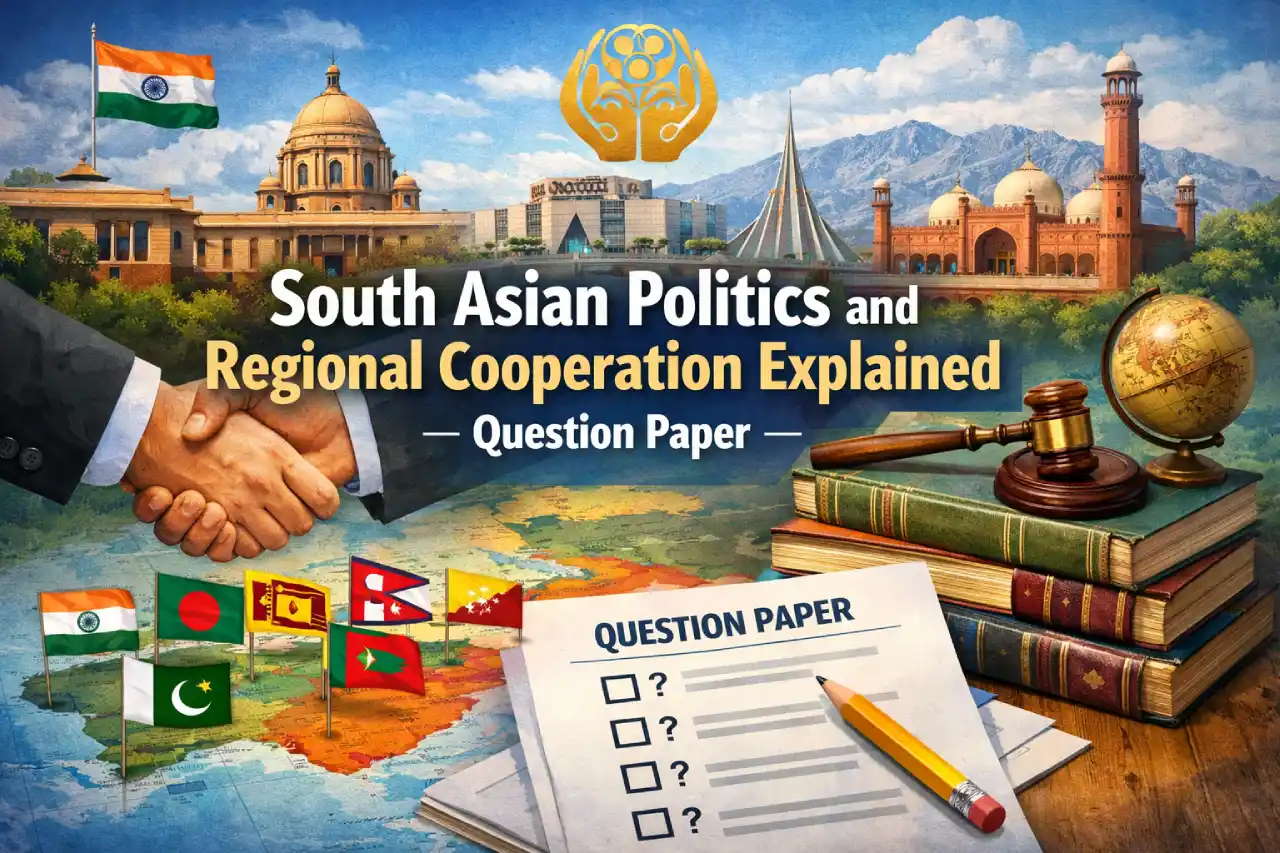
South Asia is a geographical and political region consisting of several countries connected by shared historical experiences and regional interactions.
The main countries included in the region are:
- India
- Pakistan
- Bangladesh
- Nepal
- Sri Lanka
- Bhutan
- Maldives
- Afghanistan
India occupies a central geographical position and shares borders with most of the countries in the region. Because of this central location, India plays an important role in shaping political developments in South Asia.
Political Systems in the Region
The countries of South Asia follow different political systems, though many of them have adopted democratic governance over time.
For example:
- India has maintained a stable parliamentary democracy since independence.
- Sri Lanka has also sustained a democratic political system.
- Pakistan has experienced alternating periods of military rule and civilian governments.
- Bangladesh has faced political instability along with military interventions in the past.
- Nepal moved from monarchy to a democratic republic after a long political struggle.
These developments show that while democracy has faced challenges, it continues to gain acceptance across the region.
Aspirations for Democracy in South Asia
Despite political instability in some countries, the people of South Asia strongly support democratic governance. Popular movements and political protests have played an important role in expanding democratic institutions.
For instance, political movements in Nepal demanded a more open and representative system of governance, eventually leading to the end of monarchy and the establishment of democratic institutions. Similar struggles in other countries have also strengthened the demand for democratic reforms.
Public opinion across the region generally views democracy as the most suitable system for governance.
Download this B-1 Contemporary South Asia WS 2 PDF File: Click Here
Regional Cooperation and SAARC
South Asian countries recognised the importance of cooperation and created a regional organisation to promote economic and social development among member states.
The organisation aims to:
- Promote peace and stability in the region
- Encourage economic cooperation and trade
- Improve cultural and social relations among member countries
- Address shared challenges such as poverty and development
Through regular meetings and agreements, member countries attempt to strengthen regional collaboration.
South Asian Free Trade Agreement
An important step toward economic cooperation in the region was the creation of a regional free trade arrangement among member states. The objective of this agreement is to reduce trade barriers and encourage economic integration.
Key goals include:
- Increasing trade among South Asian countries
- Reducing tariffs on goods and services
- Promoting economic development across the region
- Strengthening economic cooperation among neighbouring nations
Such agreements are intended to make regional economies more interconnected.
Conflicts in South Asian Politics
South Asia has also witnessed several conflicts and political tensions among its countries.
Some major issues include:
- Political tensions between India and Pakistan
- Ethnic conflict in Sri Lanka between Sinhalese and Tamil communities
- Political struggles and democratic movements in Nepal
- Internal political instability in some countries
These conflicts demonstrate the challenges of maintaining stability in a region with diverse political and social structures.
India’s Relations with Neighbouring Countries
India plays a significant role in South Asian politics because of its geographical location and economic influence. Its relations with neighbouring countries shape regional stability and cooperation.
Examples include:
- Close economic and development cooperation with Bhutan
- Open border and economic relations with Nepal
- Diplomatic and economic engagement with Bangladesh
- Complex political relations with Pakistan
These relationships influence both regional diplomacy and economic development.
Common Challenges in South Asia
South Asian countries face several common problems that affect their development and political stability.
Some of the major challenges include:
- Poverty and economic inequality
- Political instability in some nations
- Border disputes and regional tensions
- Slow economic integration within the region
Addressing these issues requires stronger cooperation and mutual trust among neighbouring countries.
Importance of Studying South Asian Politics
Understanding the political developments of South Asia helps students analyse regional diplomacy and international relations. It provides insights into how countries interact, resolve conflicts and cooperate for economic growth.
For students of political science, studying the region also helps in understanding concepts such as democracy, regional organisations and geopolitical strategies.