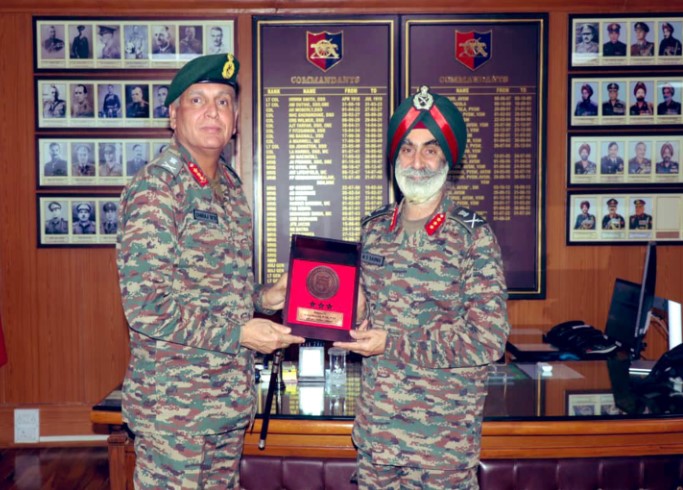
Lieutenant General Dhiraj Seth, General Officer Commanding-in-Chief of the Indian Army’s Southern Command, recently visited the School of Artillery at Devlali in Maharashtra to review training standards and infrastructure. The visit was confirmed by the Southern Command in an official statement and focused on assessing how well the institution is preparing officers and soldiers for modern battlefield requirements.
I am writing about this visit because Devlali’s School of Artillery plays a key role in shaping India’s artillery capabilities, and such high-level reviews are not routine formalities. When the Army’s top leadership takes time to inspect training institutions, it usually signals a deeper focus on readiness, modernisation and long-term planning. At a time when warfare is evolving rapidly with new technology, terrain challenges and operational demands, the quality of training and infrastructure becomes just as important as equipment. This visit highlights how seriously the Army is looking at these aspects, especially within the Southern Command’s area of responsibility.
Purpose of the Visit
Lt Gen Dhiraj Seth’s visit aimed to take a close look at both training practices and physical infrastructure at the School of Artillery. During the review, he interacted with senior officers and instructors to understand how training programmes are being updated to meet current and future operational needs.
The focus was on ensuring that artillery personnel are trained not just in traditional firepower roles but also in new-age systems, coordination techniques and joint operations.
Importance of the School of Artillery, Devlali
The School of Artillery at Devlali is one of the Indian Army’s premier training institutions. It is responsible for:
- Training artillery officers and soldiers
- Developing artillery doctrines and tactics
- Conducting specialised courses on advanced weapon systems
- Supporting research and experimentation in artillery operations
Officers trained here go on to serve in key operational and command roles across the Army.
Review of Training Standards
During the visit, Lt Gen Seth reviewed ongoing courses and training modules. Emphasis was laid on realism in training, integration of technology and maintaining high professional standards.
Training areas reviewed reportedly included:
- Live-fire exercises
- Simulator-based learning
- Tactical planning and execution
- Coordination between different arms of the Army
Such reviews help identify gaps and areas where training methods can be further strengthened.
Infrastructure and Modernisation
Apart from training, infrastructure was a key part of the inspection. Modern military training requires well-maintained ranges, classrooms, accommodation and technical facilities.
The review covered:
- Training ranges and equipment
- Classrooms and learning aids
- Accommodation and support facilities
- Overall upkeep of the campus
Feedback from these inspections often guides future upgrades and investment decisions.
Message to Officers and Instructors
Senior Army leaders usually use such visits to motivate officers and instructors. Lt Gen Seth is understood to have appreciated the professionalism of the staff while also stressing the need to continuously adapt to changing operational realities.
This kind of interaction boosts morale and reinforces the importance of training institutions in overall combat readiness.
Why Such Visits Matter
High-level visits are important because they:
- Ensure accountability in training institutions
- Align training goals with operational needs
- Encourage innovation in teaching methods
- Highlight the Army’s focus on preparedness
They also send a clear signal that training excellence remains a top priority.
Broader Context
The Southern Command has a diverse operational landscape, ranging from deserts to coastal areas. Artillery units trained at Devlali play a critical role in supporting formations deployed across these terrains. Regular reviews help ensure that training remains relevant to these varied conditions.