JOIN WHATSAPP
STORIES

SSC CGL Tier II Admit Card 2025 Release Date Out: Exam Schedule for January 18 and 19 Explained

SSC CGL Tier II Admit Card 2025 Release Date Out: Exam Schedule for January 18 and 19 Explained

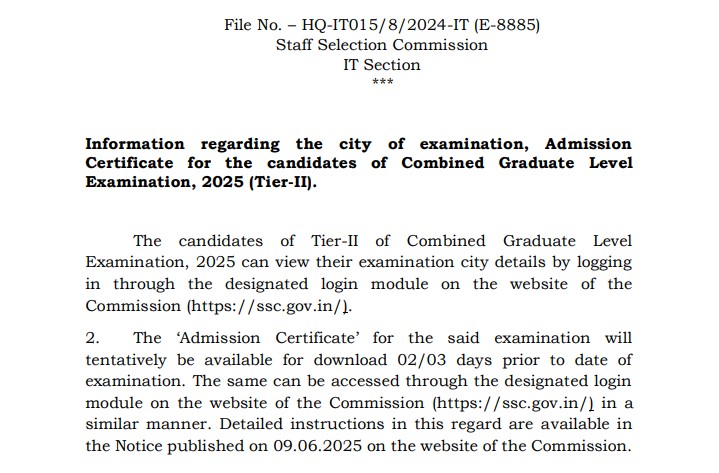
The Staff Selection Commission has officially announced the release schedule for the SSC CGL Tier II Admit Card 2025, bringing clarity for thousands of candidates waiting for the final phase of the examination. As per the latest update, the SSC CGL Tier II examination will be conducted on January 18 and January 19, 2026. The admit cards will be released ahead of the exam dates on the official SSC website, and candidates will be able to download them using their registration details.

I am writing about this update because admit card announcements mark a crucial stage in the SSC CGL journey. At this point, preparation shifts from long-term study plans to exam-day readiness. Knowing the exact exam dates, paper-wise schedule, and admit card timeline helps candidates plan revision, travel, and logistics properly. Clear information at this stage can reduce stress and prevent last-minute confusion.

About SSC CGL Tier II Examination

The Combined Graduate Level (CGL) examination is conducted every year by the Staff Selection Commission to recruit candidates for various Group B and Group C posts in central government departments and ministries. Tier II is the most important stage of the exam, as it directly impacts final merit and selection.

SSC CGL Tier II Exam Dates and Schedule

The Tier II examination will be held over two days with different papers scheduled on each date.

January 18, 2026

  • Skill Test (DEST – Data Entry Speed Test)

January 19, 2026

  • Mathematical Abilities
  • Reasoning and General Intelligence
  • English Language and Comprehension
  • General Awareness
  • Computer Knowledge Test
  • Statistics (for eligible candidates)

Candidates must appear for papers as per their post preferences and eligibility.

SSC CGL Tier II Admit Card Release Update

The SSC has announced that the Tier II admit cards will be released before the examination dates. Once available, candidates can download their admit cards from the official SSC regional websites. The admit card is compulsory for entry into the exam centre and will contain all key details related to the examination.

Details mentioned on the admit card include:

  • Candidate’s name and roll number
  • Exam date and shift timing
  • Centre address and reporting time
  • Exam-day instructions

Download Official Notification: Click Here
Leave a Comment

End of Article

Maharashtra Ghost Teacher Scam Explained: How Fake Salaries Drained ₹3,000 Crore from Education Funds

Maharashtra Ghost Teacher Scam Explained: How Fake Salaries Drained ₹3,000 Crore from Education Funds

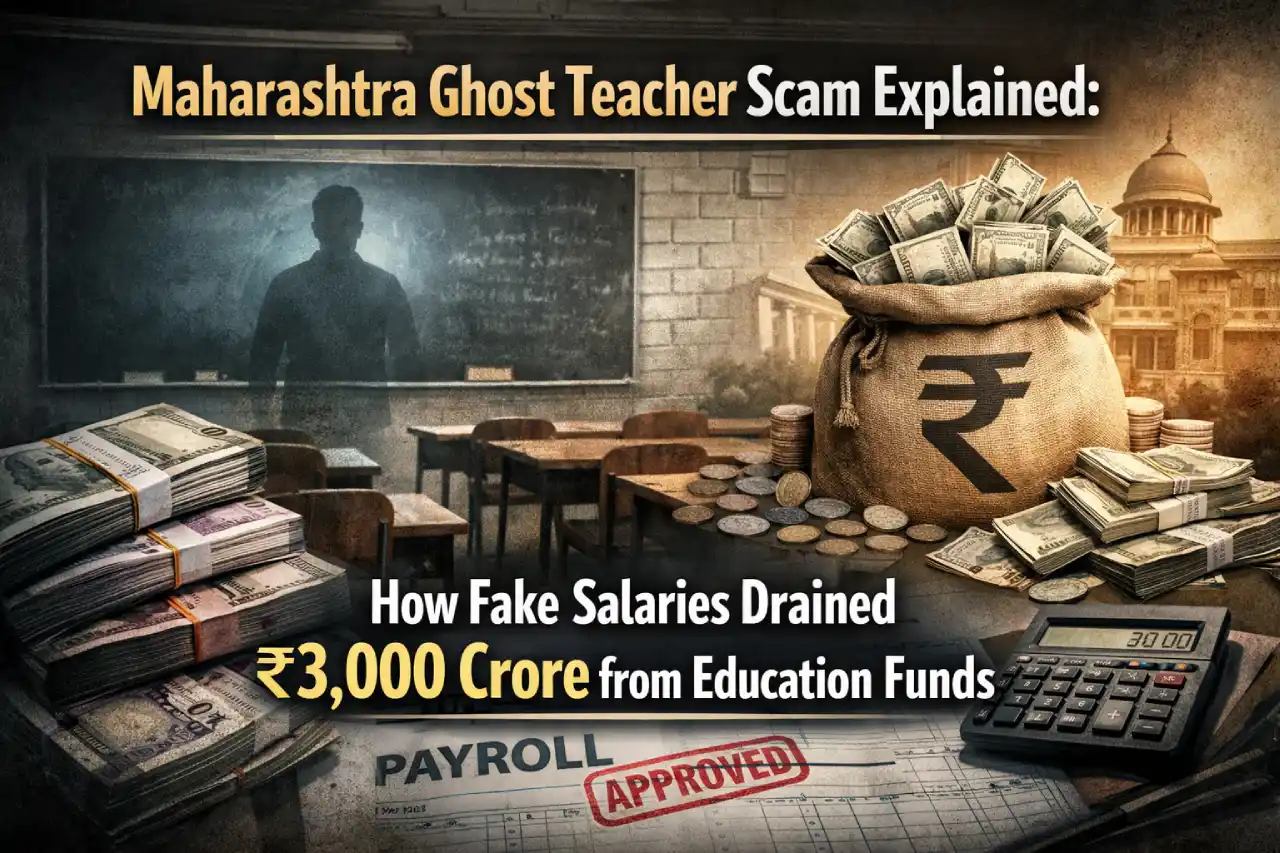
A massive financial scandal has rocked Maharashtra’s education department, with senior officials accused of creating thousands of “ghost teachers” to siphon off public money. According to government estimates, the scam could be worth anywhere between ₹2,000 crore and ₹3,000 crore. Fake teacher profiles were allegedly generated on the government’s salary and HR management portal, allowing salaries to be drawn for people who never existed. The fraud reportedly spans both the Mumbai and Nagpur zones.

I am writing about this issue because it exposes serious weaknesses in how public funds meant for education are monitored and protected. When money meant for schools and teachers is diverted on such a large scale, it directly impacts students, infrastructure, and trust in the system. Understanding how the scam worked is important, not just for accountability, but also to prevent similar frauds in the future.

What Is the Ghost Teacher Scam All About

The scam centres around the creation of fake teacher identities in the education department’s official salary system. These ghost teachers were shown as appointed staff, complete with employee codes and bank details, even though they never worked in any school. Salaries were then regularly credited and siphoned off by those running the operation.

The fraud was carried out using Shalarth, the state government’s official portal for managing salaries and human resources of school education staff.

How the Fake Teachers Were Created

Investigators believe that insiders with access to the system misused their authority to manipulate records. The process allegedly involved:

  • Creating fake appointment orders and service records
  • Generating employee IDs on the Shalarth portal
  • Linking bank accounts controlled by the accused or their associates
  • Ensuring regular salary disbursement without physical verification

Because the system relied heavily on digital entries, the fraud went undetected for a long time.

Scale of the Scam and Money Involved

As per initial government assessments, the total amount siphoned off could range between ₹2,000 crore and ₹3,000 crore. The scam is believed to have operated across multiple years, allowing salaries to be drawn month after month.

The involvement of both Mumbai and Nagpur education zones suggests the operation was not isolated but part of a wider network within the department.

Arrests and Investigation So Far

Some arrests have already been made in connection with the case, indicating that investigators have found concrete evidence of wrongdoing. The Maharashtra government has also announced the formation of a Special Investigation Team to probe the matter in detail.

The SIT is expected to:

  • Identify all fake teacher accounts
  • Trace the flow of money
  • Fix responsibility on officials who enabled or ignored the fraud
  • Recommend systemic changes to prevent recurrence

Why the Scam Went Undetected for So Long

One of the biggest concerns is how such a large fraud escaped notice. Experts point to:

  • Lack of regular audits and cross-verification
  • Over-reliance on digital records without physical checks
  • Limited accountability at district and zone levels
  • Weak integration between school-level data and salary systems

From my point of view, this shows that digitisation without strong oversight can create new risks instead of solving old problems.

Impact on Education and Public Trust

The money lost in this scam could have been used for teacher training, school infrastructure, student welfare schemes, and learning resources. Instead, it was drained by a system that failed to protect public funds.

Beyond financial loss, the scandal damages trust in the education administration and raises uncomfortable questions about governance and transparency.

Leave a Comment

End of Article

Loading more posts...