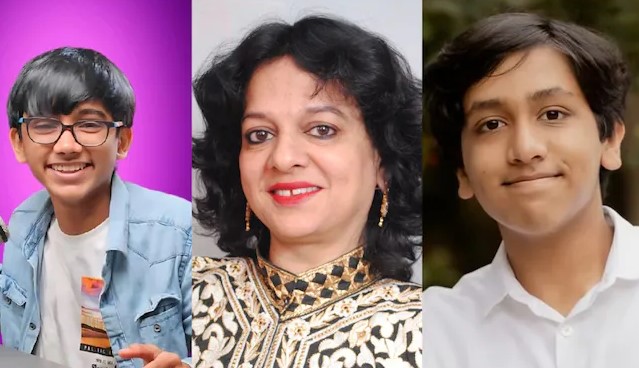
India has earned global recognition once again as an Indian teacher and two young student innovators have been named among the 15 finalists for the prestigious World Education Medals 2025. The finalists include Vineeta Garg, an experienced educator from Delhi; Raul John Aju, a tech-driven student innovator from Kerala; and Ashwat Prasanna, a Bengaluru-based student known for his curiosity and projects in artificial intelligence. Their selection highlights India’s growing contribution to AI-led learning and education reform.
At a time when AI is reshaping careers, teaching methods and problem-solving abilities, seeing an Indian educator and two students being recognised on the world stage is both inspiring and significant. It reinforces the idea that innovation does not depend on age but on access, passion and the willingness to experiment. Sharing this story can motivate students, teachers and parents to embrace creative learning models, explore new technologies and understand how AI can be used to solve real-world challenges. It also showcases the growing role of Indian talent in shaping the future of global education.
About the World Education Medals 2025
The World Education Medals are awarded annually to teachers and students who have demonstrated exceptional impact through education-related initiatives. This includes contributions in innovation, community empowerment, digital learning and the development of tools that support learners across different backgrounds.
Being listed among the top 15 global finalists is a major achievement, as nominees come from various countries with groundbreaking work in STEM, AI, social learning, environmental education and more.
Meet the Indian Finalists
Vineeta Garg – Educator from Delhi
A seasoned teacher known for her work in integrating artificial intelligence into school-level learning, Vineeta Garg has helped students understand AI concepts through practical tools and activity-based methods. She has introduced ethical AI discussions in classrooms and worked with students on projects that solve everyday problems. Her nomination recognises her role in making technology accessible and non-intimidating for young learners.
Raul John Aju – Student Innovator from Kerala
Raul is known for his curiosity in AI-driven projects, especially those aimed at social impact. His work focuses on using technology to solve community-level challenges. He has been part of coding and innovation programmes where he built prototypes that attracted national attention. His inclusion as a finalist celebrates student-driven problem-solving and the value of early exposure to technology.
Ashwat Prasanna – Student from Bengaluru
Ashwat has been recognised for his enthusiasm for AI research and hands-on experimentation. His projects often explore how machine learning can be used in fields like environment monitoring, accessibility and smart systems. Teachers describe him as a student who learns beyond the syllabus and experiments until he finds practical solutions.
Together, the three finalists represent India’s diverse pool of talent—spanning both educators and young innovators.
Why Their Work Stands Out
Each of these finalists has used AI not as a buzzword but as a genuine tool for learning and problem-solving. Their work matters because:
- It shows that AI education is reaching school classrooms
- Students are using technology to solve real issues, not just theoretical exercises
- Teachers are guiding learners to think beyond rote learning
- India is emerging as a strong contributor to global education innovation
Their achievements reflect a shift where Indian schools are embracing technology-led creativity.
Importance of AI in Education Today
Artificial intelligence is now a key part of skill development. For students, AI-based learning encourages:
- Critical thinking
- Analytical reasoning
- Creativity and design thinking
- Early exposure to technology careers
For teachers, AI creates opportunities to personalise learning and introduce new ways of understanding complex topics. The recognition of Indian finalists signals that India is aligning with global education trends.
Impact of This Global Recognition
Being named a finalist for the World Education Medals brings global visibility and can open doors to:
- International collaborations
- Funding for innovative projects
- Exchange programmes
- Mentorship opportunities
- Wider adoption of their ideas in schools across India
It also shows that meaningful innovation is possible within school settings without requiring large budgets.