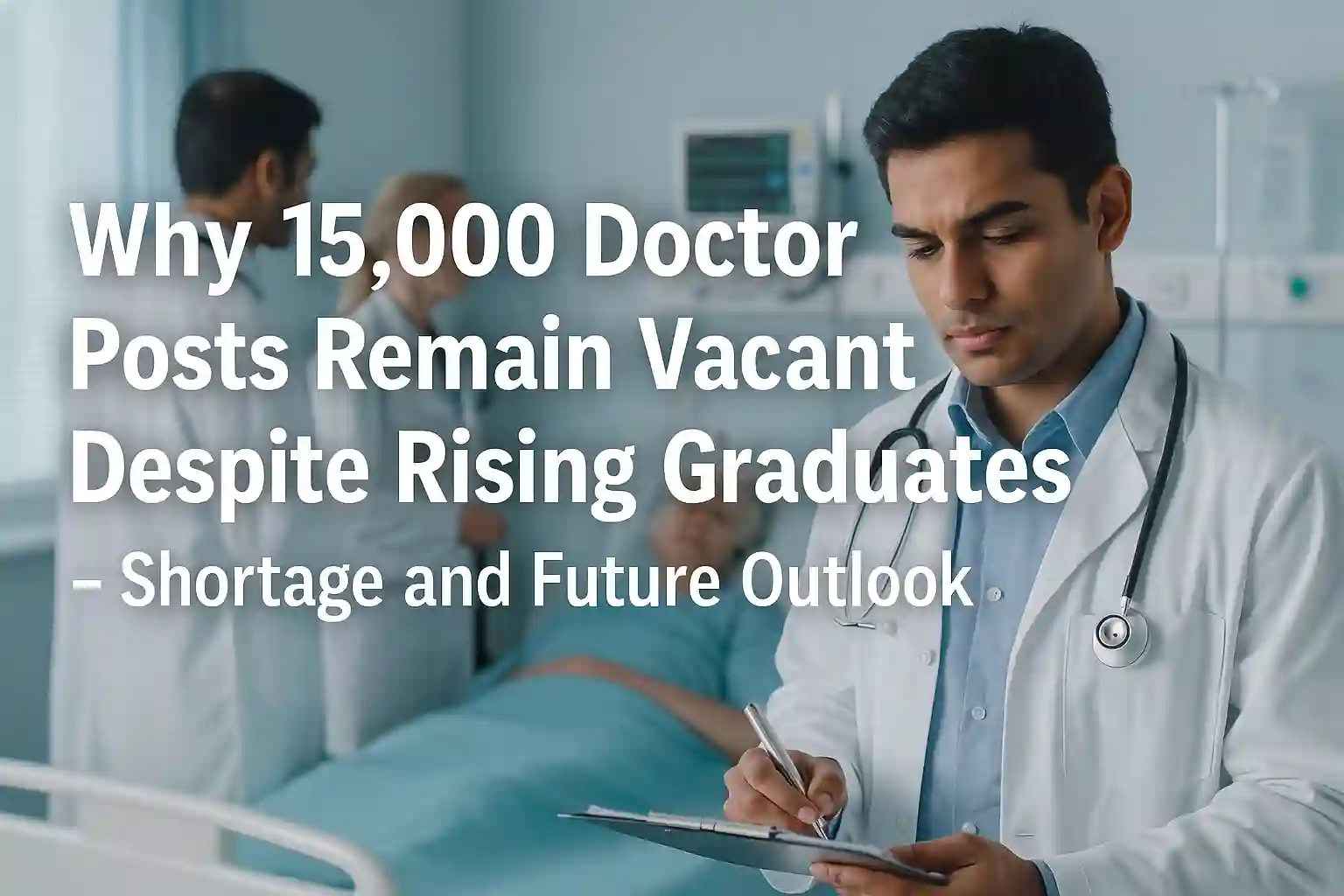
India has seen a steady rise in the number of medical graduates over the past decade, yet a large number of posts for doctors in government hospitals remain unfilled. Reports suggest that around 15,000 sanctioned posts could not be filled in the last ten years. At the same time, health experts predict that 56,000 new doctors will join the workforce in the coming decade. Despite these encouraging numbers, the shortage of doctors in rural and remote areas continues to be a major challenge.
I felt it was important to write about this issue because health care affects every family. While more students are choosing medicine as a career, there is still a mismatch between supply and demand. Many doctors prefer urban areas or private practice, leaving rural health centres understaffed. This shortage is not just about numbers but also about distribution and working conditions. Highlighting the problem may help us understand why vacancies remain unfilled despite the rise in medical graduates. It also opens a discussion about what policies, incentives, and systemic changes are needed to ensure that doctors are available where they are most required.
The Current Doctor Shortage
India has more than 1.4 billion people, but the doctor-to-patient ratio is still below the World Health Organisation’s recommended standard. In government hospitals, thousands of sanctioned posts remain vacant, which affects patient care. Rural areas face the maximum shortage, where primary health centres often run without qualified doctors.
Why Vacancies Remain Unfilled
There are several reasons why 15,000 posts went unfilled in the past decade:
- Urban preference: Many doctors prefer to work in cities due to better infrastructure and opportunities.
- Workload and facilities: Rural centres often lack proper equipment, staff, and basic facilities, making the job difficult.
- Contract-based recruitment: Some states offer temporary contracts instead of permanent jobs, which discourages doctors.
- Migration abroad: A section of medical graduates move to other countries for better pay and career opportunities.
The Positive Outlook: 56,000 More Doctors in Next Decade
Despite the challenges, there is some hope. With more medical colleges being set up and the number of MBBS seats increasing, around 56,000 new doctors are expected to join the workforce in the next ten years. This expansion may help improve availability, provided the government ensures proper distribution of doctors across urban and rural areas.
What Can Be Done
To address the shortage effectively, steps such as better incentives for rural postings, improved working conditions, and permanent job opportunities must be taken. Telemedicine and digital health tools can also help reduce the burden on doctors in remote areas.