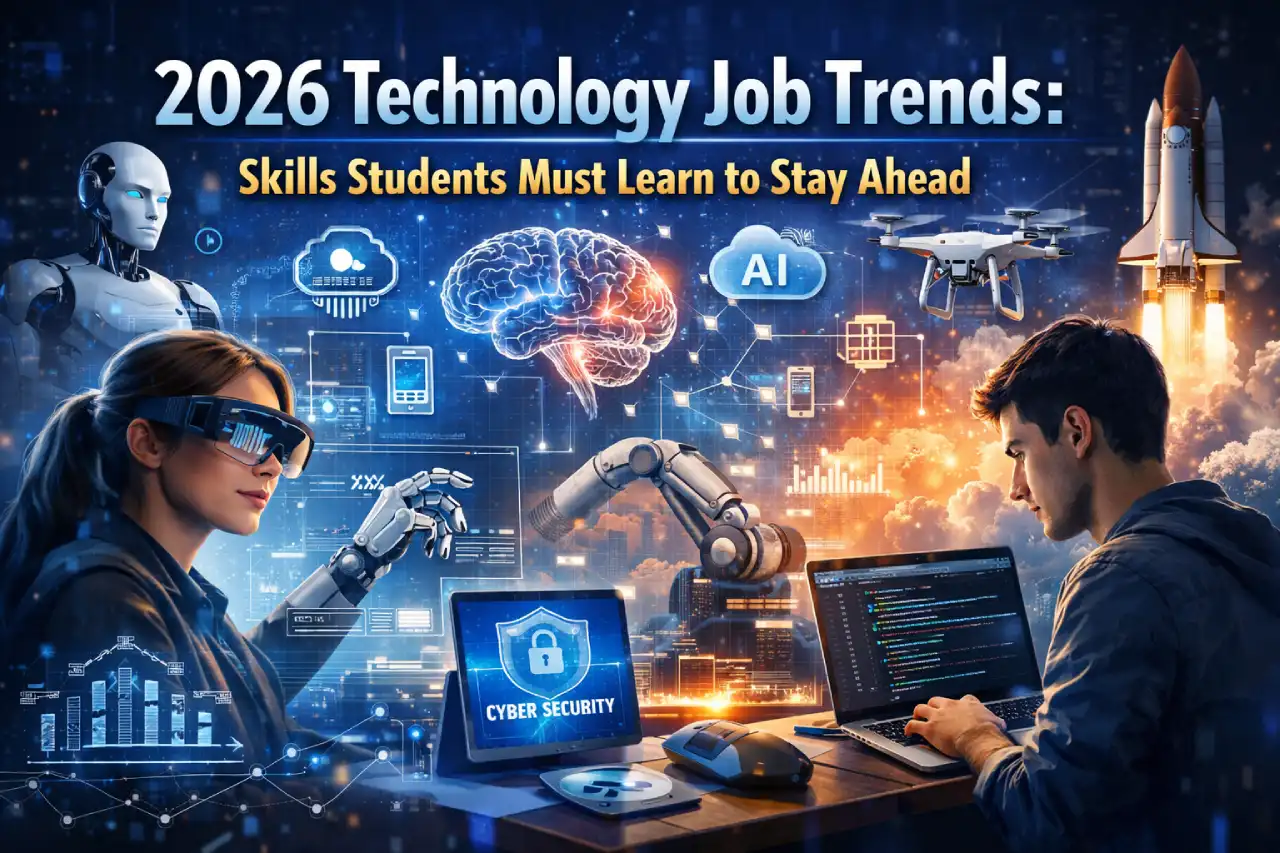
Technology is changing the world of work faster than ever before. New tools, new platforms, and new ways of doing business are reshaping what employers expect from young professionals. As we move into 2026, students need to understand how these changes will influence job opportunities and career paths, especially in the technology sector.
I am writing about this topic because many students still plan their careers based on yesterday’s job market. But the reality is that future-ready careers demand a different set of skills, mindsets, and learning habits. Knowing what is coming can help students make smarter academic and career choices today.
Technology Is Driving Almost Every Industry
Earlier, technology jobs were mainly linked to IT companies. Today, every industry uses technology in some form. Healthcare, education, finance, manufacturing, agriculture, media, and even government services depend heavily on digital systems.
This means students do not have to be “pure tech” professionals to benefit from technology skills. Even non-technical roles now expect basic digital knowledge.
Key examples include:
- Doctors using AI-based diagnostic tools
- Teachers using digital classrooms and learning platforms
- Accountants working with cloud-based financial software
- Farmers using smart devices and data analytics
Technology literacy is becoming a basic requirement, not an optional extra.
High-Demand Technology Fields in 2026
Several technology areas are expected to see strong job growth in 2026. Students who build skills in these fields will have better chances of employment.
Some important areas include:
- Artificial Intelligence and Machine Learning
- Cybersecurity and Ethical Hacking
- Data Science and Data Analytics
- Cloud Computing
- Software Development and App Development
- Internet of Things (IoT)
- Blockchain Technology
These fields are creating roles that did not even exist a decade ago.
Skills That Matter More Than Degrees
While degrees are still important, employers are increasingly focusing on practical skills.
Students should work on:
- Coding and programming basics
- Problem-solving and logical thinking
- Communication and teamwork
- Adaptability and willingness to learn
- Time management and self-discipline
Internships, online courses, certifications, and project work can often make a stronger impression than marks alone.
Importance of Digital and Soft Skills Together
Being technically strong is not enough. Students must also develop soft skills to succeed in the workplace.
Important soft skills include:
- Clear communication
- Critical thinking
- Creativity
- Emotional intelligence
- Leadership
The best opportunities usually go to candidates who can combine technical knowledge with strong interpersonal skills.
Role of Online Learning and Self-Study
In 2026, learning is no longer limited to classrooms. Many top skills can be learnt online through:
- Free and paid learning platforms
- YouTube tutorials
- Virtual labs and coding practice sites
- Online certifications
Students who take initiative and learn on their own gain a big advantage.
How Students Can Start Preparing Now
- Choose courses that include practical training
- Build a habit of continuous learning
- Take part in hackathons, workshops, and competitions
- Create small projects and portfolios
- Follow technology news and trends
Starting early makes the journey much easier.