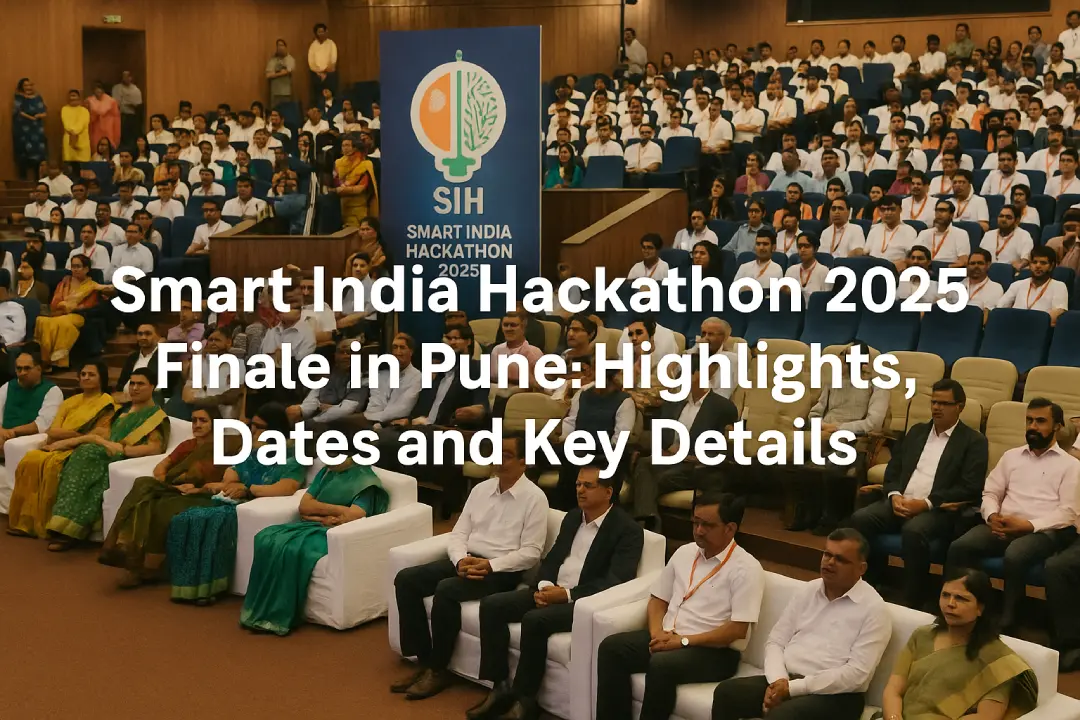
The grand finale of Smart India Hackathon (SIH) 2025 will take place in Pune, bringing together finalists from across the country to present technology-based solutions for real problems faced by government departments, industries and civic bodies. This annual event, which is one of India’s largest student hackathons, gives young innovators a stage to build practical solutions that can actually be implemented by various ministries and organisations.
It has become a national platform for students who want to use technology to solve everyday challenges, whether it is related to education, transport, sustainability, healthcare or public services. Many young participants see their ideas come alive beyond college projects. Over the past years, several prototypes from SIH have been adopted by different organisations. With Pune hosting the finale this year, engineering colleges in Maharashtra and nearby states are already buzzing with excitement. Writing about SIH 2025 helps students understand what this event stands for, what opportunities it opens up and why innovation competitions like this matter for India’s future workforce.
What is Smart India Hackathon?
Smart India Hackathon is a national-level innovation programme launched in 2017 by the Ministry of Education in collaboration with the All India Council for Technical Education (AICTE). It invites college students to work on real problem statements provided by government departments, state agencies, start-ups and industry bodies. Participants propose technology-based solutions, develop prototypes and present them directly to officials who may implement them later.
Why Pune is Hosting the 2025 Finale
Pune is known for its strong academic ecosystem, especially engineering and research-based institutions. Over the years, the city has become a hub for IT firms, manufacturing industries, automotive technology and start-ups. Hosting the grand finale in Pune is seen as a strategic move because:
- It has a large pool of skilled technical students
- The city has close links with industries that support innovation
- Engineering institutions here often rank among the best in SIH entries
- Pune has previously hosted regional-level hackathons successfully
The finale is expected to involve both student teams and mentors from multiple states.
What to Expect in SIH 2025 Finale
Participants will be working continuously for nearly 36 hours to build working models and present them in front of jury panels. The grand finale generally includes:
- Coding and prototype development
- Live mentoring from industry experts
- Jury rounds with government officials
- Prize announcements and prototype selections
- Real-time demonstrations of solutions
Selected teams may receive funding from ministries or organisations to develop their prototypes further.
Common Themes and Problem Areas
Every year, the hackathon focuses on issues connected to daily life and governance. Some expected problem domains for SIH 2025 include:
- Digital governance and public services
- Smart transportation systems
- Cybersecurity and data protection
- Waste management and clean energy
- Healthcare solutions powered by AI or robotics
- Education technology and skill development tools
These categories allow students from diverse academic areas to participate.
How Students Benefit from SIH
Smart India Hackathon is often seen as a career-changing platform for aspiring engineers. The benefits include:
- Internship or placement opportunities with participating organisations
- Hands-on experience working on real-life problems
- Direct interaction with industry experts and government authorities
- Funding for innovative ideas and start-up support
- National-level recognition for winning teams
Students often point out that SIH gives them practical exposure that regular classroom learning cannot offer.