JOIN WHATSAPP
STORIES

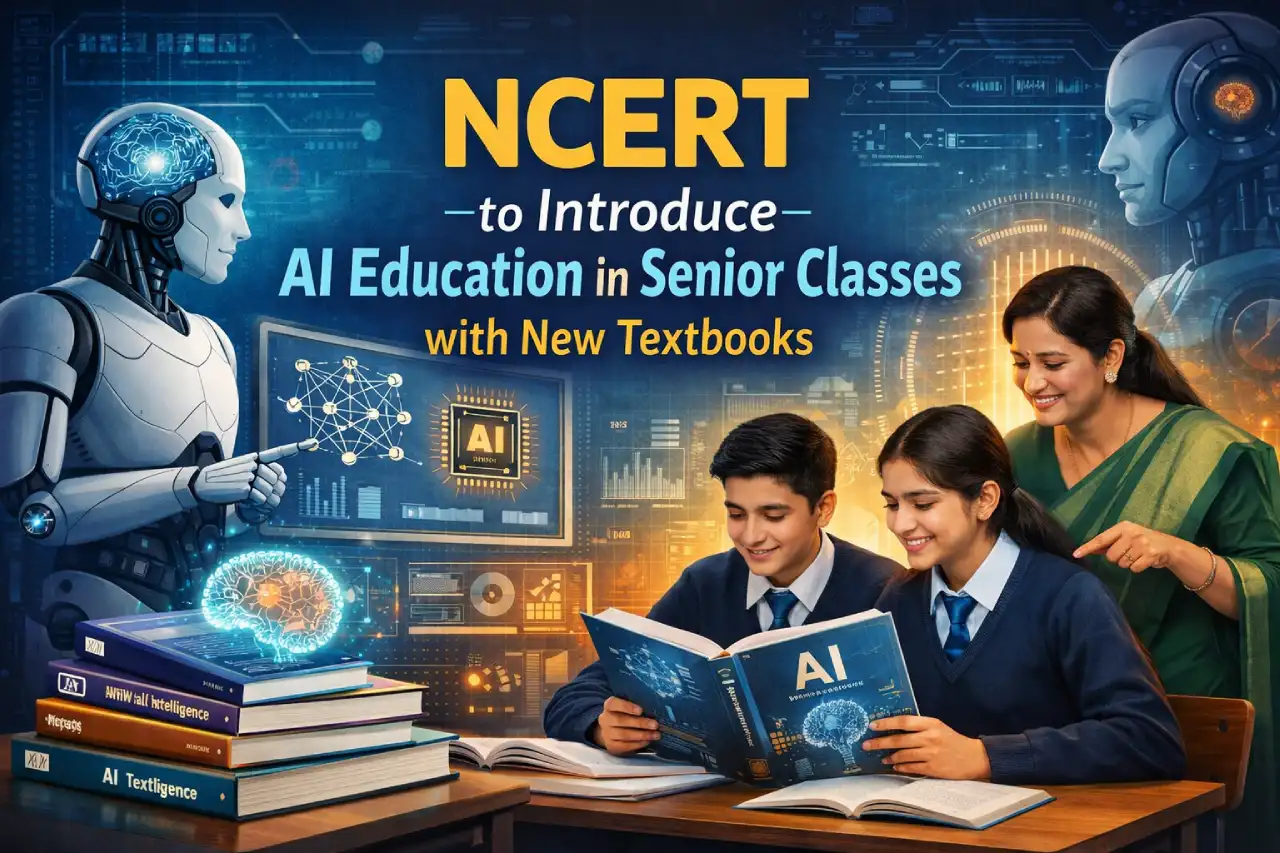
NCERT to Introduce AI Education in Senior Classes with New Textbooks

NCERT to Introduce AI Education in Senior Classes with New Textbooks

The National Council of Educational Research and Training has taken a major step towards modernising school education by constituting a dedicated team to develop Artificial Intelligence textbooks for Classes 11 and 12. The move is aimed at introducing students to AI concepts in a structured and age-appropriate manner. According to officials, the textbooks will focus on building foundational understanding, practical awareness, and ethical use of AI, keeping in line with India’s evolving education and technology goals.

I am writing about this development because Artificial Intelligence is no longer a niche subject limited to higher education or specialised careers. It is already shaping daily life, careers, and future job markets. Introducing AI at the senior secondary level ensures that students are not just passive users of technology but informed learners who understand how it works. This step also signals a shift in school education from rote learning towards skills that matter in the real world.

Why NCERT Is Introducing AI Textbooks

NCERT’s decision comes at a time when AI is influencing almost every sector, from healthcare and finance to education and governance. The idea is to familiarise students early with emerging technologies so they are better prepared for higher studies and future careers.

By developing dedicated textbooks, NCERT aims to move beyond short modules and offer a clear, well-designed curriculum.

What the AI Textbooks Are Expected to Cover

The upcoming textbooks for Classes 11 and 12 are expected to include:

  • Basic concepts of Artificial Intelligence
  • Real-life applications of AI
  • Introduction to data, algorithms, and automation
  • Ethical issues, bias, and responsible use of AI
  • Simple project-based learning and case studies

The focus will be on understanding concepts rather than heavy technical coding.

Who Is Part of the Textbook Development Team

NCERT has brought together subject experts, academicians, and technology professionals to work on the AI textbooks. This multidisciplinary approach is meant to ensure that the content is accurate, student-friendly, and aligned with global standards.

Experts will also ensure that the language and examples remain accessible to students from different backgrounds.

How This Fits into the National Education Vision

The move aligns with the broader goals of the National Education Policy, which emphasises skill-based learning, critical thinking, and exposure to emerging technologies. AI education at the school level supports the vision of creating future-ready learners.

It also encourages curiosity and problem-solving rather than memorisation.

What This Means for Students and Teachers

For students, AI textbooks open up early exposure to a high-demand field and help them make informed career choices. Teachers will receive structured material and training support, making it easier to teach a subject that is often seen as complex.

Schools may also gradually introduce practical activities linked to AI learning.

Challenges and Expectations

While the move has been widely welcomed, successful implementation will depend on teacher training, availability of resources, and clear assessment methods. NCERT will need to ensure that schools across regions can adopt the curriculum smoothly.

Balanced rollout will be key to avoiding a digital divide.

Leave a Comment

End of Article

How Online Education Is Helping Maharashtra Students Improve Math and English Skills

How Online Education Is Helping Maharashtra Students Improve Math and English Skills

Digital learning has quietly changed the way many students across Maharashtra approach difficult subjects like Mathematics and English. For one student who once struggled with basic concepts, online learning tools became a turning point. With access to interactive lessons, recorded explanations, and regular practice tests, the student was able to learn at a comfortable pace. Over time, weak areas in maths calculations and English comprehension improved, leading to better confidence and noticeable academic progress.

I am writing about this topic because stories like these reflect a larger shift happening in education. Many students still believe that struggling in subjects means they are not capable, which is not true. The right learning support can make a big difference. Digital learning is no longer just an option for urban or elite students, it is becoming a practical solution for learners from different backgrounds who need personalised attention and flexible study methods.

The Challenge Many Students Face

Subjects like Mathematics and English often create fear among students. Maths demands clarity of concepts and constant practice, while English requires reading, listening, and confidence in expression. In traditional classrooms, students who fall behind may hesitate to ask questions, leading to long-term gaps in learning. This is exactly where digital learning tools have started to help bridge the gap.

How Digital Learning Changed the Learning Process

Digital platforms allow students to revisit lessons as many times as needed. Instead of moving at the pace of the classroom, the Maharashtra student could pause videos, revise concepts, and practise questions repeatedly.

Some key benefits included:

  • Step-by-step explanations for maths problems
  • Grammar and vocabulary practice through interactive exercises
  • Instant feedback on tests and quizzes
  • Learning without fear of judgement

This personalised approach helped build understanding and confidence.

Improvement in Mathematics Skills

For maths, digital learning provided structured practice. Concepts like fractions, algebra, and problem-solving became easier through visual explanations and guided practice sessions. Regular mock tests helped the student identify mistakes early and correct them before exams.

Over time, maths shifted from being a fear subject to one of the student’s stronger areas.

Growth in English Language Skills

English improvement came through consistent exposure. Listening to recorded lessons improved pronunciation, while reading-based exercises strengthened comprehension. Writing tasks with sample answers helped the student understand sentence structure and grammar usage.

Slowly, the student became more confident in reading passages and answering questions, both in exams and daily classroom activities.

Role of Self-Paced Learning

One of the biggest advantages of digital education is self-paced learning. The student could study early in the morning or late in the evening, depending on comfort. This flexibility reduced pressure and allowed learning to happen naturally, without stress.

From my point of view, this freedom is especially helpful for students who need more time to understand concepts.

Support from Teachers and Parents

Digital learning worked best when supported by guidance. Teachers helped track progress through performance reports, while parents encouraged regular study habits at home. This combined effort ensured the student stayed consistent and motivated.

Why This Matters for Other Students

This story is not unique. Many students across Maharashtra and other states are benefiting in similar ways. Digital learning does not replace teachers, but it strengthens learning by offering extra support where needed.

Students who struggle should see this as proof that improvement is possible with the right tools.

Leave a Comment

End of Article

Loading more posts...