JOIN WHATSAPP
STORIES

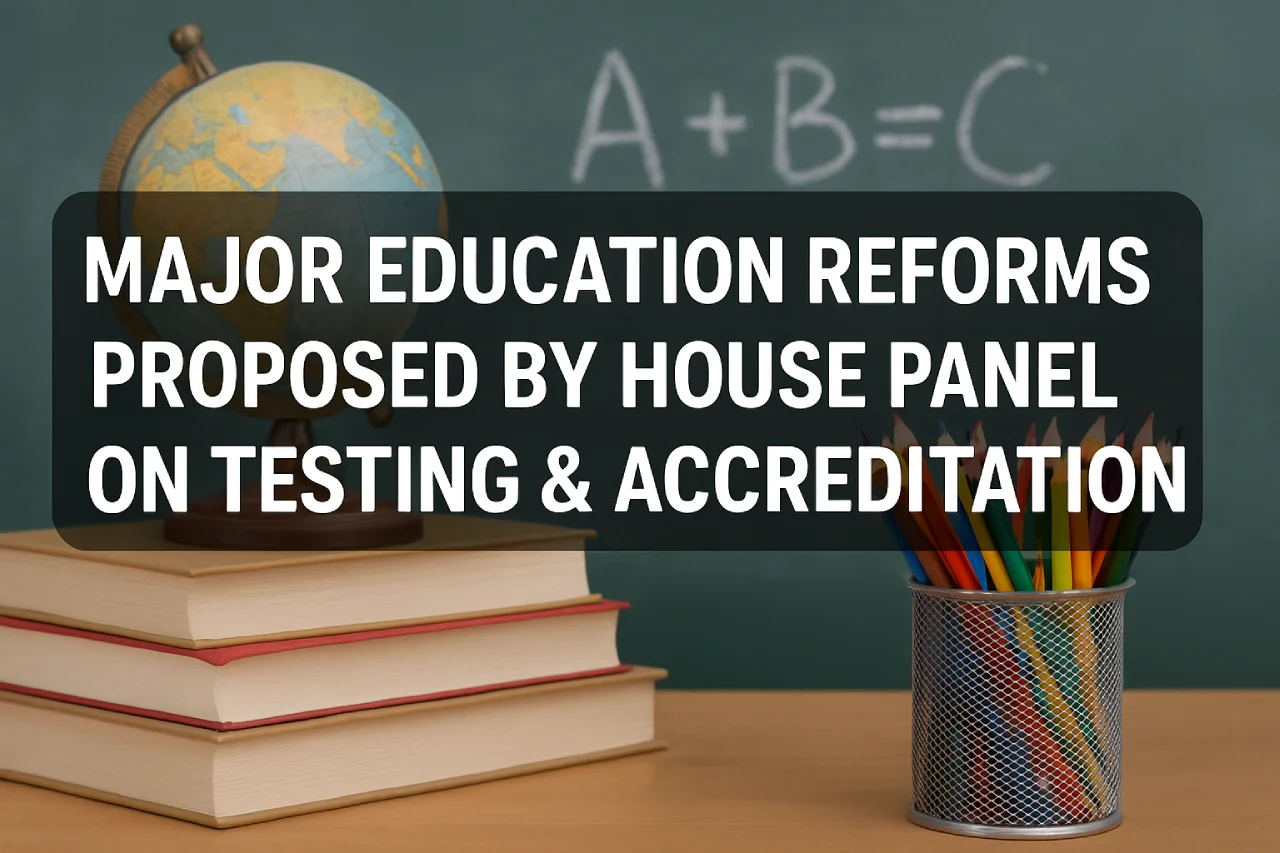
Major Education Reforms Proposed by House Panel on Testing & Accreditation

Major Education Reforms Proposed by House Panel on Testing & Accreditation

A parliamentary panel on education has recommended a wide range of reforms to improve the quality and transparency of India’s education system. The committee has focused on two major areas: testing and accreditation. It has suggested stronger measures to prevent paper leaks, better monitoring of examination bodies, and a more reliable ranking system for schools and universities. The report also highlights the need for equal opportunities for students from rural and disadvantaged backgrounds, ensuring that merit is not overshadowed by systemic flaws.

Many young people prepare for months only to face cancellations, delays or irregularities. At the same time, institutes often rely on rankings that do not reflect real academic quality. With competition growing and education becoming increasingly important for employment, reforms like these are essential. They ensure fairness, protect student interests and build trust in academic institutions. By understanding what the panel has proposed, students, parents and educators can hold the system accountable and push for better implementation in the coming years.

Key Recommendations on Testing and Examinations

The committee has suggested reforms to strengthen exam processes and reduce malpractices. These include:

  • Setting standard rules for all central and state-level entrance tests
  • Stricter security systems to prevent paper leaks
  • Using encrypted digital question papers with limited access
  • Faster action and accountability when irregularities take place
  • Creating a specialised oversight body to monitor exam conduct

This aims to protect students’ hard work and reduce mental stress caused by uncertainty in exam results or cancellations.

Improving Accreditation and Ranking Systems

Accreditation decides whether an institution meets quality standards, yet current methods often differ widely. To fix this, the panel has recommended:

  • Uniform accreditation rules for all higher education institutes
  • Real-time assessment instead of one-time evaluations
  • Ranking systems that consider student outcomes, not just infrastructure
  • Transparent criteria that are publicly accessible
  • Strong safeguards to avoid manipulation by institutions

Better accreditation would ensure students get value for the fees they pay and can trust the academic claims made by colleges and universities.

Ensuring Equal Access to Education

The panel stressed the need to make quality education accessible to students from all regions and communities. It suggested:

  • Inclusive evaluation processes that do not favour urban candidates
  • Financial support and free application mechanisms for economically weaker students
  • Regional-language options in testing to reduce language barriers
  • Scholarships linked to performance in standardised tests

These steps recognise that talent exists everywhere but opportunities are not equally available.

Accountability and Transparency in Education Bodies

The recommendations call for public accountability from agencies handling exams and accreditation. This includes:

  • Periodic review of examination authorities
  • Clear reporting on how answer sheets are evaluated
  • Publishing accreditation scores and indicators online
  • Making grievance redressal systems student-friendly

Such measures would ensure that institutions and testing bodies operate responsibly rather than only reacting when controversies arise.

Leave a Comment

End of Article

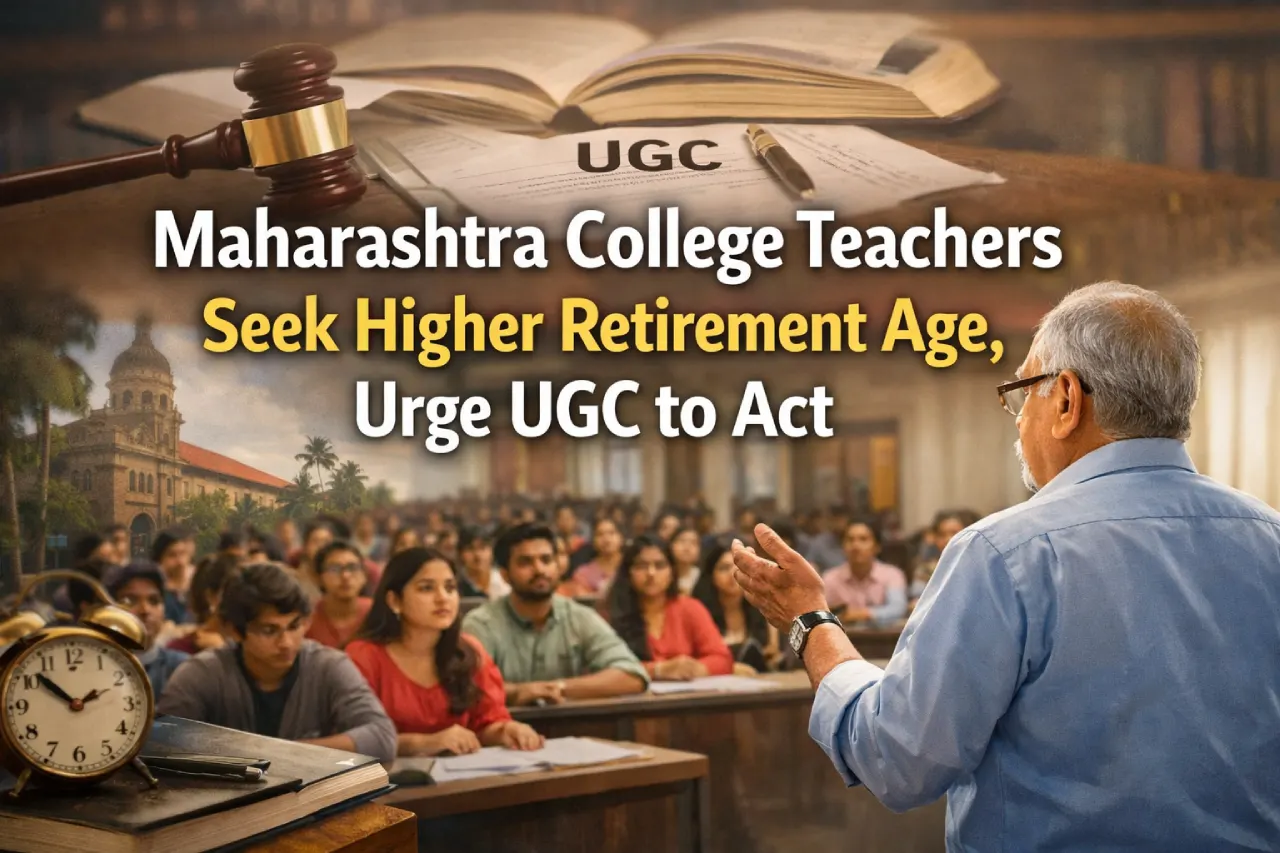
Maharashtra College Teachers Seek Higher Retirement Age, Urge UGC to Act

Maharashtra College Teachers Seek Higher Retirement Age, Urge UGC to Act

Teachers from colleges across Maharashtra have urged the University Grants Commission to raise the retirement age for teaching faculty from the current 60 years to 65 years. The demand has been made by teachers’ associations who argue that experienced educators are being forced to retire too early, even as colleges continue to face staff shortages. They believe extending the retirement age will help retain academic expertise and improve teaching quality in higher education institutions.

I am writing about this issue because it affects not just teachers, but also students and the overall higher education system. At a time when universities are struggling with vacant posts and delayed recruitments, losing senior faculty creates gaps in teaching, research, and mentorship. The demand also raises a larger question about how India values experience in academia and whether policy needs to evolve with changing life expectancy and professional capability.

What Maharashtra Teachers Are Demanding

Teachers’ bodies have formally requested UGC to revise the retirement age for college and university teachers to 65 years, bringing it in line with several central institutions. They argue that many educators remain academically active and physically fit well beyond 60.

According to them, forcing retirement at 60 leads to a loss of institutional memory and teaching continuity.

Why Teachers Want the Age Limit Raised

Teachers say the demand is based on practical realities. Many colleges face:

  • Acute shortage of qualified faculty
  • Delays in permanent recruitment
  • Heavy teaching loads on existing staff

Extending the retirement age would offer immediate relief without additional recruitment costs.

Comparison with Central Institutions

In several central universities and institutions, teachers are allowed to work up to 65 years, and in some cases even longer through re-employment. Maharashtra teachers feel this creates inequality between state and central institutions.

They believe a uniform retirement policy across the country would be fairer and more effective.

Impact on Students and Academic Quality

Senior teachers often play a key role in mentoring young faculty, guiding research scholars, and maintaining academic standards. Their early retirement disrupts this balance and places extra pressure on junior staff.

Students, especially at postgraduate and research levels, are among the biggest losers.

Concerns About Youth Employment

Some critics argue that extending retirement age could limit opportunities for younger aspirants. Teachers’ associations counter this by saying vacant posts already exist and recruitment processes are slow, so extending service will not block new jobs.

They stress that experience and new talent should coexist.

What UGC’s Role Will Be

UGC has the authority to frame regulations related to service conditions in higher education. Any change in retirement age would require policy review and coordination with state governments.

Teachers are hopeful that the commission will consider the request seriously.

Leave a Comment

End of Article

Loading more posts...