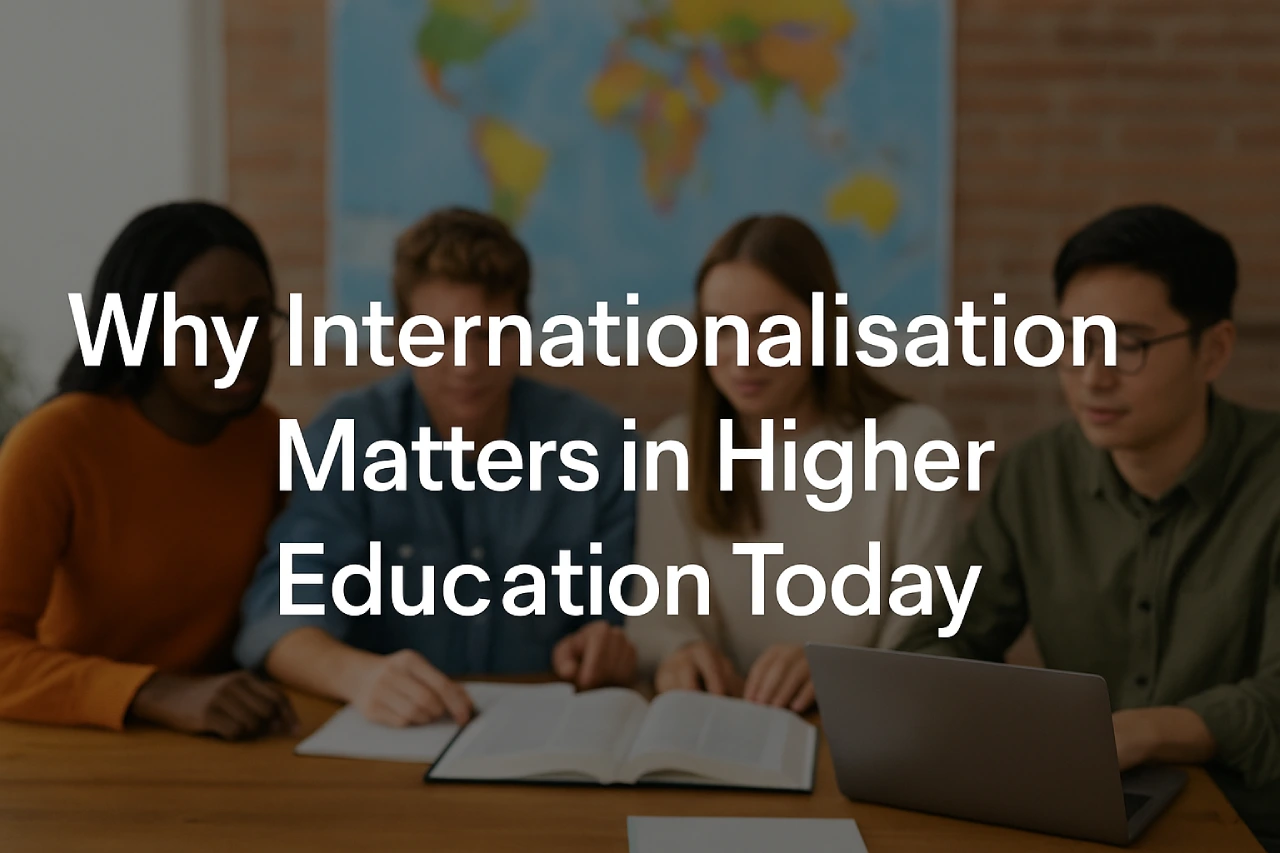
Higher education across the world is undergoing a major transformation as universities expand beyond their national boundaries. The internationalisation of higher education includes student exchange programmes, cross-border collaborations, joint research centres, foreign campuses, global curriculum development and the mobility of faculty. In today’s interconnected world, universities are no longer limited to promoting local knowledge alone. They are becoming global knowledge hubs, preparing students for an increasingly competitive and diverse global workforce.
A degree today is not only a certificate of academic learning but also a reflection of how adaptable, innovative and aware a student is of international perspectives. Countries use education to shape global influence, build soft power and strengthen economic relationships. Students benefit from research opportunities, diverse cultural learning and international networking. However, this movement also raises concerns about affordability, brain drain and unequal access. Understanding how global education fits within the present geopolitical and economic order helps us decide whether these changes create opportunities for everyone or only for a privileged few.
What Internationalisation Means for Universities
Globalisation has pushed universities to compete and collaborate simultaneously. Institutions today aim to:
- Attract international students and faculty
- Develop joint degree programmes with foreign universities
- Create research partnerships across borders
- Set up offshore campuses in other countries
- Offer internationally relevant curriculum and skill-based learning
This helps institutions build global reputation and stay academically competitive.
Higher Education as a Soft Power Tool
Countries use education to build diplomatic ties and global influence. When students study abroad, they often:
- Build long-lasting cultural and economic relations
- Carry forward international friendships and networks
- Promote a positive image of the host country
- Create future collaborations in trade, technology and governance
For example, countries like Australia, Canada, the UK and the United States attract students not just for academic revenue, but also to strengthen their global engagement strategies.
Research Collaboration and Knowledge Exchange
Internationalisation has led to collaborative research in fields like:
- Climate change
- Biotechnology and healthcare
- Data science and artificial intelligence
- Agriculture and food security
- Peace studies and global policy
Shared research projects pool global talent, reduce research costs, and accelerate scientific innovation. This is especially important in areas where global cooperation is essential.
The Concern of Brain Drain
While internationalisation opens doors, it also leads to skilled workers migrating permanently to developed nations. This creates:
- Loss of talent in developing countries
- Shortage of skilled professionals in critical sectors
- Economic imbalance in the global knowledge economy
To counter this, many countries are focusing on improving domestic universities, attracting foreign faculty and creating research incentives within their borders.
Making Global Education Accessible
Internationalisation must not widen inequality. To make it fair, governments and universities need to invest in:
- Affordable exchange programmes
- International scholarship schemes
- Virtual learning partnerships
- Joint degrees without mandatory travel
- Community-based global learning models
The goal should be to provide global exposure without making it unaffordable for disadvantaged students.