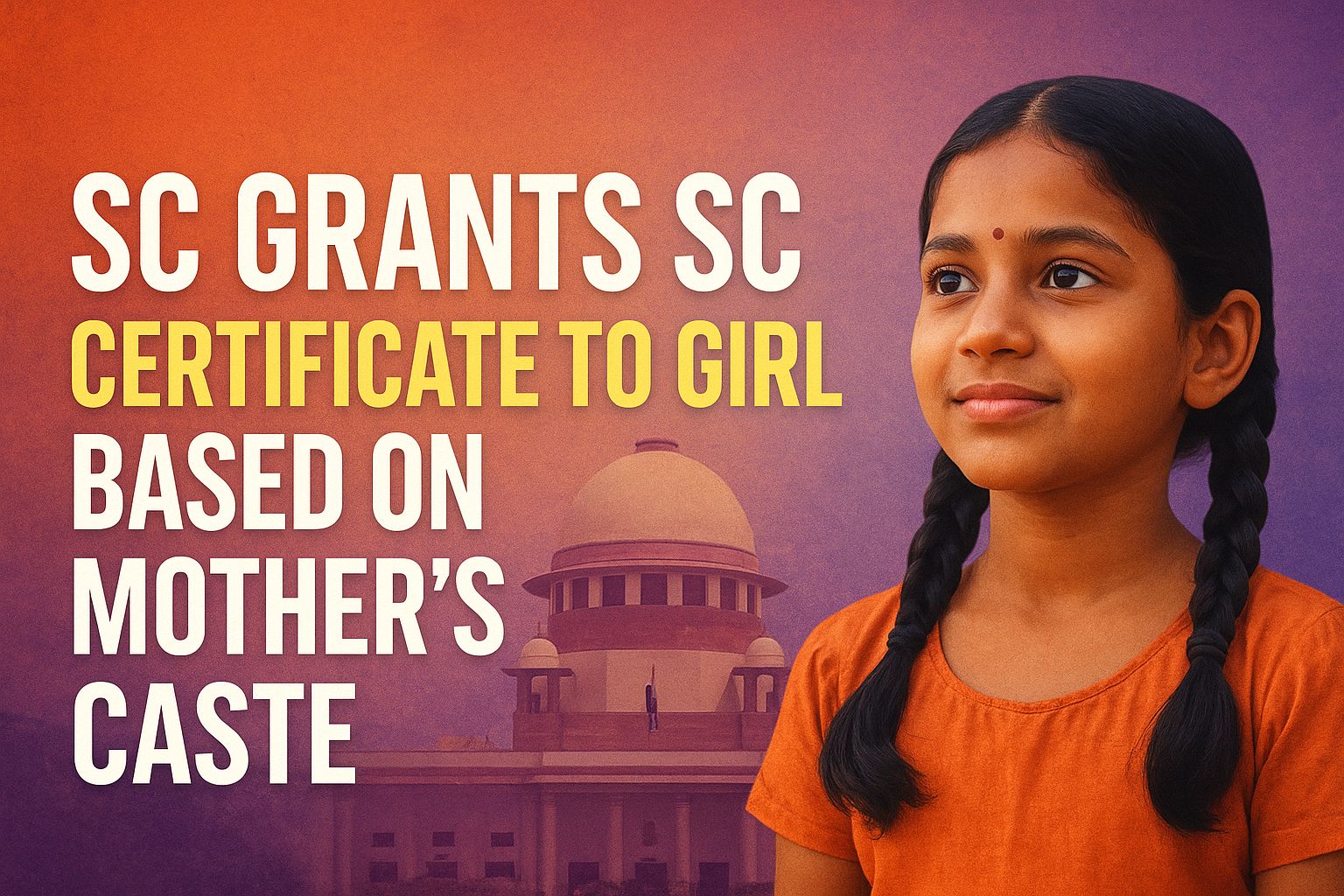
In a landmark judgment delivered on December 9, 2025, the Supreme Court of India upheld a Madras High Court order allowing a minor girl to obtain a Scheduled Caste (SC) certificate based on her mother’s caste, Adi-Dravid, despite her father belonging to a non-SC community. The bench, headed by Chief Justice Surya Kant along with Justice Joymalya Bagchi, dismissed the challenge filed against the High Court ruling, stating that denying the certificate would adversely affect the child’s educational future and social opportunities.
The Court highlighted that caste determination need not always follow a strictly patrilineal view. Emphasizing evolving social realities, the bench questioned why a child growing up under the care and identity of an SC mother should be deprived of the same caste status. It asserted that the girl’s upbringing, social acceptance, and the challenges she faces carry significant weight when determining her caste identity. The decision thus recognizes equality in parental identity, particularly empowering women in inter-caste marriages.
This ruling is expected to have far-reaching consequences in matters involving caste identity and reservation rights. It potentially paves the way for children of SC mothers and non-SC fathers to claim SC status, strengthening social justice and inclusion. While the Court clarified that the broader constitutional question remains open for future consideration, the judgment marks an important progressive step toward dismantling the patriarchal foundation of caste inheritance in India.