JOIN WHATSAPP
STORIES

NCERT Class 11 History Chapter 4 PDF (Hindi): तीन वर्ग

NCERT Class 11 History Chapter 4 PDF (Hindi): तीन वर्ग

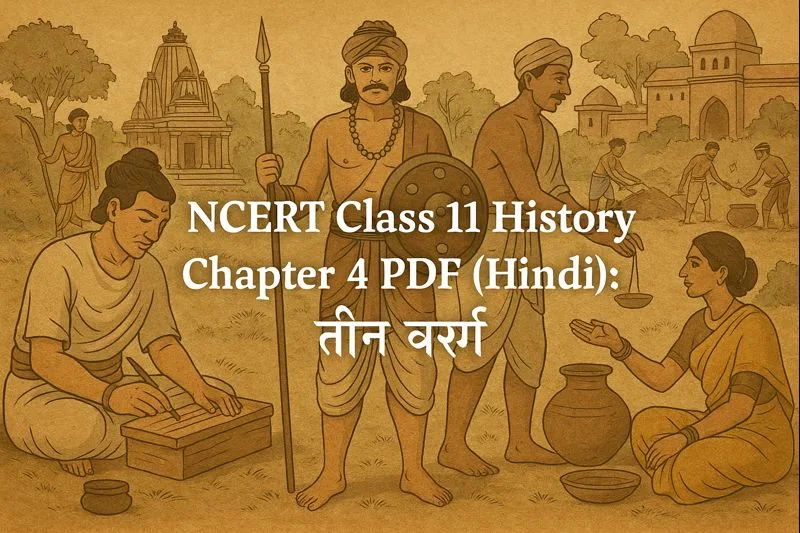
Chapter 4 of Class 11 History (Hindi Medium), तीन वर्ग, takes us to medieval Europe, where society was divided into three main social groups known as the “Three Orders.” These orders included the clergy (religious leaders), the nobility (land-owning warriors), and the peasants (common people who worked on farms). This chapter explains how these groups lived, worked, and contributed to medieval life. It helps us understand that European society during that period was not only controlled by kings but also by priests, knights, and ordinary farmers who formed the backbone of the economy.

The medieval European system may look different from modern times, yet it teaches us how power, religion, and labour together controlled everyday life. Many students assume history is only about wars and rulers, but this chapter highlights the importance of farmers who grew food, knights who protected lands, and priests who influenced people’s beliefs. This structure defined what people could wear, eat, learn, and even who they could marry. Understanding the Three Orders helps students connect social structure with economics, politics, and religion, giving a clear picture of how people lived before the modern world emerged.

About Chapter 4: Medieval Three Orders (तीन वर्ग)

Medieval European society was organised into three major categories known as Three Orders:

CategoryRole in SocietyExample
Clergy (धार्मिक वर्ग)Provided religious guidance and educationPriests, Bishops
Nobles (युद्ध वर्ग/श्रेष्ठ वर्ग)Protected society and controlled landKnights, Lords
Peasants (कृषि व सामान्य वर्ग)Worked on farms and produced foodFarmers, Labourers

1. Clergy: The Religious Class

  • Controlled churches and monasteries
  • Influenced education, rituals, and social life
  • Collected taxes in the form of tithes
  • Guided kings and nobles on religious matters
  • Enjoyed high respect and authority

2. Nobility: The Warrior Class

  • Owned land and collected taxes from peasants
  • Provided military support to the king
  • Trained as knights with weapons and horseback skills
  • Followed the “Code of Chivalry” (rules of honour and duty)

3. Peasants: The Working Class

  • Worked on large estates called manors
  • Paid rent or taxes to nobles
  • Produced food, raised animals, and made goods
  • Had limited freedom and rights
  • Some peasants were serfs who were bound to the land

Medieval Manor System

The manor was like a small village controlled by a noble. It included:

  • Fields and farms
  • A church and houses
  • Workshops and mills
  • Living quarters for peasants

This system worked as a local economic and social unit.

Change in Social Structure

Over time, trade grew and towns developed. A new group emerged: merchants and artisans, reducing the power of nobles. The rise of cities eventually weakened the medieval structure, leading to modern changes like business, wages, and urban life.

NCERT Class 11 History Chapter 4 PDF Download (Hindi Medium)

Students can download the official NCERT Class 11 History Chapter 4 PDF (Hindi): तीन वर्ग from here.
1 thought on “NCERT Class 11 History Chapter 4 PDF (Hindi): तीन वर्ग”

Leave a Comment

End of Article

NCERT Class 11 Political Science Chapter 5 PDF (Hindi): अधिकार

NCERT Class 11 Political Science Chapter 5 PDF (Hindi): अधिकार

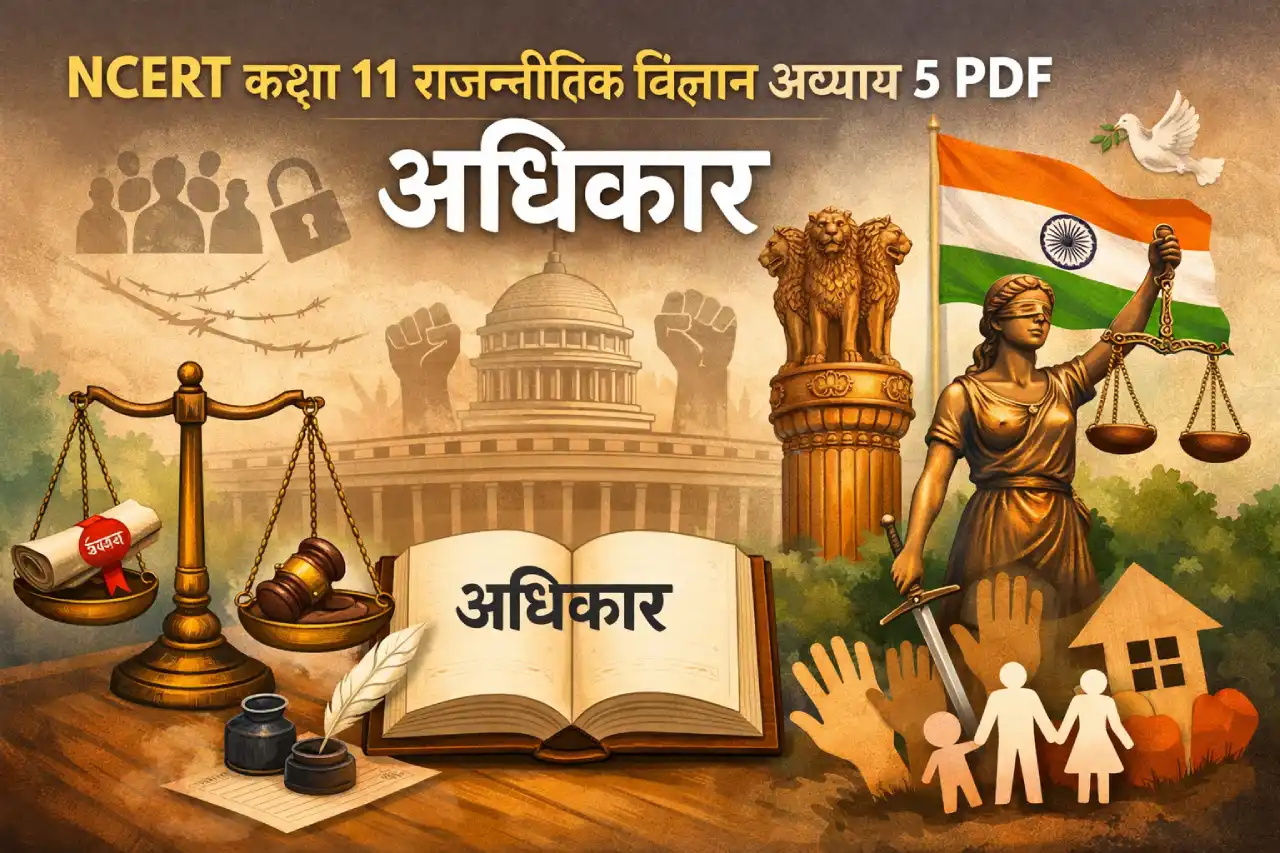
Chapter 5 of Class 11 Political Science Part 1 (Hindi Medium), titled अधिकार, deals with the idea of rights and why they are essential for a free and dignified life. This chapter explains what rights mean, how they differ from privileges, and why societies create laws to protect them. It also introduces students to different kinds of rights such as civil, political, and social rights, using simple explanations and everyday examples.

I am writing about this chapter because the word “rights” is often used in daily conversations, protests, debates, and even social media arguments, but many students do not clearly understand what counts as a right and what does not. Knowing this difference is important, especially in a democracy like India. This chapter helps students understand that rights are not just demands but legally and morally justified claims. It also explains why rights must be balanced with duties and responsibilities. For students preparing for board exams or competitive exams, this chapter builds a strong foundation for topics related to the Constitution, democracy, and citizenship.

What Are Rights?

Rights are justified claims that individuals can make on society and the state. They allow people to live with freedom, security, and self-respect. The chapter clearly explains that rights are not unlimited freedoms. They exist within a legal and moral framework so that one person’s freedom does not harm another.

Rights are important because they:

  • Protect individual freedom
  • Ensure equality before law
  • Prevent misuse of power
  • Help people participate in public life

Types of Rights Explained in the Chapter

The chapter talks about different categories of rights that are recognised in democratic societies.

Major Types of Rights

Type of RightWhat It Includes
Civil RightsRight to life, freedom of speech, equality before law
Political RightsRight to vote, contest elections, form political groups
Social RightsRight to education, health, and basic welfare
Economic RightsRight to work, fair wages, and livelihood

These rights together ensure that freedom is not limited to paper but works in real life.

Legal Rights and Moral Rights

The chapter makes an important distinction between legal and moral rights. Legal rights are protected by law and can be enforced in courts. Moral rights are based on ethical values and social expectations, even if they are not written in law.

For example, the right to free speech is a legal right, while treating others with dignity is a moral responsibility. Both are necessary for a healthy society.

Rights and Responsibilities Go Together

One of the strongest messages in this chapter is that rights cannot exist without responsibilities. If citizens enjoy freedom of expression, they must also avoid spreading hatred or false information. If people demand equality, they must also respect others’ rights.

This balance is what keeps a democracy stable and fair.

Why Rights Are Crucial in a Democracy

In a democracy, citizens are not subjects; they are active participants. Rights allow people to question the government, demand accountability, and express opinions without fear. The chapter explains that without rights, democracy would lose its meaning and power would remain concentrated in a few hands.

NCERT Class 11 Political Science Chapter 5 PDF Download (Hindi Medium)

Students can download the official NCERT PDF by following these steps:

  • Visit the official NCERT website
  • Click on E-Books
  • Select Class 11
  • Choose Political Science
  • Open Political Theory – Part 1 (Hindi Medium)
  • Click on Chapter 5: अधिकार
  • Download the PDF for regular study and revision

Using the official NCERT PDF ensures accuracy and alignment with the current syllabus.

Leave a Comment

End of Article

Loading more posts...