JOIN WHATSAPP
STORIES

Bihar Govt to Upgrade Schools with Digital Access, Labs & New Teacher Appointments

Bihar Govt to Upgrade Schools with Digital Access, Labs & New Teacher Appointments

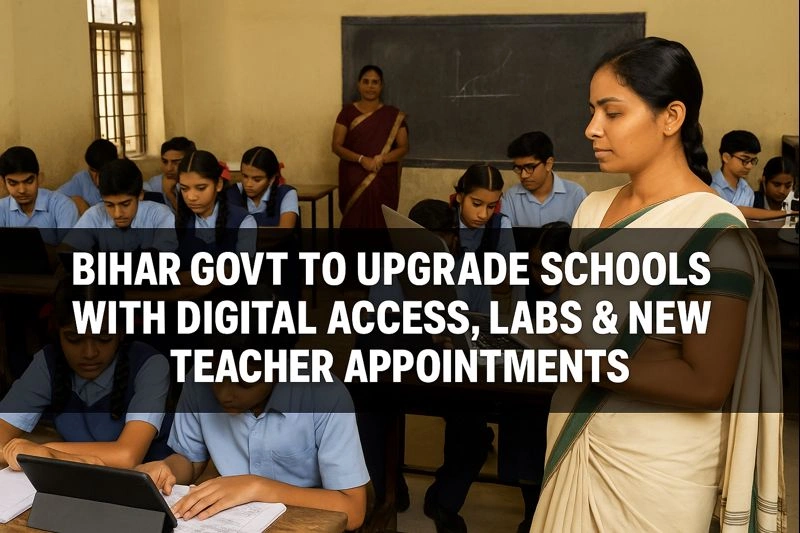
The Bihar government has announced a masterplan to modernise government schools with computer labs, digital access, and improved infrastructure. As shared by Education Minister Sunil Kumar, students will soon be able to learn through smart technologies and better classroom facilities, bringing government schools closer to modern education standards.

Educational transformation does not depend only on textbooks and classrooms anymore; it demands technology, teacher training, and infrastructure that helps students stay future-ready. With India focusing on skill-based learning and digital empowerment under the National Education Policy, Bihar’s decision signals a strong step toward bridging regional education gaps.

New appointments will address the shortage of teachers, and setting up labs will ensure science and computer subjects are taught through practice, not just theory. The plan aims to improve government school performance, reduce dropouts, and prepare students for competitive exams and job-oriented learning. For many families, this could change how education is valued and accessed, making Bihar’s schools a platform for real growth.

Labs, Digital Classrooms and Better Infrastructure

The upgrade plan focuses on modernising learning spaces in government schools. According to the announcement, the following facilities are likely to be introduced:

  • Fully equipped computer labs
  • Science labs for practical learning
  • Smart classroom technology
  • Internet connectivity for students and teachers
  • Access to digital learning materials

The government also plans to improve basic infrastructure such as classroom repairs, better seating, drinking water, and sanitation facilities.

New Appointments to Strengthen Teaching Quality

Modern facilities alone are not enough without trained teachers. The state will make new appointments to:

  • Fill teacher vacancies
  • Deploy computer instructors
  • Strengthen science and mathematics departments
  • Support vocational and skill-based training in schools

These recruitments aim to ensure every student benefits equally from the upgraded system.

Why This Move Matters for Students

This initiative can directly change learning outcomes in Bihar. Once implemented, students are likely to benefit through:

  • Hands-on practical lessons
  • Exposure to coding, computer skills, and lab experiments
  • Better preparation for competitive exams
  • Improved career awareness and counselling

It will also help bridge the gap between private and government schooling.
Leave a Comment

End of Article

Maharashtra College Teachers Seek Higher Retirement Age, Urge UGC to Act

Maharashtra College Teachers Seek Higher Retirement Age, Urge UGC to Act

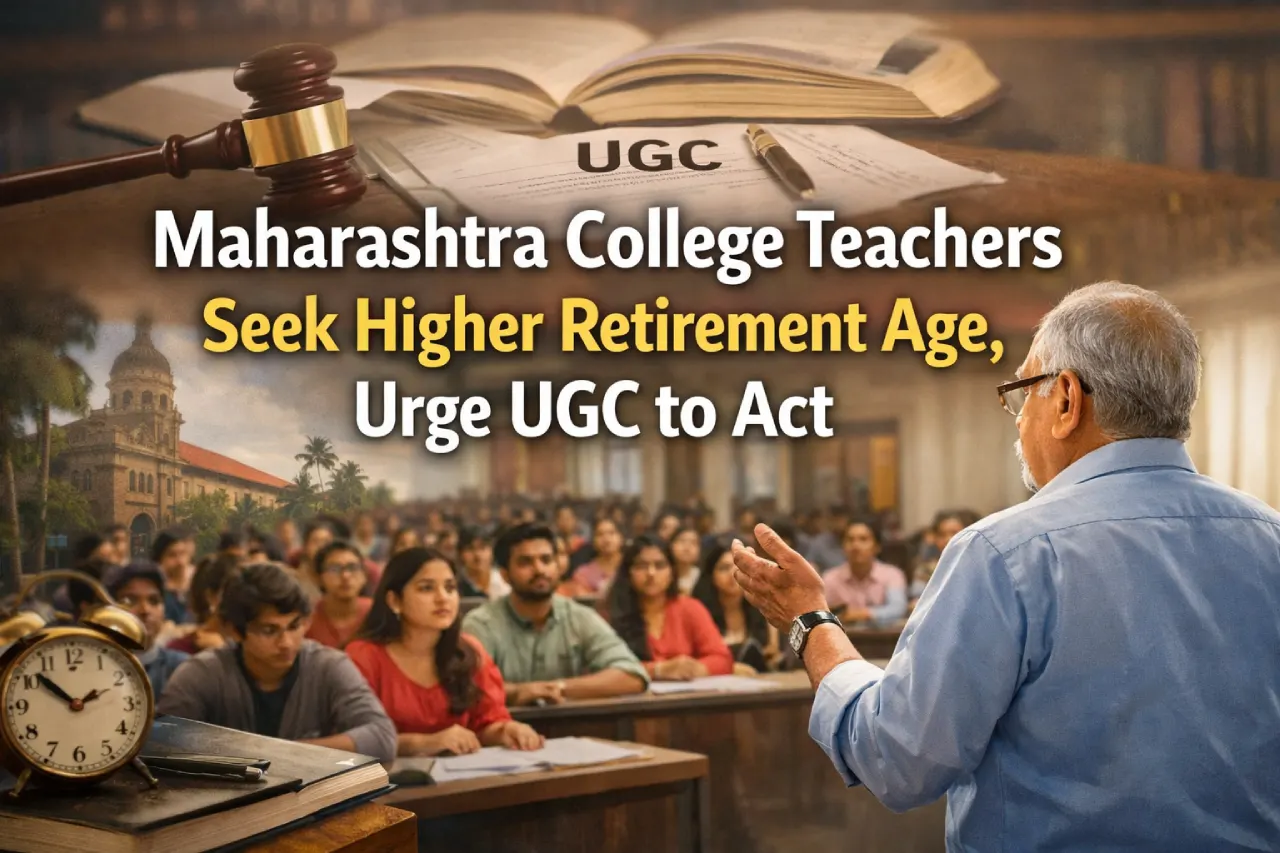
Teachers from colleges across Maharashtra have urged the University Grants Commission to raise the retirement age for teaching faculty from the current 60 years to 65 years. The demand has been made by teachers’ associations who argue that experienced educators are being forced to retire too early, even as colleges continue to face staff shortages. They believe extending the retirement age will help retain academic expertise and improve teaching quality in higher education institutions.

I am writing about this issue because it affects not just teachers, but also students and the overall higher education system. At a time when universities are struggling with vacant posts and delayed recruitments, losing senior faculty creates gaps in teaching, research, and mentorship. The demand also raises a larger question about how India values experience in academia and whether policy needs to evolve with changing life expectancy and professional capability.

What Maharashtra Teachers Are Demanding

Teachers’ bodies have formally requested UGC to revise the retirement age for college and university teachers to 65 years, bringing it in line with several central institutions. They argue that many educators remain academically active and physically fit well beyond 60.

According to them, forcing retirement at 60 leads to a loss of institutional memory and teaching continuity.

Why Teachers Want the Age Limit Raised

Teachers say the demand is based on practical realities. Many colleges face:

  • Acute shortage of qualified faculty
  • Delays in permanent recruitment
  • Heavy teaching loads on existing staff

Extending the retirement age would offer immediate relief without additional recruitment costs.

Comparison with Central Institutions

In several central universities and institutions, teachers are allowed to work up to 65 years, and in some cases even longer through re-employment. Maharashtra teachers feel this creates inequality between state and central institutions.

They believe a uniform retirement policy across the country would be fairer and more effective.

Impact on Students and Academic Quality

Senior teachers often play a key role in mentoring young faculty, guiding research scholars, and maintaining academic standards. Their early retirement disrupts this balance and places extra pressure on junior staff.

Students, especially at postgraduate and research levels, are among the biggest losers.

Concerns About Youth Employment

Some critics argue that extending retirement age could limit opportunities for younger aspirants. Teachers’ associations counter this by saying vacant posts already exist and recruitment processes are slow, so extending service will not block new jobs.

They stress that experience and new talent should coexist.

What UGC’s Role Will Be

UGC has the authority to frame regulations related to service conditions in higher education. Any change in retirement age would require policy review and coordination with state governments.

Teachers are hopeful that the commission will consider the request seriously.

Leave a Comment

End of Article

Loading more posts...